Actors: Career Overview
Play parts in stage, television, radio, video, or film productions, or other settings for entertainment, information, or instruction. Interpret serious or comic role by speech, gesture, and body movement to entertain or inform audience. May dance and sing.
Featured schools near , edit
The Daily Work of Actors Do?
Typical responsibilities of actors include:
- Collaborate with other actors as part of an ensemble.
- Portray and interpret roles, using speech, gestures, and body movements, to entertain, inform, or instruct radio, film, television, or live audiences.
- Work closely with directors, other actors, and playwrights to find the interpretation most suited to the role.
- Perform humorous and serious interpretations of emotions, actions, and situations, using body movements, facial expressions, and gestures.
- Study and rehearse roles from scripts to interpret, learn and memorize lines, stunts, and cues as directed.
- Learn about characters in scripts and their relationships to each other to develop role interpretations.
- Attend auditions and casting calls to audition for roles.
- Sing or dance during dramatic or comedic performances.
Key Skills and Knowledge
Effective actors draw on a mix of skills and domain knowledge.
Most Important Skills
The competencies that matter most in this role, rated on an importance scale of 0 to 5:
Knowledge Areas
Types of Actors Jobs
People in this occupation may also be known by titles such as:
- Actor
- Actor Understudy
- Actress
- Background Actor
- Character Artist
- Character Performer
- Comedian
- Comic
How Many Actors Are There?
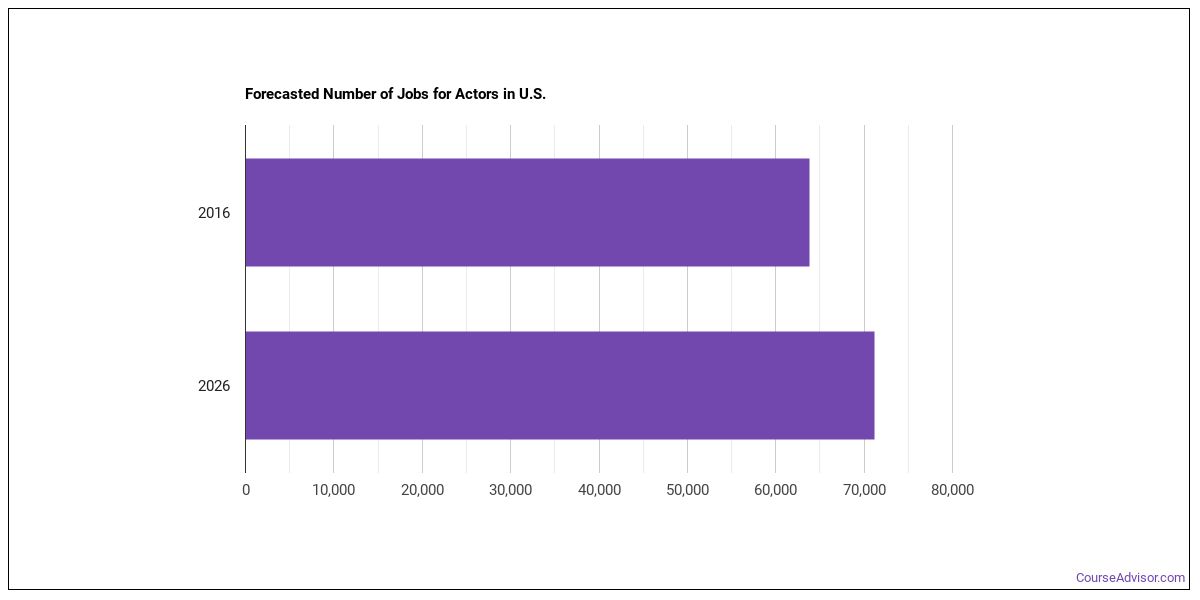
The U.S. employs around 48,840 actors working in the United States today. Demand is forecast to grow by +6.5% over the projection horizon.
Actors Pay
| Statistic | Value |
|---|---|
| Annual median | $45,006 |
| Hourly median | $21.64 |
| 10th percentile | $29,923 |
| 25th percentile | $37,465 |
| 75th percentile | $52,547 |
| 90th percentile | $60,089 |
Compensation varies based on experience, location, and industry.

Which Industries Hire Actors
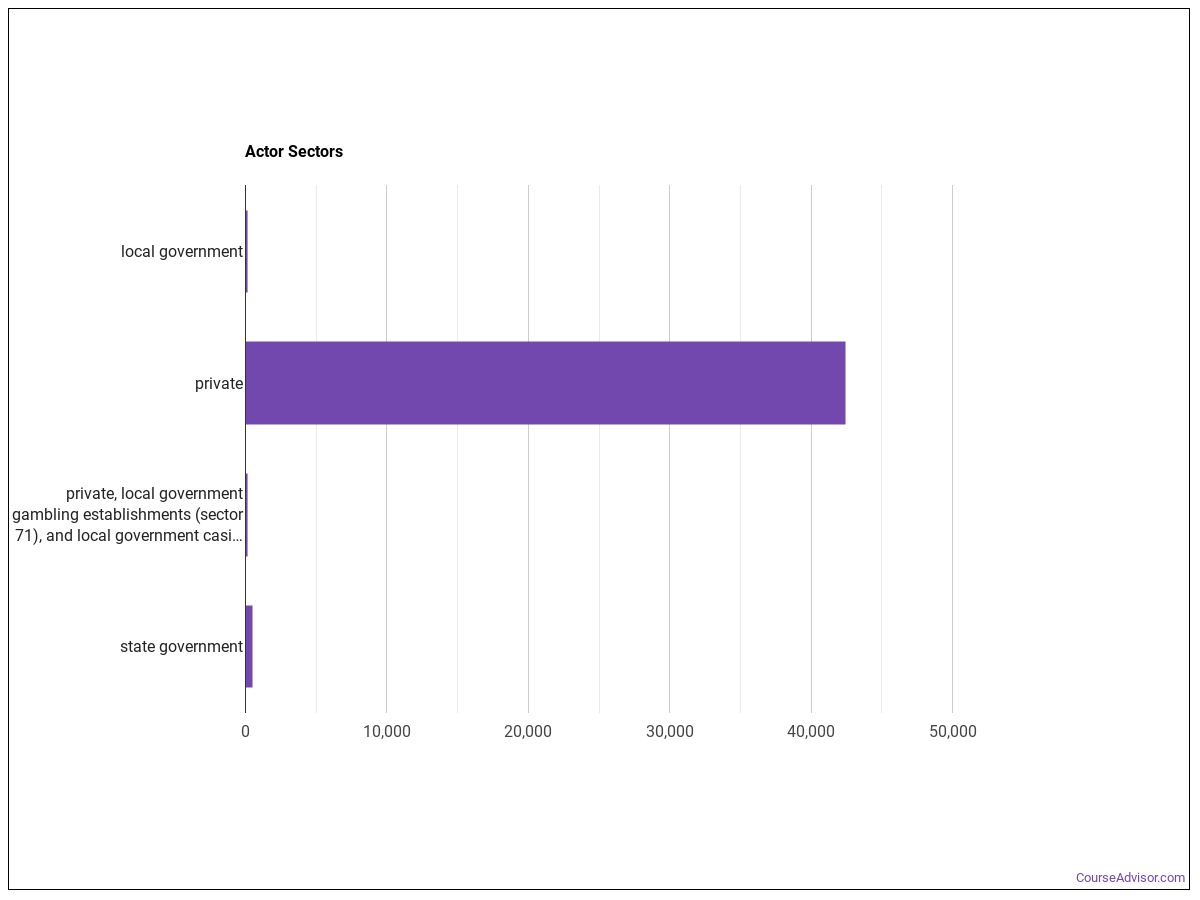
The largest employers of actors are concentrated in the following sectors:
| Industry | Employment | Median annual wage |
|---|---|---|
| Arts, Entertainment, and Recreation | 16,460 | n/a |
| Information | 8,980 | n/a |
| Professional, Scientific, and Technical Services | 7,670 | n/a |
| Educational Services | 2,720 | n/a |
| Transportation and Warehousing | 300 | n/a |
| Health Care and Social Assistance | 180 | n/a |
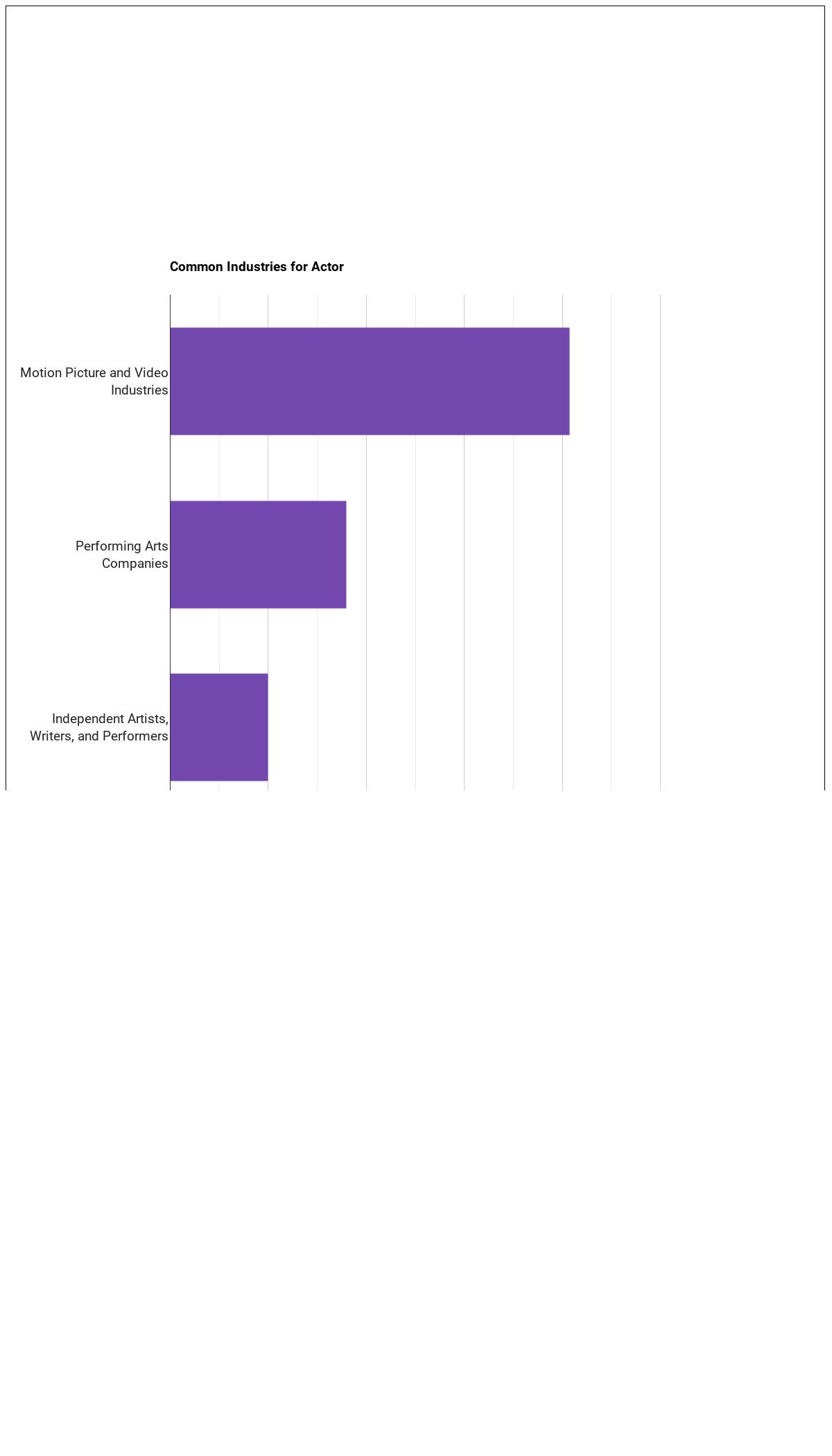
Below are examples of industries where actors work:
Tech Stack
- Web page creation and editing software: Facebook (hot technology)
- Operating system software: Linux (hot technology)
- Spreadsheet software: Microsoft Excel (hot technology)
- Office suite software: Microsoft Office software (hot technology)
- Electronic mail software: Microsoft Outlook (hot technology)
- Presentation software: Microsoft PowerPoint (hot technology)
- Word processing software: Microsoft Word (hot technology)
- Video creation and editing software: TikTok (hot technology)
- Video conferencing software: Zoom (hot technology)
Work Environment
The on-the-job environment of actors is shaped by the following characteristics:
- Work With or Contribute to a Work Group or Team
- Physical Proximity
- Contact With Others
- Time Pressure
Education and Training
Most actors positions require less than a high school diploma as the typical entry-level education. This occupation sits in Some Preparation Needed (Job Zone 2), reflecting the level of preparation typically expected.
Related Careers
Similar Occupations
- Agents and Business Managers of Artists, Performers, and Athletes (Supplemental)
- Art, Drama, and Music Teachers, Postsecondary (Primary-Long)
- Self-Enrichment Teachers (Supplemental)
- Art Directors (Supplemental)
- Fine Artists, Including Painters, Sculptors, and Illustrators (Supplemental)
- Special Effects Artists and Animators (Supplemental)
- Producers and Directors (Primary-Long)
- Talent Directors (Primary-Short)
Degree Programs
Students preparing for actors commonly pursue programs in:
Visual and Performing Arts
7 programs across 1 majors
References
Data on this page comes from the following authoritative sources:
- U.S. Bureau of Labor Statistics — Occupational Employment and Wage Statistics (OEWS) for employment and wage data by state and industry.
- BLS Employment Projections for total employment and growth forecasts.
- O*NET (Occupational Information Network) for skills, knowledge, tasks, work activities, work context, technology, and education-zone data.
SOC code: 27-2011.00 (Actors).

Course Advisor provides higher-education, college and university, degree, program, career, salary, and other helpful information to students, faculty, institutions, and other internet audiences. Presented information and data are subject to change. Inclusion on this website does not imply or represent a direct relationship with the company, school, or brand. Information, though believed correct at time of publication, may not be correct, and no warranty is provided. Contact the schools to verify any information before relying on it. Financial aid may be available for those who qualify. The displayed options may include sponsored or recommended results, not necessarily based on your preferences.
© Course Advisor – All Rights Reserved.