Park Naturalists: Job Description
Plan, develop, and conduct programs to inform public of historical, natural, and scientific features of national, state, or local park.
Featured schools near , edit
The Daily Work of Park Naturalists Do?
Typical responsibilities of park naturalists include:
- Provide visitor services, such as explaining regulations, answering visitor requests, needs and complaints, and providing information about the park and surrounding areas.
- Assist with operations of general facilities, such as visitor centers.
- Confer with park staff to determine subjects and schedules for park programs.
- Conduct field trips to point out scientific, historic, and natural features of parks, forests, historic sites, or other attractions.
- Plan and organize public events at the park.
- Prepare and present illustrated lectures and interpretive talks about park features.
- Plan, organize and direct activities of seasonal staff members.
- Perform emergency duties to protect human life, government property, and natural features of park.
Skills and Knowledge
Top park naturalists rely on a mix of skills and domain knowledge.
Top Skills
The abilities that matter most in this role, rated on an importance scale of 0 to 5:
Knowledge Areas
Other Park Naturalists Job Titles
People in this occupation may also be known by titles such as:
- Camp Ranger
- Environmental Education Specialist
- Environmental Educator
- Interpretation Park Ranger
- Interpretive Naturalist
- National Park Ranger
- Natural Resource Educator
- Naturalist
Employment and Demand
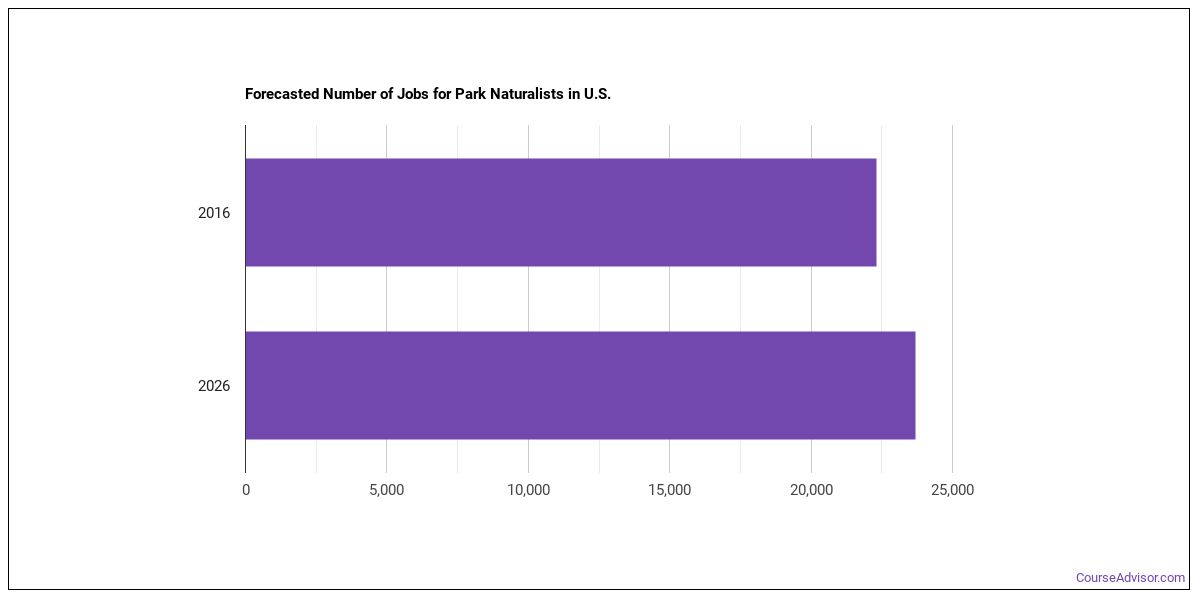
There are roughly 42,669 park naturalists working in the United States today. This occupation is expected to grow by +9.4% over the projection horizon.
Park Naturalists Pay
| Statistic | Value |
|---|---|
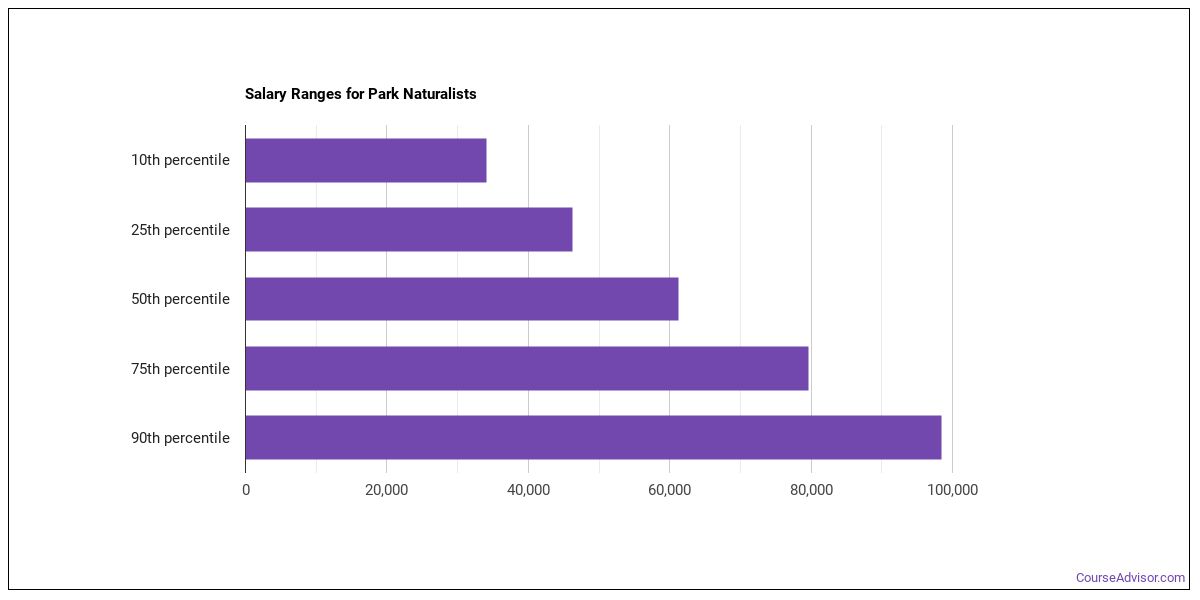
| Annual median | $76,516 |
| Hourly median | $36.79 |
| 10th percentile | $44,819 |
| 25th percentile | $60,668 |
| 75th percentile | $92,365 |
| 90th percentile | $108,214 |
Pay can vary substantially based on experience, location, and industry.
Pay by State
| State | Annual median salary |
|---|---|
| Oregon | $86,170 |
| California | $81,620 |
| Washington | $81,220 |
| Colorado | $80,240 |
| Nevada | $79,790 |
| North Dakota | $79,790 |
| Connecticut | $77,410 |
| Utah | $77,380 |
| Minnesota | $77,180 |
| Wyoming | $77,020 |
| Massachusetts | $76,750 |
| Alabama | $76,270 |
| Arizona | $76,100 |
| Wisconsin | $75,940 |
| Alaska | $75,470 |
| Maryland | $75,350 |
| Tennessee | $74,960 |
| Nebraska | $74,960 |
| Montana | $74,900 |
| Illinois | $72,550 |
| Idaho | $72,550 |
| Arkansas | $72,550 |
| South Dakota | $72,550 |
| New Mexico | $72,490 |
| West Virginia | $68,390 |
| Georgia | $67,950 |
| New Hampshire | $67,720 |
| Virginia | $67,200 |
| New York | $65,550 |
| Texas | $65,170 |
| Maine | $64,990 |
| Iowa | $64,010 |
| Puerto Rico | $63,960 |
| Kentucky | $63,960 |
| Indiana | $62,880 |
| Oklahoma | $61,960 |
| Vermont | $61,880 |
| North Carolina | $61,820 |
| Michigan | $61,010 |
| Missouri | $60,900 |
| New Jersey | $60,430 |
| Ohio | $59,780 |
| Louisiana | $58,480 |
| Mississippi | $56,980 |
| Delaware | $55,990 |
| South Carolina | $54,220 |
| Pennsylvania | $53,110 |
| Florida | $52,820 |
| Hawaii | $46,580 |
| Kansas | $45,880 |
Where Park Naturalists Earn the Most
Pay for park naturalists shift depending on where you work. The following regions pay the most:
| Region | Median annual wage | Share of U.S. jobs | Location quotient |
|---|---|---|---|
| Far Western US | $80,272 | 17.4% | 1.70 |
| Rocky Mountains | $77,766 | 9.4% | 2.87 |
| New England | $72,059 | 5.3% | 1.57 |
| Great Lakes | $67,709 | 13.7% | 1.17 |
| Southwest | $67,053 | 12.1% | 1.12 |
| Plains States | $66,894 | 12.3% | 2.27 |
| Other U.S. Territories | $63,960 | 0.2% | 0.40 |
| Southeast | $62,091 | 16.2% | 0.91 |
Top Metro Areas
| Metro area | State | Median annual wage | Employment |
|---|---|---|---|
| San Jose-Sunnyvale-Santa Clara, CA | CA | $105,680 | 80 |
| Portland-Vancouver-Hillsboro, OR-WA | OR | $98,930 | 340 |
| Salem, OR | OR | $98,050 | 90 |
| San Francisco-Oakland-Fremont, CA | CA | $96,260 | 370 |
| Bend, OR | OR | $94,310 | 80 |
| Santa Rosa-Petaluma, CA | CA | $91,770 | 90 |
| Medford, OR | OR | $87,050 | 30 |
| Charlottesville, VA | VA | $86,730 | 30 |
Which Industries Hire Park Naturalists
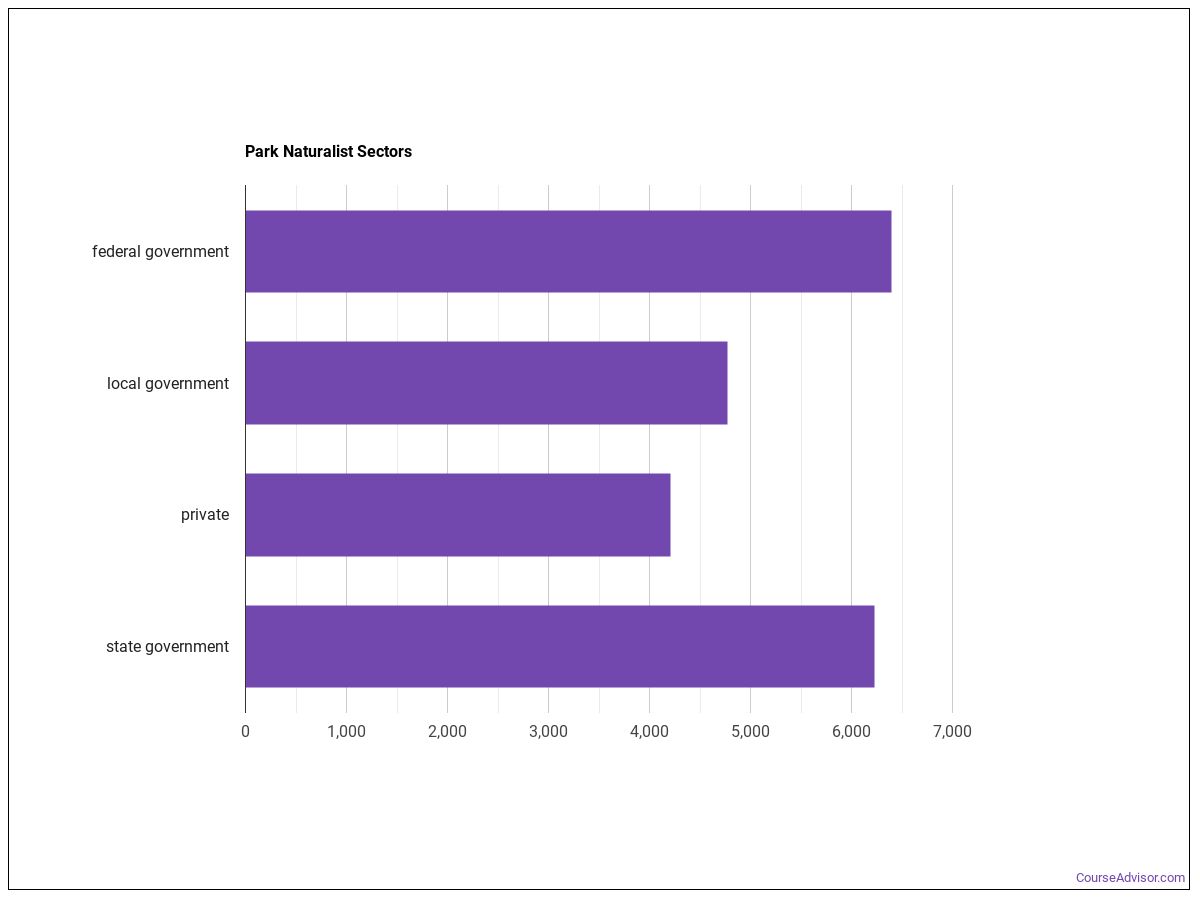
The bulk of park naturalists are found across these industries:
| Industry | Employment | Median annual wage |
|---|---|---|
| Other Services (except Public Administration) | 5,250 | $62,940 |
| Professional, Scientific, and Technical Services | 1,170 | $72,010 |
| Educational Services | 830 | $64,110 |
| Arts, Entertainment, and Recreation | 330 | $49,980 |
| Administrative and Support and Waste Management and Remediation Services | 50 | $76,990 |
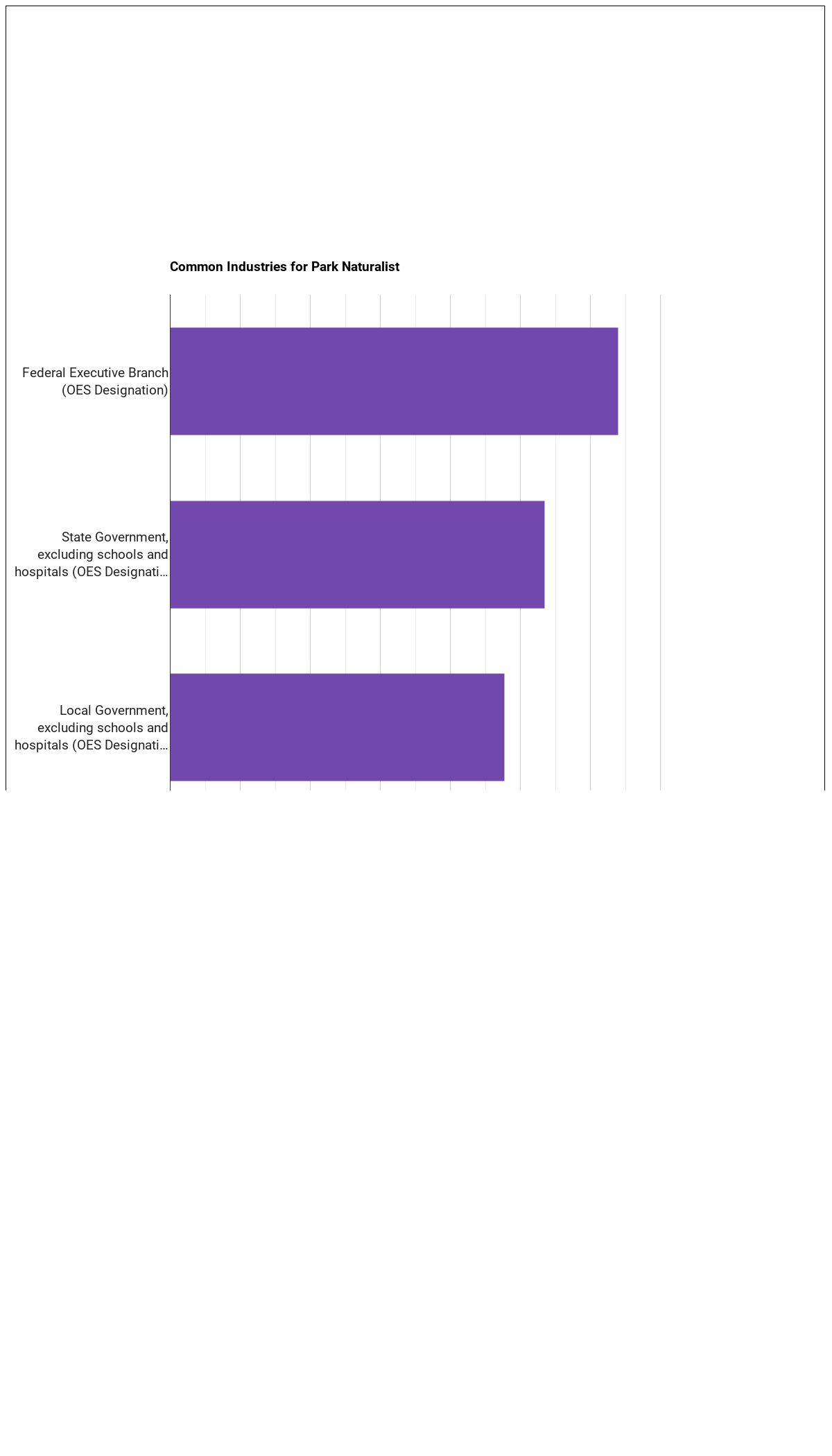
Park Naturalists work in the following industries:
Tools and Technology
- Document management software: Adobe Acrobat (hot technology)
- Web page creation and editing software: Facebook (hot technology)
- Web platform development software: Microsoft Active Server Pages ASP (hot technology)
- Spreadsheet software: Microsoft Excel (hot technology)
- Office suite software: Microsoft Office software (hot technology)
- Electronic mail software: Microsoft Outlook (hot technology)
- Presentation software: Microsoft PowerPoint (hot technology)
- Word processing software: Microsoft Word (hot technology)
Work Environment
The work environment for park naturalists is shaped by the following characteristics:
- Deal With External Customers or the Public in General
- Telephone Conversations
- Face-to-Face Discussions with Individuals and Within Teams
- Contact With Others
Education and Training
Most park naturalists positions require a bachelor’s degree as the typical entry-level education. The role falls in Considerable Preparation Needed (Job Zone 4), reflecting the level of preparation typically expected.
Other Careers to Consider
Similar Occupations
- Education and Childcare Administrators, Preschool and Daycare (Supplemental)
- Entertainment and Recreation Managers, Except Gambling (Supplemental)
- Zoologists and Wildlife Biologists (Supplemental)
- Conservation Scientists (Primary-Long)
- Range Managers (Primary-Short)
- Foresters (Primary-Long)
- Environmental Scientists and Specialists, Including Health (Primary-Long)
- Environmental Restoration Planners (Supplemental)
Degree Programs
Aspiring park naturalists commonly pursue programs in:
Natural Resources and Conservation
8 programs across 4 majors
Biological and Biomedical Sciences
5 programs across 1 majors
Multi/Interdisciplinary Studies
2 programs across 2 majors
Agriculture, Agriculture Operations, and Related Sciences
2 programs across 2 majors
References
This profile draws on the following authoritative sources:
- U.S. Bureau of Labor Statistics — Occupational Employment and Wage Statistics (OEWS) for employment and wage data by state and industry.
- BLS Employment Projections for total employment and growth forecasts.
- O*NET (Occupational Information Network) for skills, knowledge, tasks, work activities, work context, technology, and education-zone data.
SOC code: 19-1031.03 (Conservation Scientists).

Course Advisor provides higher-education, college and university, degree, program, career, salary, and other helpful information to students, faculty, institutions, and other internet audiences. Presented information and data are subject to change. Inclusion on this website does not imply or represent a direct relationship with the company, school, or brand. Information, though believed correct at time of publication, may not be correct, and no warranty is provided. Contact the schools to verify any information before relying on it. Financial aid may be available for those who qualify. The displayed options may include sponsored or recommended results, not necessarily based on your preferences.
© Course Advisor – All Rights Reserved.