Nuclear Technicians: Career Overview
Assist nuclear physicists, nuclear engineers, or other scientists in laboratory, power generation, or electricity production activities. May operate, maintain, or provide quality control for nuclear testing and research equipment. May monitor radiation.
Featured schools near , edit
What Do Nuclear Technicians Take On?
Typical responsibilities of nuclear technicians include:
- Follow nuclear equipment operational policies and procedures that ensure environmental safety.
- Conduct surveillance testing to determine safety of nuclear equipment.
- Monitor nuclear reactor equipment performance to identify operational inefficiencies, hazards, or needs for maintenance or repair.
- Test plant equipment to ensure it is operating properly.
- Apply safety tags to equipment needing maintenance.
- Follow policies and procedures for radiation workers to ensure personnel safety.
- Modify, devise, or maintain nuclear equipment used in operations.
Key Skills and Knowledge
Effective nuclear technicians draw on a mix of skills and domain knowledge.
Top Skills
These are the skills most central to this role, rated on an importance scale of 0 to 5:
Knowledge Areas
Other Nuclear Technicians Job Titles
People in this occupation may also be known by titles such as:
- Accelerator Operator
- Accelerator Technician
- Auxiliary Operator
- Cell Support Operator
- Electric Systems Operator
- Energy Systems Operator
- Equipment Operation Instructor
- Equipment Operator
How Many Nuclear Technicians Are There?
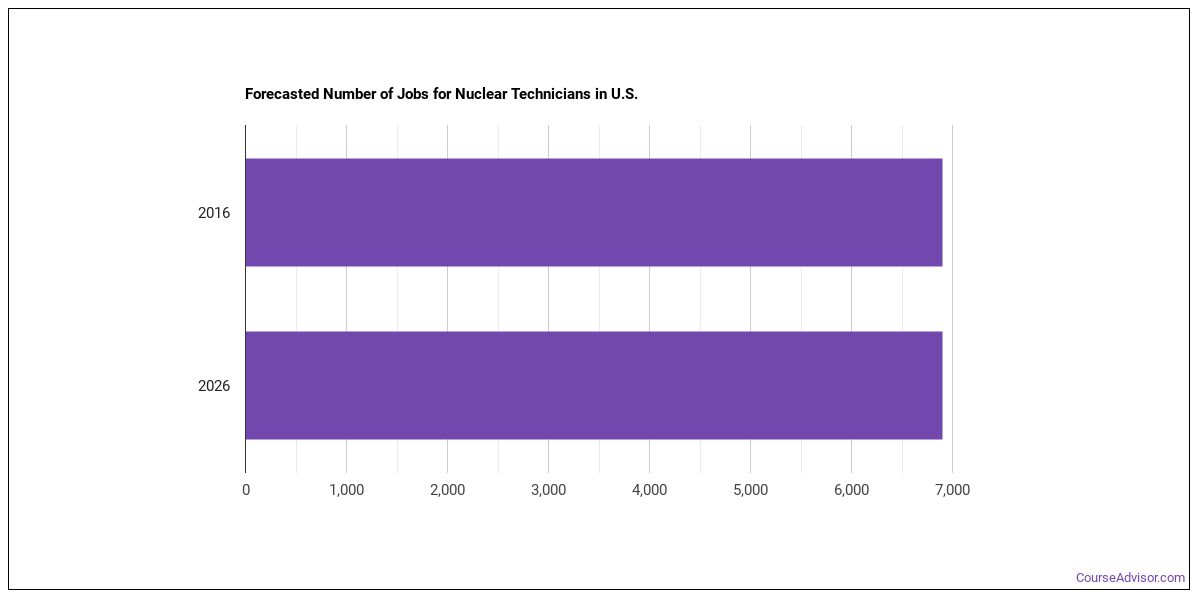
There are roughly 74,812 nuclear technicians working in the United States today. This occupation is expected to grow by +11.8% over the projection horizon.
Salary for Nuclear Technicians
| Statistic | Value |
|---|---|
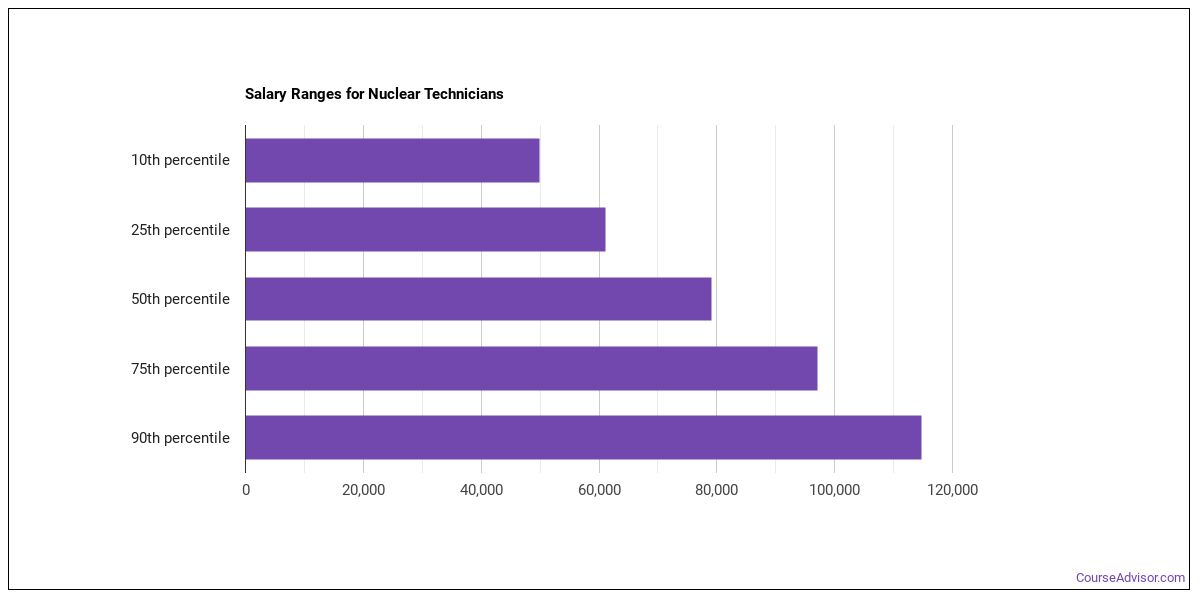
| Annual median | $92,140 |
| Hourly median | $44.30 |
| 10th percentile | $54,753 |
| 25th percentile | $73,446 |
| 75th percentile | $110,833 |
| 90th percentile | $129,527 |
Wages vary widely based on experience, location, and industry.
Pay by State
| State | Annual median salary |
|---|---|
| New York | $121,460 |
| Florida | $118,340 |
| Alabama | $107,680 |
| Virginia | $106,270 |
| New Mexico | $105,350 |
| South Carolina | $105,300 |
| Pennsylvania | $104,650 |
| Michigan | $104,450 |
| North Carolina | $104,240 |
| Illinois | $102,810 |
| Washington | $100,080 |
| Texas | $97,160 |
| Missouri | $96,930 |
| Tennessee | $94,620 |
Pay by U.S. Region
Earnings for nuclear technicians differ across the country. Top regions by median wage:
| Region | Median annual wage | Share of U.S. jobs | Location quotient |
|---|---|---|---|
| Middle Atlantic | $110,993 | 13.9% | 1.07 |
| Southeast | $105,462 | 47.5% | 4.72 |
| Great Lakes | $103,064 | 27.0% | 3.28 |
| Far Western US | $100,080 | 2.4% | 0.66 |
| Southwest | $97,160 | 4.5% | 0.32 |
| Plains States | $96,930 | 4.7% | 1.60 |
Top Metro Areas
| Metro area | State | Median annual wage | Employment |
|---|---|---|---|
| Philadelphia-Camden-Wilmington, PA-NJ-DE-MD | PA | $117,630 | 120 |
| Virginia Beach-Chesapeake-Norfolk, VA-NC | VA | $108,690 | 90 |
| New York-Newark-Jersey City, NY-NJ | NY | $108,670 | 30 |
| Augusta-Richmond County, GA-SC | GA | $103,120 | 240 |
| Chicago-Naperville-Elgin, IL-IN | IL | $78,780 | 480 |
Industry Breakdown
The bulk of nuclear technicians are concentrated in the following sectors:
| Industry | Employment | Median annual wage |
|---|---|---|
| Utilities | 3,740 | $105,300 |
| Professional, Scientific, and Technical Services | 1,010 | $83,330 |
| Administrative and Support and Waste Management and Remediation Services | 520 | $92,120 |
| Manufacturing | 330 | $86,800 |
| Health Care and Social Assistance | 130 | $83,190 |
| Management of Companies and Enterprises | 50 | $108,740 |
| Educational Services | 40 | $62,980 |
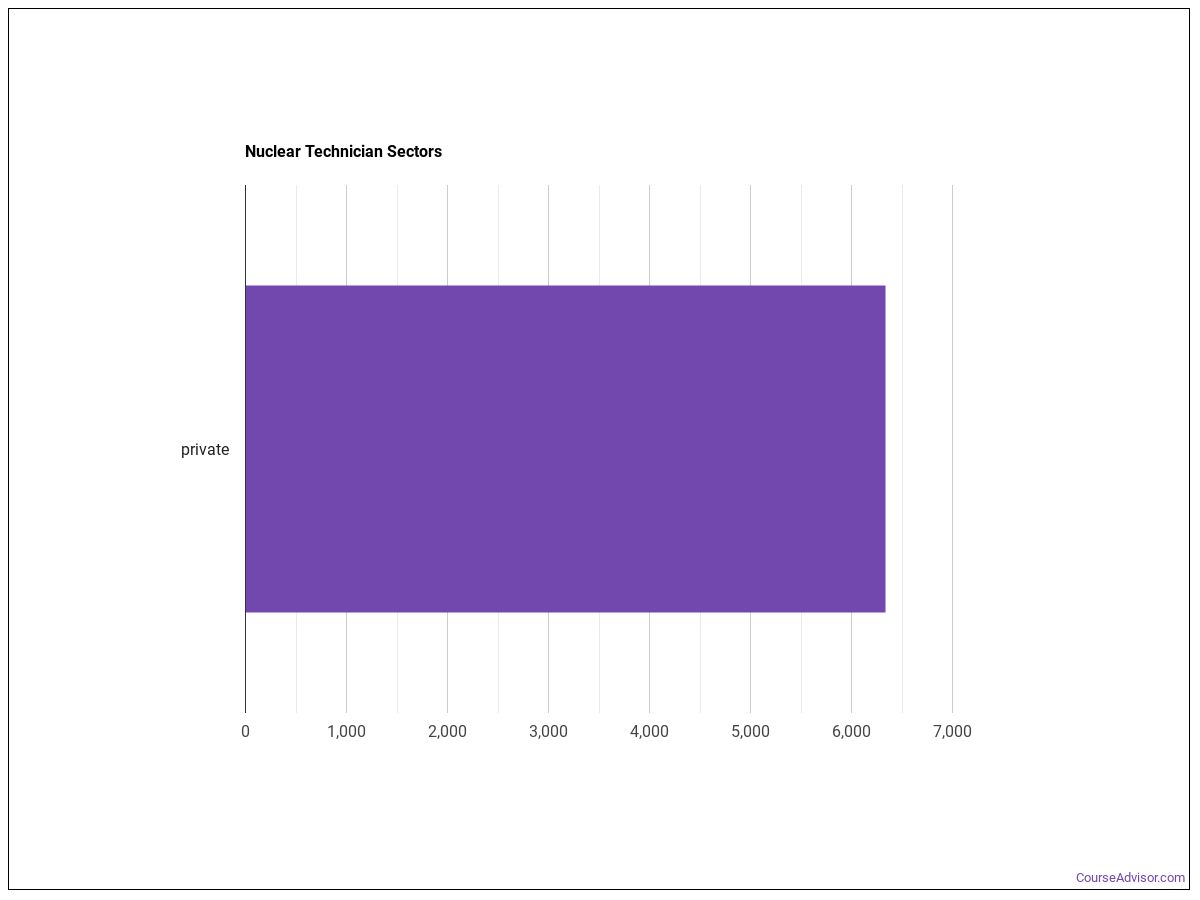
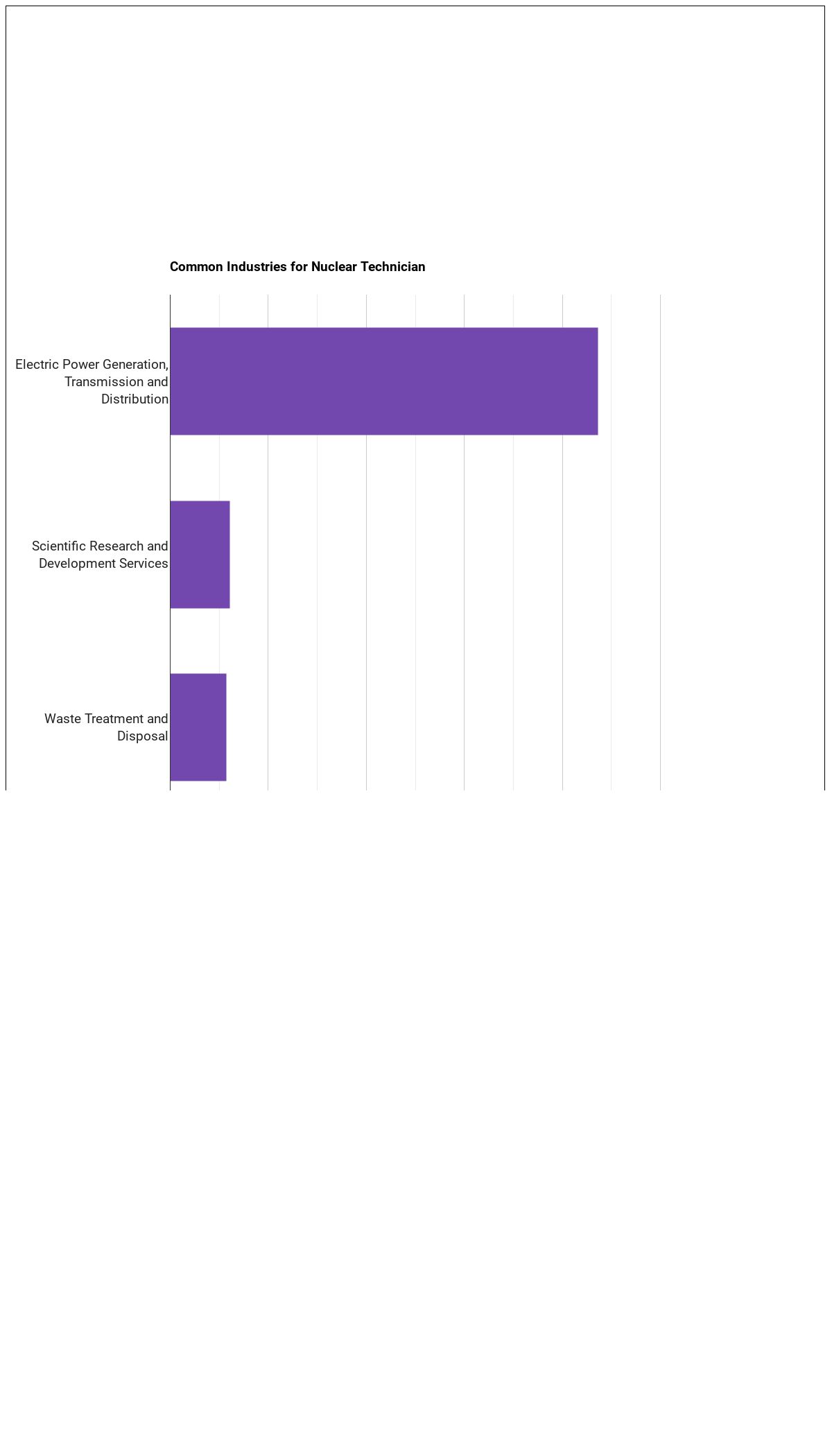
The table below shows some of the most common industries where those employed in this career field work.
Tools and Technology
- Operating system software: Linux (hot technology)
- Data base user interface and query software: Microsoft Access (hot technology)
- Spreadsheet software: Microsoft Excel (hot technology)
- Office suite software: Microsoft Office software (hot technology)
- Presentation software: Microsoft PowerPoint (hot technology)
- Operating system software: Microsoft Windows (hot technology)
- Word processing software: Microsoft Word (hot technology)
- Data base user interface and query software: Structured query language SQL (hot technology)
The Day-to-Day Environment
The on-the-job environment of nuclear technicians reflects the following characteristics:
- Face-to-Face Discussions with Individuals and Within Teams
- Work With or Contribute to a Work Group or Team
- Wear Common Protective or Safety Equipment such as Safety Shoes, Glasses, Gloves, Hearing Protection, Hard Hats, or Life Jackets
- Importance of Being Exact or Accurate
- Telephone Conversations
Education and Training
This occupation sits in Medium Preparation Needed (Job Zone 3), reflecting the level of preparation typically expected.
Similar Occupations
Similar Occupations
- Geothermal Production Managers (Supplemental)
- Biomass Power Plant Managers (Supplemental)
- Chemical Engineers (Supplemental)
- Nuclear Engineers (Supplemental)
- Aerospace Engineering and Operations Technologists and Technicians (Primary-Long)
- Electrical and Electronic Engineering Technologists and Technicians (Supplemental)
- Calibration Technologists and Technicians (Primary-Long)
- Nuclear Monitoring Technicians (Primary-Short)
Top Programs to Study For This Career
Future nuclear technicians commonly pursue programs in:
Science Technologies/Technicians
3 programs across 1 majors
Engineering Technologies and Engineering-Related Fields
1 programs across 1 majors
Health Professions and Related Programs
1 programs across 1 majors
References
This profile draws on the following authoritative sources:
- U.S. Bureau of Labor Statistics — Occupational Employment and Wage Statistics (OEWS) for employment and wage data by state and industry.
- BLS Employment Projections for total employment and growth forecasts.
- O*NET (Occupational Information Network) for skills, knowledge, tasks, work activities, work context, technology, and education-zone data.
SOC code: 19-4051.00 (Nuclear Technicians).

Course Advisor provides higher-education, college and university, degree, program, career, salary, and other helpful information to students, faculty, institutions, and other internet audiences. Presented information and data are subject to change. Inclusion on this website does not imply or represent a direct relationship with the company, school, or brand. Information, though believed correct at time of publication, may not be correct, and no warranty is provided. Contact the schools to verify any information before relying on it. Financial aid may be available for those who qualify. The displayed options may include sponsored or recommended results, not necessarily based on your preferences.
© Course Advisor – All Rights Reserved.