Radiologic Technologists and Technicians: Career Overview
Take x-rays and CAT scans or administer nonradioactive materials into patient's bloodstream for diagnostic or research purposes. Includes radiologic technologists and technicians who specialize in other scanning modalities.
Featured schools near , edit
What Do Radiologic Technologists and Technicians Take On?
The day-to-day responsibilities of radiologic technologists and technicians span:
- Position imaging equipment and adjust controls to set exposure time and distance, according to specification of examination.
- Position patient on examining table and set up and adjust equipment to obtain optimum view of specific body area as requested by physician.
- Monitor patients' conditions and reactions, reporting abnormal signs to physician.
- Explain procedures and observe patients to ensure safety and comfort during scan.
- Use radiation safety measures and protection devices to comply with government regulations and to ensure safety of patients and staff.
- Review and evaluate developed x-rays, video tape, or computer-generated information to determine if images are satisfactory for diagnostic purposes.
- Determine patients' x-ray needs by reading requests or instructions from physicians.
- Prepare contrast material, radiopharmaceuticals, or anesthetic or antispasmodic drugs under the direction of a radiologist.
What Radiologic Technologists and Technicians Need to Know
Successful radiologic technologists and technicians draw on a mix of skills and domain knowledge.
Key Skills
The competencies most important for this role, rated on an importance scale of 0 to 5:
Core Knowledge
Types of Radiologic Technologists and Technicians Jobs
Common job titles for this role include:
- 3D Technologist
- Angiogram Special Procedures Technologist
- CAT Technologist (Computed Axial Tomography Technologist)
- CT Radiology Technologist (Computerized Tomography Radiology Technologist)
- CT Scan Special Procedures Technologist (Computed Tomography Scan Special Procedures Technologist)
- CT Scan Tech (Computed Tomography Scan Technologist)
- CT Scanner Operator (Computed Tomography Scanner Operator)
- CT Tech (Computer Tomography Technician)
Job Outlook
There are about 2,987,940 radiologic technologists and technicians working in the United States today. This occupation is expected to grow by +13.3% over the projection horizon.

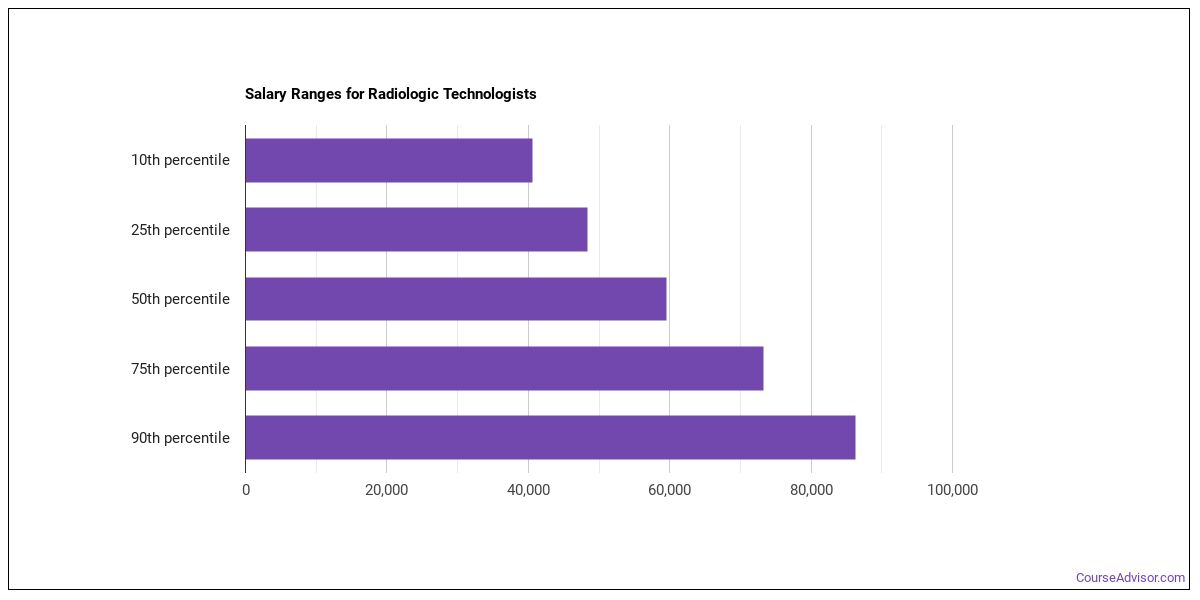
Salary for Radiologic Technologists and Technicians
| Statistic | Value |
|---|---|
| Annual median | $137,802 |
| Hourly median | $66.25 |
| 10th percentile | $77,272 |
| 25th percentile | $107,537 |
| 75th percentile | $168,067 |
| 90th percentile | $198,332 |
Compensation varies based on experience, location, and industry.
Pay by State
| State | Annual median salary |
|---|---|
| California | $107,670 |
| Massachusetts | $99,910 |
| Hawaii | $99,670 |
| Oregon | $99,530 |
| District of Columbia | $99,080 |
| Washington | $93,920 |
| New York | $91,520 |
| Nevada | $88,120 |
| Alaska | $85,870 |
| New Jersey | $85,520 |
| Vermont | $85,450 |
| Connecticut | $85,370 |
| Rhode Island | $84,630 |
| Delaware | $84,570 |
| Arizona | $84,480 |
| Colorado | $83,740 |
| Virgin Islands | $82,060 |
| New Hampshire | $82,010 |
| Minnesota | $80,960 |
| Utah | $80,080 |
| Virginia | $79,670 |
| Maryland | $79,630 |
| Idaho | $78,000 |
| Illinois | $77,890 |
| Maine | $77,750 |
| Wyoming | $77,350 |
| Texas | $76,800 |
| Indiana | $76,600 |
| Wisconsin | $76,200 |
| Ohio | $75,480 |
| Montana | $75,280 |
| New Mexico | $74,060 |
| Florida | $71,190 |
| Kansas | $68,740 |
| Nebraska | $68,520 |
| Michigan | $68,480 |
| Pennsylvania | $68,010 |
| Georgia | $67,270 |
| North Carolina | $67,150 |
| Missouri | $67,120 |
| West Virginia | $66,780 |
| Oklahoma | $66,610 |
| South Dakota | $66,320 |
| South Carolina | $65,100 |
| Kentucky | $64,840 |
| Iowa | $64,350 |
| Tennessee | $63,940 |
| North Dakota | $63,850 |
| Louisiana | $62,760 |
| Arkansas | $60,430 |
| Alabama | $56,790 |
| Mississippi | $53,340 |
| Guam | $50,510 |
| Puerto Rico | $29,340 |
Pay by U.S. Region
Pay for radiologic technologists and technicians vary by region. The following regions pay the most:
| Region | Median annual wage | Share of U.S. jobs | Location quotient |
|---|---|---|---|
| Far Western US | $103,521 | 12.7% | 0.76 |
| New England | $90,635 | 5.0% | 1.06 |
| Middle Atlantic | $83,120 | 15.1% | 1.00 |
| Rocky Mountains | $80,813 | 3.7% | 0.95 |
| Southwest | $76,760 | 12.6% | 1.01 |
| Great Lakes | $74,814 | 15.3% | 1.09 |
| Plains States | $70,385 | 7.4% | 1.08 |
| Southeast | $67,030 | 27.5% | 1.14 |
Where the Jobs Cluster
| Metro area | State | Median annual wage | Employment |
|---|---|---|---|
| Vallejo, CA | CA | $169,020 | 220 |
| San Jose-Sunnyvale-Santa Clara, CA | CA | $157,170 | 1,040 |
| San Francisco-Oakland-Fremont, CA | CA | $136,730 | 2,580 |
| Santa Rosa-Petaluma, CA | CA | $132,830 | 190 |
| Sacramento-Roseville-Folsom, CA | CA | $130,710 | 1,250 |
| Stockton-Lodi, CA | CA | $126,180 | 280 |
| Santa Cruz-Watsonville, CA | CA | $124,370 | 120 |
| Modesto, CA | CA | $112,920 | 270 |
Which Industries Hire Radiologic Technologists and Technicians
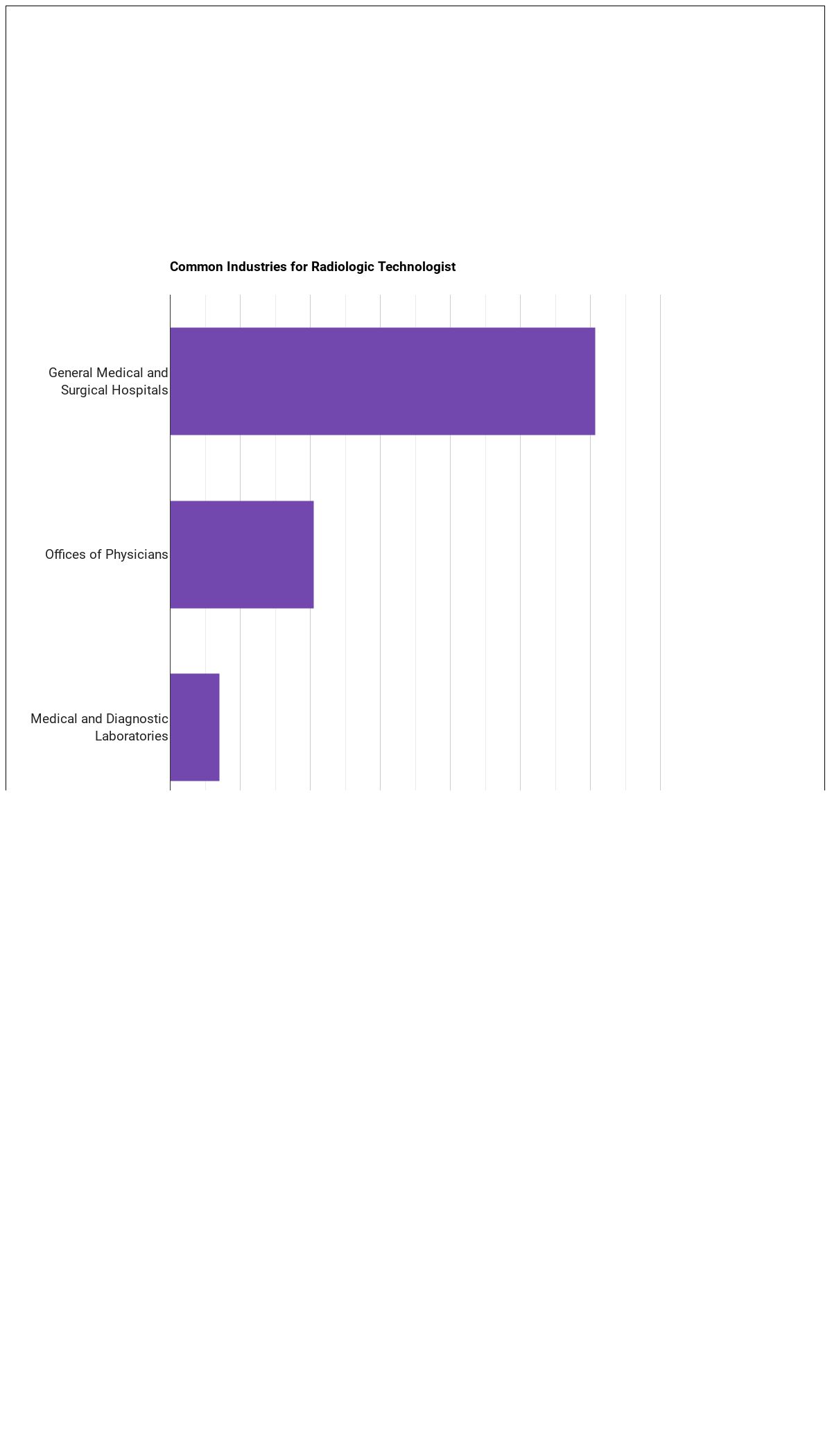
The bulk of radiologic technologists and technicians work in these industries:
| Industry | Employment | Median annual wage |
|---|---|---|
| Health Care and Social Assistance | 205,960 | $77,310 |
| Administrative and Support and Waste Management and Remediation Services | 7,080 | $81,380 |
| Educational Services | 1,400 | $83,980 |
| Professional, Scientific, and Technical Services | 860 | $73,520 |
| Management of Companies and Enterprises | 830 | $88,790 |
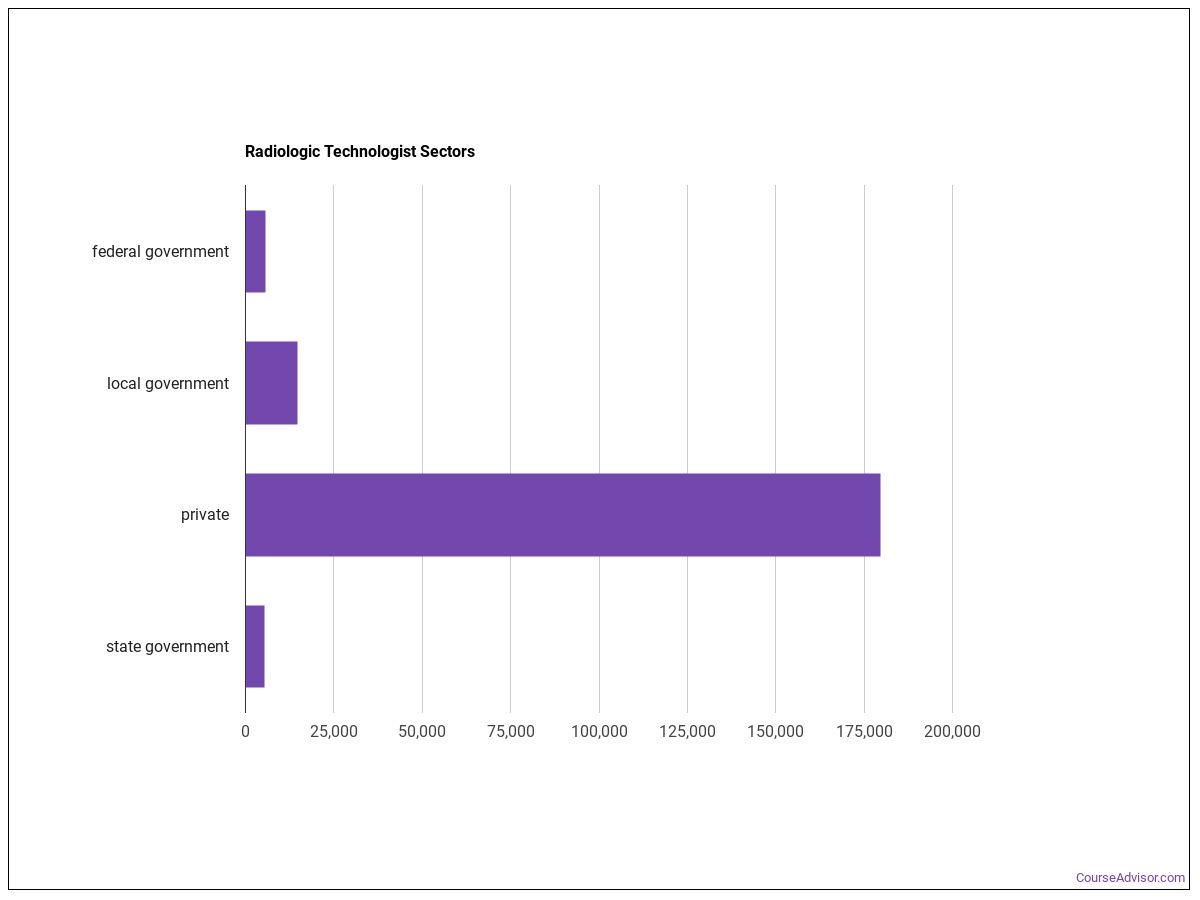
Below are examples of industries where radiologic technologists and technicians work:
Tools and Technology
- Medical software: eClinicalWorks EHR software (hot technology)
- Medical software: MEDITECH software (hot technology)
- Spreadsheet software: Microsoft Excel (hot technology)
- Office suite software: Microsoft Office software (hot technology)
- Electronic mail software: Microsoft Outlook (hot technology)
- Presentation software: Microsoft PowerPoint (hot technology)
- Word processing software: Microsoft Word (hot technology)
- Object or component oriented development software: R (hot technology)
The Day-to-Day Environment
The work environment for radiologic technologists and technicians tends to involve the following characteristics:
- Contact With Others
- Exposed to Disease or Infections
- Telephone Conversations
- Frequency of Decision Making
- Physical Proximity
Getting Started in This Career
Typical radiologic technologists and technicians positions require an associate’s degree as the typical entry-level education. The role falls in Medium Preparation Needed (Job Zone 3), signaling the level of preparation typically expected.
Similar Occupations
Similar Occupations
- Anesthesiologist Assistants (Supplemental)
- Radiation Therapists (Primary-Short)
- Respiratory Therapists (Supplemental)
- Cardiologists (Supplemental)
- Radiologists (Supplemental)
- Orthopedic Surgeons, Except Pediatric (Supplemental)
- Pediatric Surgeons (Supplemental)
- Medical and Clinical Laboratory Technologists (Supplemental)
Where to Study
Aspiring radiologic technologists and technicians commonly pursue programs in:
Health Professions and Related Programs
3 programs across 1 majors
About the Data
This profile draws on the following authoritative sources:
- U.S. Bureau of Labor Statistics — Occupational Employment and Wage Statistics (OEWS) for employment and wage data by state and industry.
- BLS Employment Projections for total employment and growth forecasts.
- O*NET (Occupational Information Network) for skills, knowledge, tasks, work activities, work context, technology, and education-zone data.
SOC code: 29-2034.00 (Radiologic Technologists and Technicians).

Course Advisor provides higher-education, college and university, degree, program, career, salary, and other helpful information to students, faculty, institutions, and other internet audiences. Presented information and data are subject to change. Inclusion on this website does not imply or represent a direct relationship with the company, school, or brand. Information, though believed correct at time of publication, may not be correct, and no warranty is provided. Contact the schools to verify any information before relying on it. Financial aid may be available for those who qualify. The displayed options may include sponsored or recommended results, not necessarily based on your preferences.
© Course Advisor – All Rights Reserved.