Neurologists: Career Profile
Diagnose, manage, and treat disorders and diseases of the brain, spinal cord, and peripheral nerves, with a primarily nonsurgical focus.
Featured schools near , edit
What Do Neurologists Take On?
The day-to-day responsibilities of neurologists span:
- Interview patients to obtain information, such as complaints, symptoms, medical histories, and family histories.
- Examine patients to obtain information about functional status of areas, such as vision, physical strength, coordination, reflexes, sensations, language skills, cognitive abilities, and mental status.
- Perform or interpret the outcomes of procedures or diagnostic tests, such as lumbar punctures, electroencephalography, electromyography, and nerve conduction velocity tests.
- Order or interpret results of laboratory analyses of patients' blood or cerebrospinal fluid.
- Diagnose neurological conditions based on interpretation of examination findings, histories, or test results.
- Prescribe or administer medications, such as anti-epileptic drugs, and monitor patients for behavioral and cognitive side effects.
- Identify and treat major neurological system diseases and disorders, such as central nervous system infection, cranio spinal trauma, dementia, and stroke.
- Develop treatment plans based on diagnoses and on evaluation of factors, such as age and general health, or procedural risks and costs.
Skills and Knowledge
Top neurologists combine a mix of skills and domain knowledge.
Top Skills
The abilities most central to this role, rated on an importance scale of 0 to 5:
Core Knowledge
Types of Neurologists Jobs
People in this occupation may also be known by titles such as:
- Adult Neurologist
- Adult and Pediatric Neurologist
- Child Neurologist
- Chiropractic Neurologist
- DO Physician (Doctor of Osteopathic Medicine Physician)
- Epileptologist
- General Neurologist
- Headache Specialist
Employment and Demand
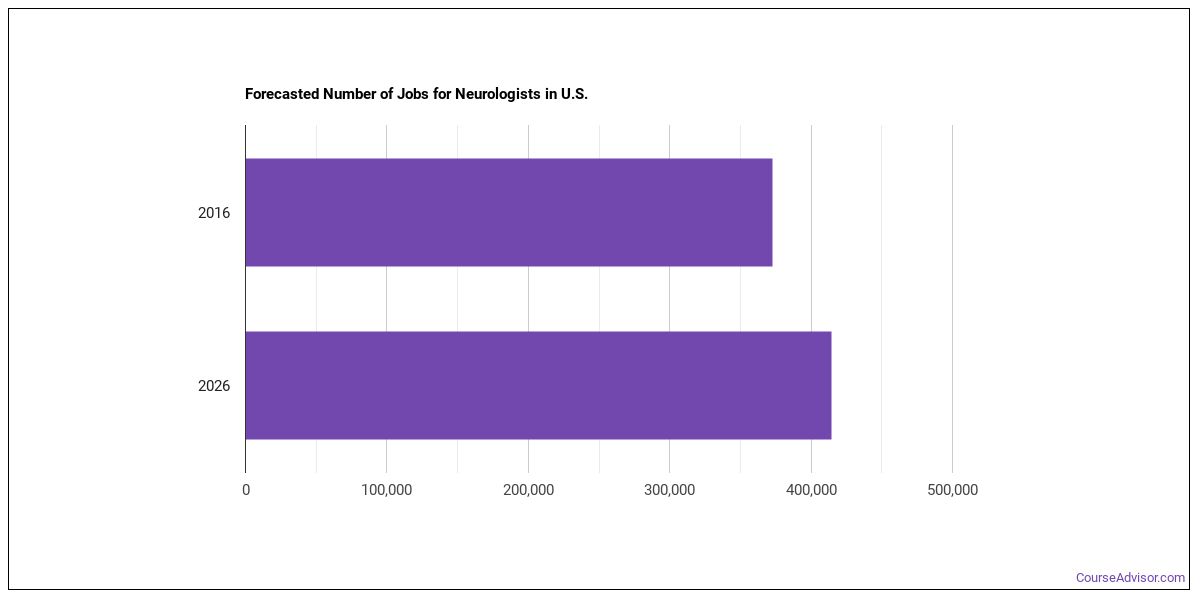
There are roughly 151,087 neurologists working in the United States today. Employment is projected to grow by +14.5% over the projection horizon.
Salary for Neurologists
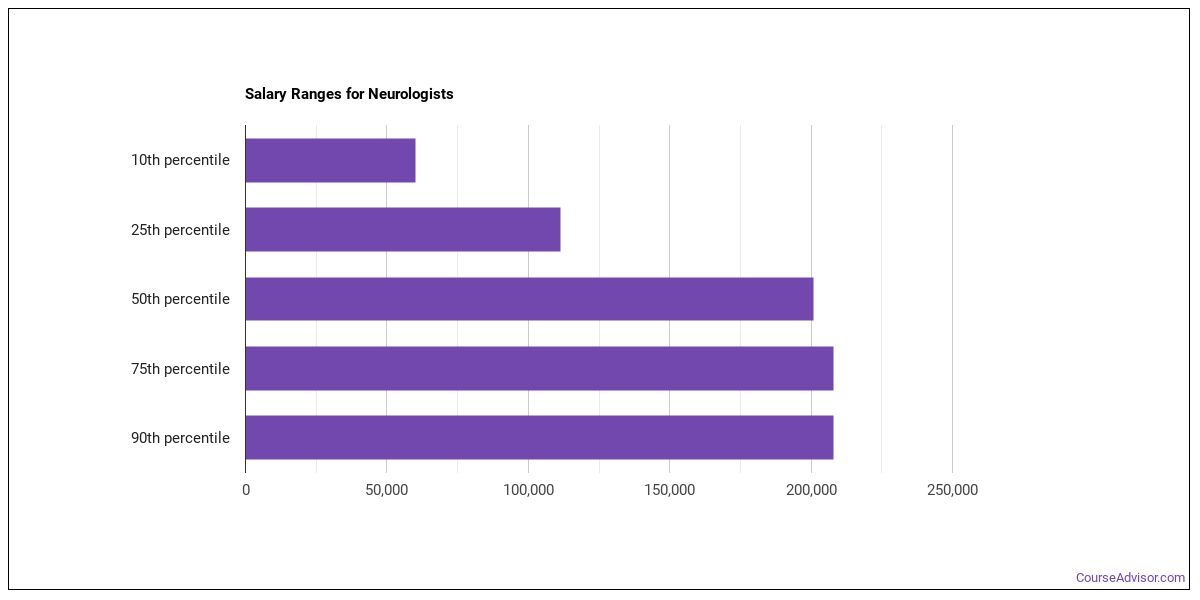
| Statistic | Value |
|---|---|
| Annual median | $159,086 |
| Hourly median | $76.48 |
| 10th percentile | $107,679 |
| 25th percentile | $133,382 |
| 75th percentile | $184,790 |
| 90th percentile | $210,493 |
Wages vary widely based on experience, location, and industry.
Neurologists Salary by State
| State | Annual median salary |
|---|---|
| Massachusetts | $234,660 |
| Tennessee | $228,350 |
| New York | $214,820 |
| New Jersey | $213,200 |
| Florida | $165,860 |
| Pennsylvania | $140,970 |
| California | $124,830 |
Pay by U.S. Region
Earnings for neurologists shift depending on where you work. These regions lead on median pay:
| Region | Median annual wage | Share of U.S. jobs | Location quotient |
|---|---|---|---|
| Middle Atlantic | $190,103 | 25.9% | 2.03 |
| New England | $126,021 | 9.4% | 1.89 |
| Southeast | $65,565 | 17.6% | 1.29 |
Top Metro Areas
| Metro area | State | Median annual wage | Employment |
|---|---|---|---|
| Hartford-West Hartford-East Hartford, CT | CT | $231,420 | 80 |
| Worcester, MA | MA | $228,470 | 60 |
| Boston-Cambridge-Newton, MA-NH | MA | $228,070 | 180 |
| New York-Newark-Jersey City, NY-NJ | NY | $214,820 | 920 |
Which Industries Hire Neurologists
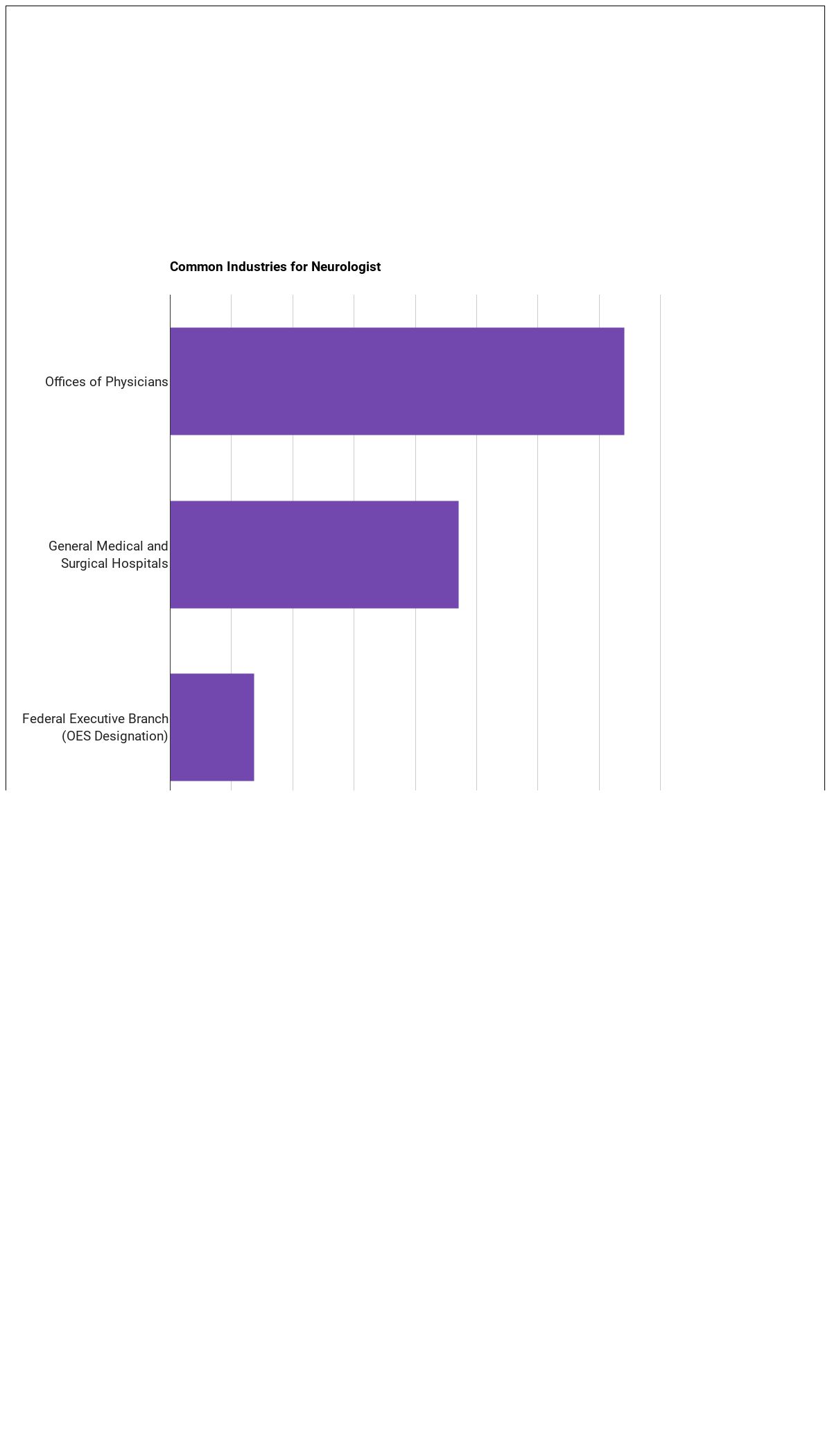
The bulk of neurologists are found across these industries:
| Industry | Employment | Median annual wage |
|---|---|---|
| Health Care and Social Assistance | 7,150 | n/a |
| Educational Services | 210 | $80,090 |
Neurologists work in the following industries:
Tools and Technology
- Medical software: eClinicalWorks EHR software (hot technology)
- Medical software: Epic Systems (hot technology)
- Spreadsheet software: Microsoft Excel (hot technology)
- Office suite software: Microsoft Office software (hot technology)
- Presentation software: Microsoft PowerPoint (hot technology)
- Word processing software: Microsoft Word (hot technology)
Work Environment
The work environment for neurologists reflects the following characteristics:
- Face-to-Face Discussions with Individuals and Within Teams
- Importance of Being Exact or Accurate
- Freedom to Make Decisions
- Contact With Others
- Impact of Decisions on Co-workers or Company Results
Education and Training
This career aligns with Extensive Preparation Needed (Job Zone 5), indicating the level of preparation typically expected.
Other Careers to Consider
Similar Occupations
- Neuropsychologists (Primary-Long)
- Clinical Neuropsychologists (Primary-Long)
- Chiropractors (Supplemental)
- Physician Assistants (Supplemental)
- Nurse Practitioners (Supplemental)
- Anesthesiologists (Supplemental)
- Cardiologists (Primary-Short)
- Dermatologists (Supplemental)
Degree Programs
Students preparing for neurologists commonly pursue programs in:
10 programs across 2 majors
Health Professions and Related Programs
2 programs across 1 majors
Sources
Data on this page comes from the following authoritative sources:
- U.S. Bureau of Labor Statistics — Occupational Employment and Wage Statistics (OEWS) for employment and wage data by state and industry.
- BLS Employment Projections for total employment and growth forecasts.
- O*NET (Occupational Information Network) for skills, knowledge, tasks, work activities, work context, technology, and education-zone data.
SOC code: 29-1217.00 (Neurologists).

Course Advisor provides higher-education, college and university, degree, program, career, salary, and other helpful information to students, faculty, institutions, and other internet audiences. Presented information and data are subject to change. Inclusion on this website does not imply or represent a direct relationship with the company, school, or brand. Information, though believed correct at time of publication, may not be correct, and no warranty is provided. Contact the schools to verify any information before relying on it. Financial aid may be available for those who qualify. The displayed options may include sponsored or recommended results, not necessarily based on your preferences.
© Course Advisor – All Rights Reserved.