Dermatologists: Job Description
Diagnose and treat diseases relating to the skin, hair, and nails. May perform both medical and dermatological surgery functions.
Featured schools near , edit
What Do Dermatologists Do?
The core tasks performed by dermatologists include:
- Conduct complete skin examinations.
- Diagnose and treat pigmented lesions such as common acquired nevi, congenital nevi, dysplastic nevi, Spitz nevi, blue nevi, or melanoma.
- Perform incisional biopsies to diagnose melanoma.
- Perform skin surgery to improve appearance, make early diagnoses, or control diseases such as skin cancer.
- Counsel patients on topics such as the need for annual dermatologic screenings, sun protection, skin cancer awareness, or skin and lymph node self-examinations.
- Diagnose and treat skin conditions such as acne, dandruff, athlete's foot, moles, psoriasis, or skin cancer.
- Record patients' health histories.
- Recommend diagnostic tests based on patients' histories and physical examination findings.
Skills and Knowledge
Successful dermatologists rely on a mix of skills and domain knowledge.
Key Skills
The competencies that matter most in this role, rated on an importance scale of 0 to 5:
Knowledge Areas
Related Job Titles
People in this occupation may also be known by titles such as:
- Board Certified Dermatologist
- Clinical Dermatologist
- DO Physician (Doctor of Osteopathic Medicine Physician)
- Dermatological Surgeon
- Dermatologist
- Dermatologist MD (Dermatologist Medical Doctor)
- Dermatologist Physician
- Dermatology Physician
How Many Dermatologists Are There?
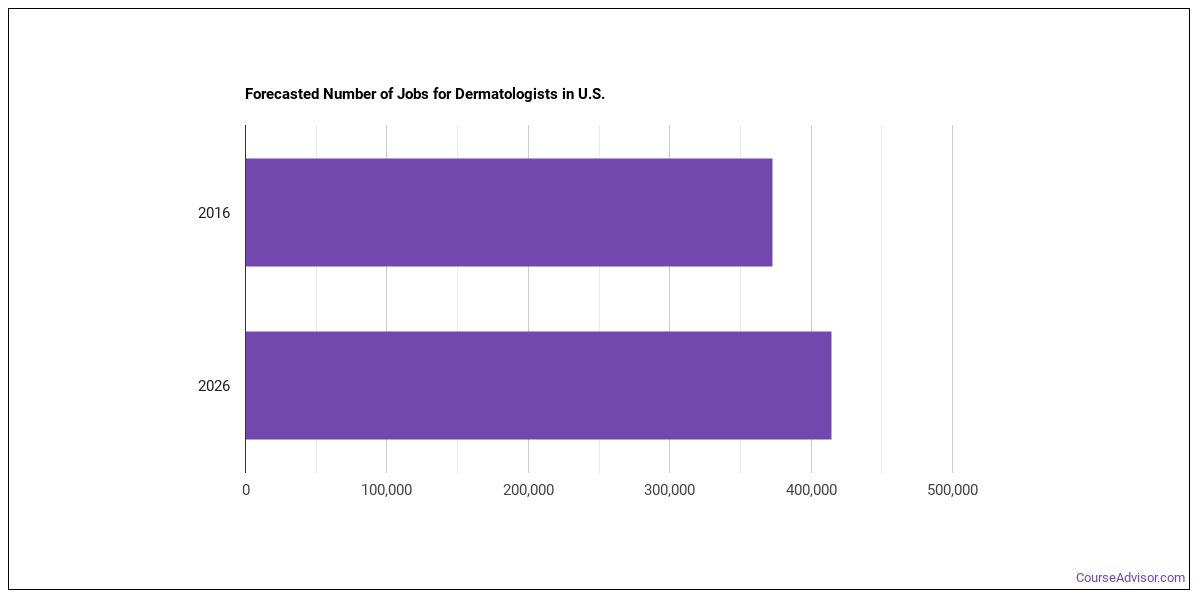
There are roughly 246,475 dermatologists working in the United States today. This occupation is expected to decline by -0.9% over the projection horizon.
Salary for Dermatologists
| Statistic | Value |
|---|---|
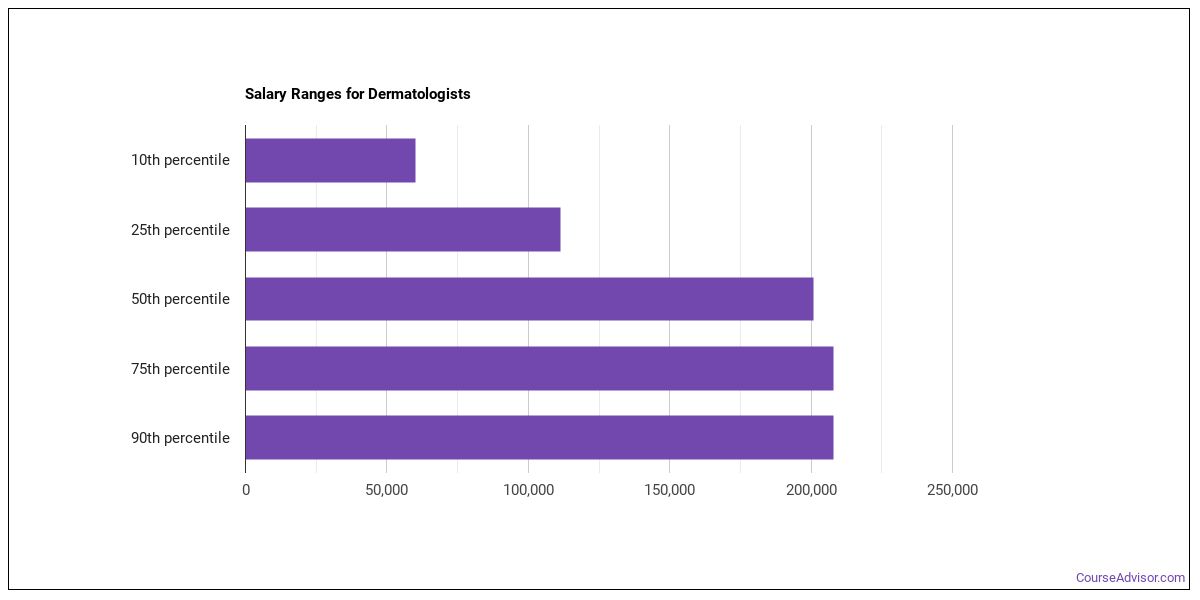
| Annual median | $66,262 |
| Hourly median | $31.86 |
| 10th percentile | $38,289 |
| 25th percentile | $52,275 |
| 75th percentile | $80,248 |
| 90th percentile | $94,235 |
Pay can vary substantially based on experience, location, and industry.
How Much Do Dermatologists Make in Different U.S. States?
| State | Annual median salary |
|---|---|
| West Virginia | $215,740 |
| Virginia | $187,150 |
| Texas | $172,510 |
Top-Paying U.S. Regions
Earnings for dermatologists differ across the country. The following regions pay the most:
| Region | Median annual wage | Share of U.S. jobs | Location quotient |
|---|---|---|---|
| Southwest | $172,510 | 16.6% | 0.82 |
| Southeast | $35,956 | 8.1% | 0.84 |
Industry Breakdown
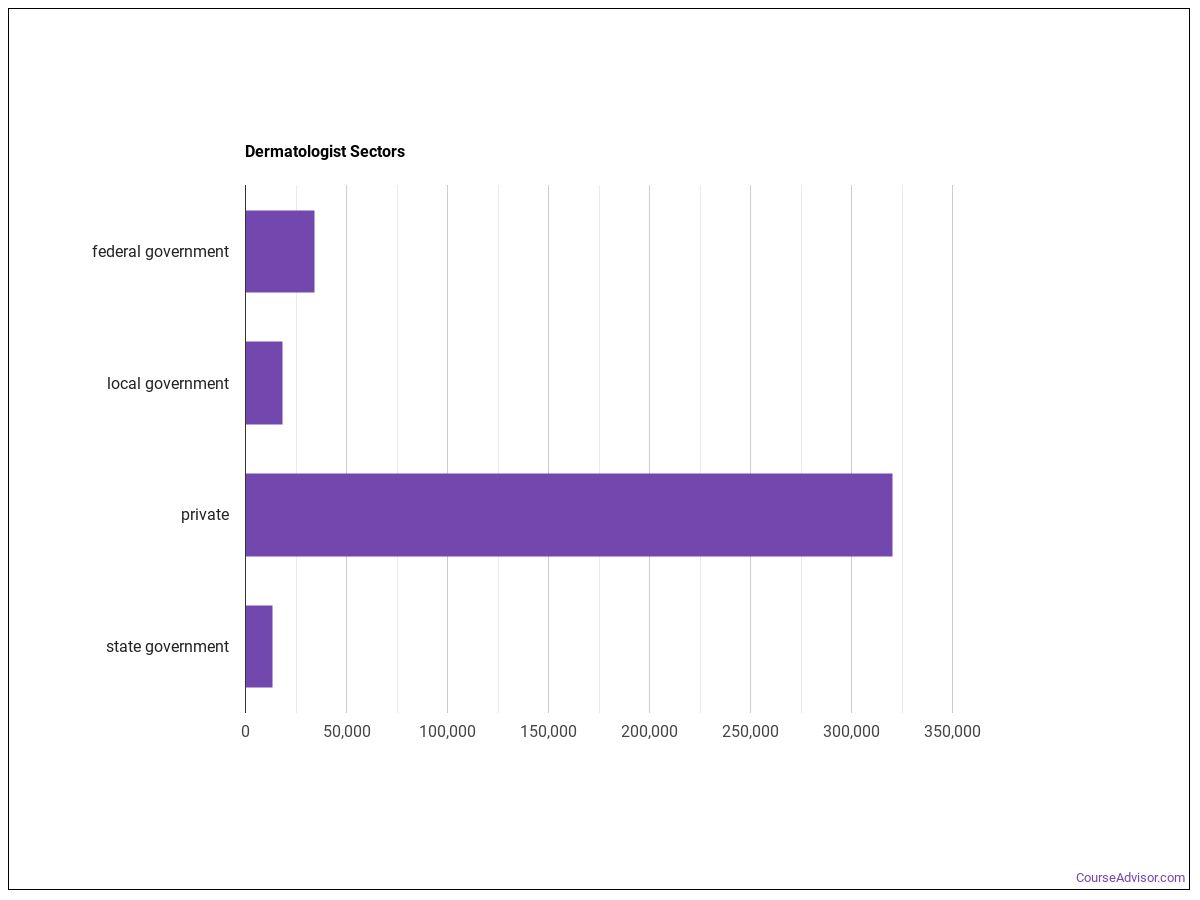
The largest employers of dermatologists work in these industries:
| Industry | Employment | Median annual wage |
|---|---|---|
| Health Care and Social Assistance | 9,700 | n/a |
| Other Services (except Public Administration) | 110 | $155,080 |
| Educational Services | 70 | $74,020 |
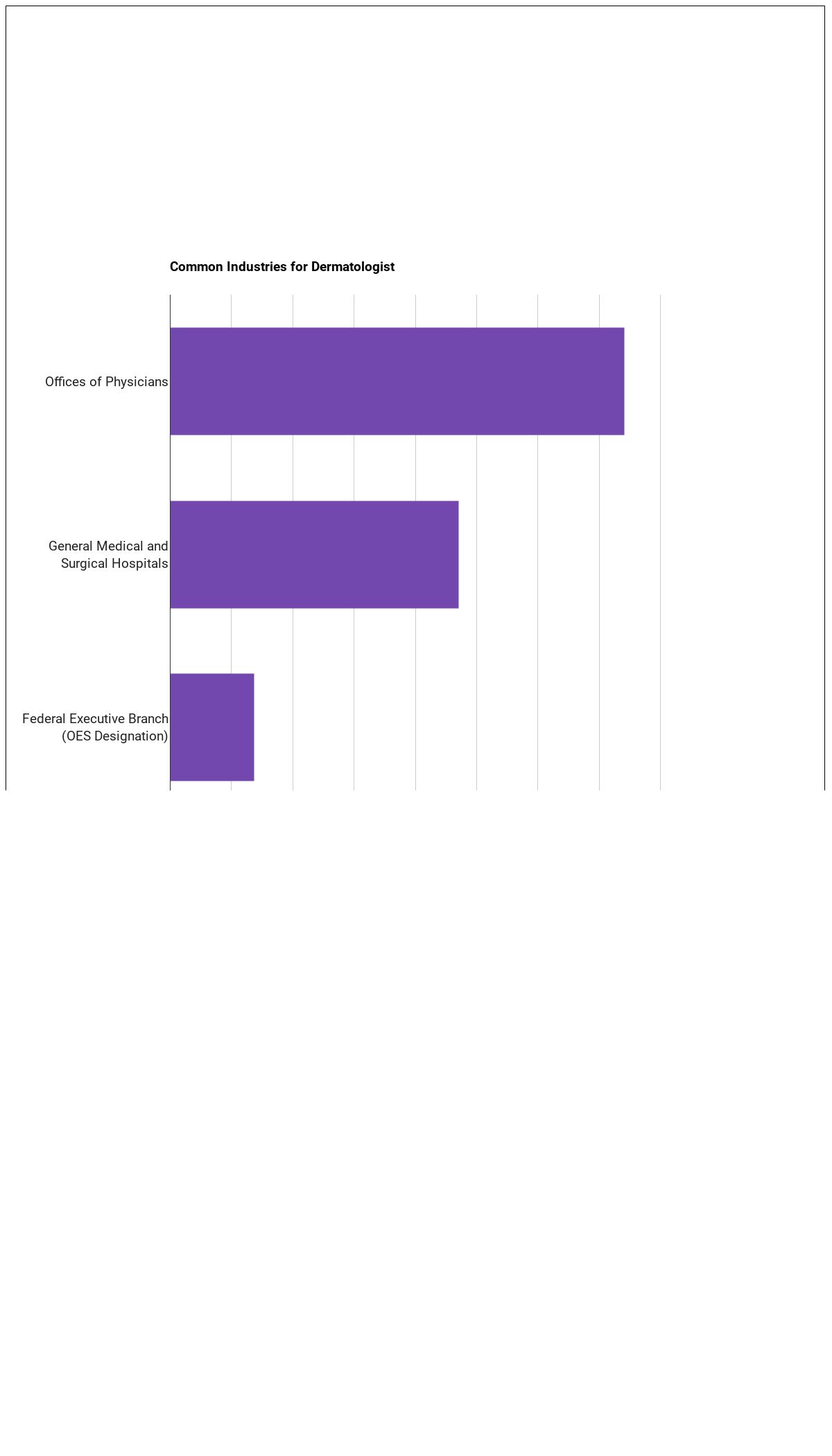
Below are examples of industries where dermatologists work:
Software Dermatologists Use
- Video conferencing software: Cisco Webex (hot technology)
- Medical software: eClinicalWorks EHR software (hot technology)
- Spreadsheet software: Microsoft Excel (hot technology)
- Office suite software: Microsoft Office software (hot technology)
- Word processing software: Microsoft Word (hot technology)
- Video conferencing software: Zoom (hot technology)
What the Workplace Is Like
The on-the-job environment of dermatologists tends to involve the following characteristics:
- Freedom to Make Decisions
- Face-to-Face Discussions with Individuals and Within Teams
- Contact With Others
- Deal With External Customers or the Public in General
- Wear Common Protective or Safety Equipment such as Safety Shoes, Glasses, Gloves, Hearing Protection, Hard Hats, or Life Jackets
How to Become Dermatologists
This career aligns with Extensive Preparation Needed (Job Zone 5), indicating the level of preparation typically expected.
Other Careers to Consider
Similar Occupations
- Chiropractors (Supplemental)
- Oral and Maxillofacial Surgeons (Primary-Long)
- Optometrists (Supplemental)
- Physician Assistants (Supplemental)
- Podiatrists (Supplemental)
- Nurse Practitioners (Supplemental)
- Anesthesiologists (Supplemental)
- Cardiologists (Primary-Short)
Top Programs to Study For This Career
Aspiring dermatologists typically earn programs in:
5 programs across 2 majors
Health Professions and Related Programs
2 programs across 1 majors
Sources
This profile draws on the following authoritative sources:
- U.S. Bureau of Labor Statistics — Occupational Employment and Wage Statistics (OEWS) for employment and wage data by state and industry.
- BLS Employment Projections for total employment and growth forecasts.
- O*NET (Occupational Information Network) for skills, knowledge, tasks, work activities, work context, technology, and education-zone data.
SOC code: 29-1213.00 (Dermatologists).

Course Advisor provides higher-education, college and university, degree, program, career, salary, and other helpful information to students, faculty, institutions, and other internet audiences. Presented information and data are subject to change. Inclusion on this website does not imply or represent a direct relationship with the company, school, or brand. Information, though believed correct at time of publication, may not be correct, and no warranty is provided. Contact the schools to verify any information before relying on it. Financial aid may be available for those who qualify. The displayed options may include sponsored or recommended results, not necessarily based on your preferences.
© Course Advisor – All Rights Reserved.