Orthotists and Prosthetists in Mississippi
Want to work as an Orthotists and Prosthetists in Mississippi? Here’s what you need to know. Design, measure, fit, and adapt orthopedic braces, appliances or prostheses, such as limbs or facial parts for patients with disabling conditions.
What do Orthotists and Prosthetists Make in Mississippi?
The orthotists and prosthetists working in Mississippi, the typical annual salary is $89,860 per year (or roughly $43.20/hour).Earnings range from $67,100 at the 10th percentile to $122,950 at the 90th percentile.
| Wage Statistic | Annual | Hourly |
|---|---|---|
| 10th percentile | $67,100 | $32.26 |
| 25th percentile | $77,430 | $37.23 |
| Median (50th) | $89,860 | $43.20 |
| 75th percentile | $113,640 | $54.64 |
| 90th percentile | $122,950 | $59.11 |

The job concentration index in Mississippi relative to the national average — is 1.08.
National Wage Comparison
Nationally, orthotists and prosthetists earn a median of $86,860 per year ($41.76/hour), above the Mississippi median.

Employment Outlook
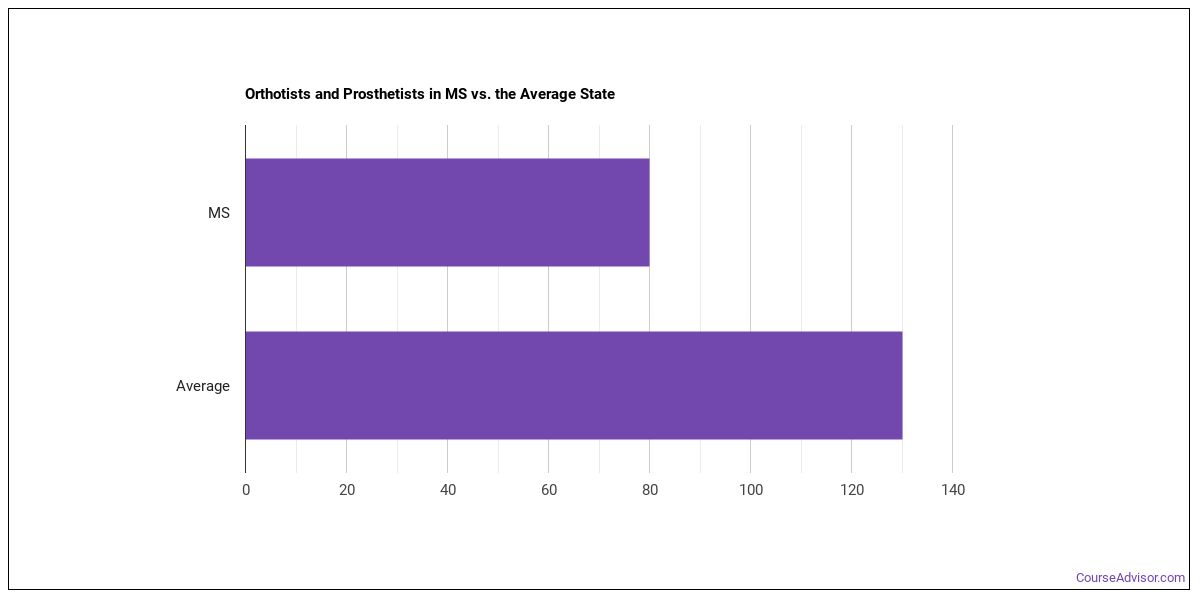
There are roughly 2,935,413 orthotists and prosthetists across the United States. In Mississippi alone, about 80 people work in this role. That’s below the typical state, which employs around 130 orthotists and prosthetists.

Top States for Orthotists and Prosthetists Employment
View the states that employ the most orthotists and prosthetists work.
| State | Number Employed |
|---|---|
| California | 1,370 |
| Pennsylvania | 570 |
| North Carolina | 460 |
| Washington | 420 |
| Ohio | 410 |
| New York | 410 |
| Michigan | 400 |
| Texas | 400 |
| Florida | 350 |
| Missouri | 310 |
| Massachusetts | 240 |
| Georgia | 190 |
| Illinois | 180 |
| New Jersey | 180 |
| New Hampshire | 180 |
| Virginia | 180 |
| Wisconsin | 150 |
| Maine | 140 |
| Minnesota | 140 |
| District of Columbia | 130 |
Highest-Paying States for Orthotists and Prosthetists
These states pay the most for orthotists and prosthetists.
| State | Annual Median Salary |
|---|---|
| New Jersey | $110,760 |
| Maine | $98,520 |
| Utah | $92,070 |
| California | $91,870 |
| Alabama | $90,690 |
| Washington | $90,240 |
| Mississippi | $89,860 |
| South Carolina | $89,860 |
| Massachusetts | $86,510 |
| Wisconsin | $86,290 |
Skills
The most important orthotists and prosthetists skills, rated on an importance scale of 0 to 5:
Knowledge Areas
Important knowledge areas for this occupation, rated on an importance scale of 0 to 5:
Abilities
Key abilities for orthotists and prosthetists, rated on an importance scale of 0 to 5:
Daily Tasks
Day-to-day, orthotists and prosthetists typically:
- Fit, test, and evaluate devices on patients, and make adjustments for proper fit, function, and comfort.
- Instruct patients in the use and care of orthoses and prostheses.
- Maintain patients' records.
- Examine, interview, and measure patients to determine their appliance needs and to identify factors that could affect appliance fit.
- Select materials and components to be used, based on device design.
- Design orthopedic and prosthetic devices, based on physicians' prescriptions and examination and measurement of patients.
- Repair, rebuild, and modify prosthetic and orthopedic appliances.
- Construct and fabricate appliances, or supervise others constructing the appliances.
- Make and modify plaster casts of areas to be fitted with prostheses or orthoses to guide the device construction process.
- Confer with physicians to formulate specifications and prescriptions for orthopedic or prosthetic devices.
- Show and explain orthopedic and prosthetic appliances to healthcare workers.
- Train and supervise support staff, such as orthopedic and prosthetic assistants and technicians.
Work Activities
- Documenting/Recording Information
- Assisting and Caring for Others
- Making Decisions and Solving Problems
- Performing for or Working Directly with the Public
- Communicating with Supervisors, Peers, or Subordinates
- Working with Computers
- Getting Information
- Organizing, Planning, and Prioritizing Work
- Processing Information
- Inspecting Equipment, Structures, or Materials
- Updating and Using Relevant Knowledge
- Thinking Creatively
Tools & Technology
Software and systems commonly involved: Hot technologies: Autodesk AutoCAD
What Major Will Prepare You For This Career?
Several college majors map to this occupation:
- Rehabilitation Professions
Featured schools near , edit
Related Careers
Careers similar to orthotists and prosthetists include:
- Orthodontists
- Prosthodontists
- Anesthesiologist Assistants
- Podiatrists
- Physical Therapists
- Nurse Anesthetists
Also Known As
American Board Certified Orthotist (ABC Orthotist), Artificial Limb Fitter, Board Orthotist, Board Prosthetist, Certified Orthotic Fitter, Certified Orthotist (CO), Certified Pedorthist, Certified Prosthetist (CP), Certified Prosthetist Orthotist (CPO), LPO (Licensed Prosthetist Orthotist), Licensed Orthotist, Licensed Prosthetist, Orthopedic Assistant, Orthopedic Mechanic, Orthotic Clinician.
References
- U.S. Bureau of Labor Statistics, Occupational Employment and Wage Statistics — https://www.bls.gov/oes/
- O*NET Online — https://www.onetonline.org/
- BLS Employment Projections — https://www.bls.gov/emp/
- O*NET-SOC code: 29-2091.00

Course Advisor provides higher-education, college and university, degree, program, career, salary, and other helpful information to students, faculty, institutions, and other internet audiences. Presented information and data are subject to change. Inclusion on this website does not imply or represent a direct relationship with the company, school, or brand. Information, though believed correct at time of publication, may not be correct, and no warranty is provided. Contact the schools to verify any information before relying on it. Financial aid may be available for those who qualify. The displayed options may include sponsored or recommended results, not necessarily based on your preferences.
© Course Advisor – All Rights Reserved.