Industrial Engineers in Oregon
Want to work as an Industrial Engineers in Oregon? Below are the key facts. Design, develop, test, and evaluate integrated systems for managing industrial production processes, including human work factors, quality control, inventory control, logistics and material flow, cost analysis, and production coordination. Excludes “Health and Safety Engineers, Except Mining Safety Engineers and Inspectors” (17-2111).
What do Industrial Engineers Make in Oregon?
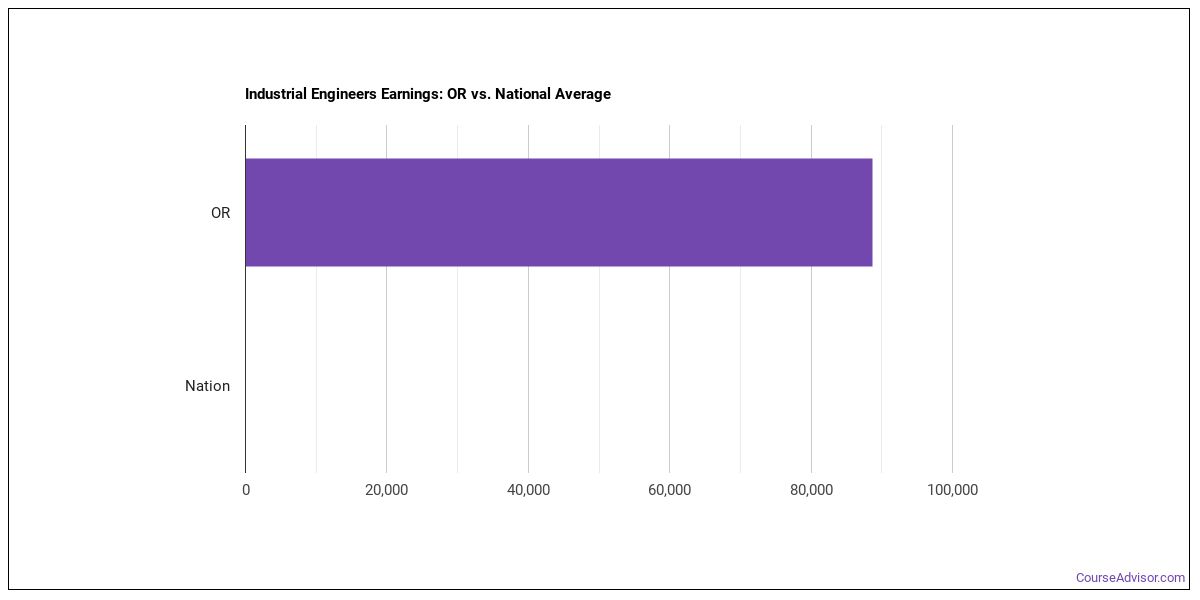
For a industrial engineers working in Oregon, the typical annual salary is $124,560 per year (or roughly $59.88/hour).Annual wages span from $79,310 at the 10th percentile to $207,180 at the 90th percentile.
| Wage Statistic | Annual | Hourly |
|---|---|---|
| 10th percentile | $79,310 | $38.13 |
| 25th percentile | $97,720 | $46.98 |
| Median (50th) | $124,560 | $59.88 |
| 75th percentile | $161,600 | $77.69 |
| 90th percentile | $207,180 | $99.61 |

The location quotient — a measure of how concentrated this occupation is in Oregon relative to the national average — is 1.33, indicating that industrial engineers are more concentrated here than the national average.
National Wage Comparison
Nationally, industrial engineers earn a median of $120,863 per year ($58.11/hour), above the Oregon median.
Employment Outlook
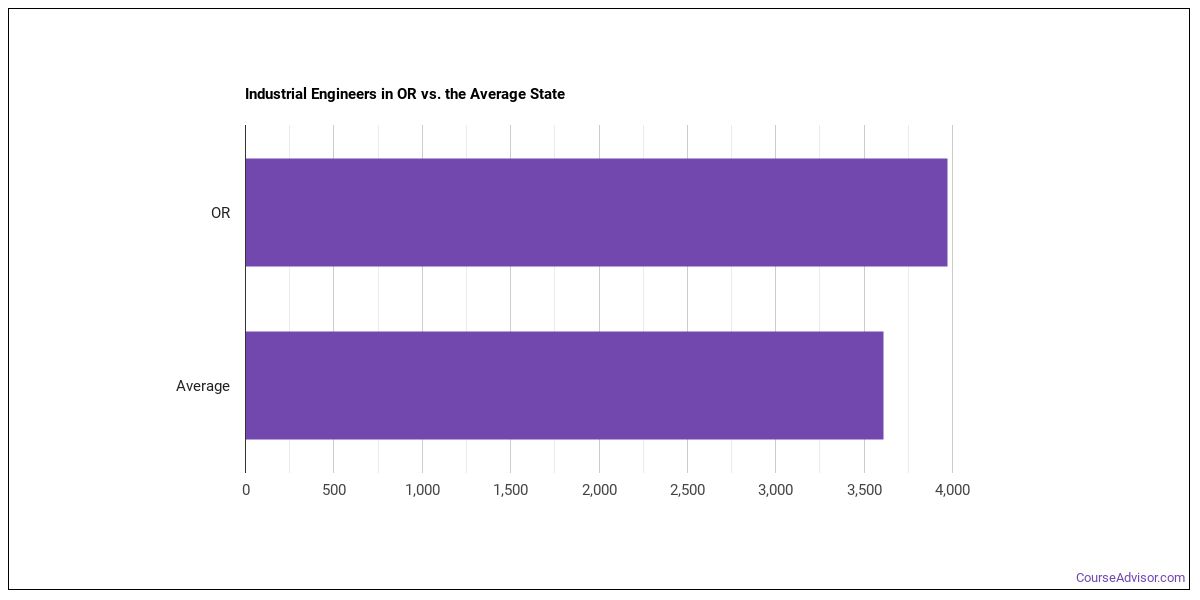
Nationally, total employment in this occupation is 199,768 industrial engineers in the U.S.. In Oregon alone, approximately 5,950 people work in this role. That’s more than the typical state, which employs around 4,950 industrial engineers.

Top Oregon Metros for Industrial Engineers
The largest metro-area employers of industrial engineers in Oregon.
| Metro Area | Number Employed | Annual Median Salary |
|---|---|---|
| Portland-Vancouver-Hillsboro, OR-WA | 5,440 | $126,530 |
| Bend, OR | 170 | $92,010 |
| Eugene-Springfield, OR | 130 | $95,870 |
| Albany, OR | 100 | $96,960 |
| Salem, OR | 100 | $96,240 |
| Medford, OR | 70 | $92,020 |
| Corvallis, OR | 30 | $89,460 |
Top States for Industrial Engineers Employment
These states have the highest employment of industrial engineers work.
| State | Number Employed |
|---|---|
| Michigan | 31,850 |
| Texas | 29,620 |
| California | 25,830 |
| Ohio | 22,310 |
| Minnesota | 18,000 |
| Illinois | 16,590 |
| Florida | 15,310 |
| Wisconsin | 12,660 |
| New York | 12,640 |
| Pennsylvania | 12,550 |
| North Carolina | 11,620 |
| Indiana | 10,990 |
| Massachusetts | 10,650 |
| Alabama | 8,040 |
| Georgia | 7,410 |
| Arizona | 7,320 |
| South Carolina | 7,270 |
| Tennessee | 7,200 |
| Washington | 6,800 |
| New Jersey | 6,280 |
Highest-Paying States for Industrial Engineers
Where industrial engineers earn the most: industrial engineers.
| State | Annual Median Salary |
|---|---|
| Alaska | $142,980 |
| Louisiana | $126,960 |
| Oregon | $124,560 |
| California | $123,070 |
| Wyoming | $122,540 |
| Washington | $119,670 |
| New Mexico | $119,390 |
| District of Columbia | $118,960 |
| Delaware | $118,670 |
| Idaho | $112,490 |
Skills
The most important industrial engineers skills, rated on an importance scale of 0 to 5:
Knowledge Areas
Core knowledge areas for this occupation, rated on an importance scale of 0 to 5:
Abilities
The abilities that matter most for industrial engineers, rated on an importance scale of 0 to 5:
Daily Tasks
Industrial Engineers typically:
- Estimate production costs, cost saving methods, and the effects of product design changes on expenditures for management review, action, and control.
- Plan and establish sequence of operations to fabricate and assemble parts or products and to promote efficient utilization.
- Analyze statistical data and product specifications to determine standards and establish quality and reliability objectives of finished product.
- Confer with clients, vendors, staff, and management personnel regarding purchases, product and production specifications, manufacturing capabilities, or project status.
- Communicate with management and user personnel to develop production and design standards.
- Evaluate precision and accuracy of production and testing equipment and engineering drawings to formulate corrective action plan.
- Recommend methods for improving utilization of personnel, material, and utilities.
- Record or oversee recording of information to ensure currency of engineering drawings and documentation of production problems.
- Draft and design layout of equipment, materials, and workspace to illustrate maximum efficiency using drafting tools and computer.
- Direct workers engaged in product measurement, inspection, and testing activities to ensure quality control and reliability.
- Develop manufacturing methods, labor utilization standards, and cost analysis systems to promote efficient staff and facility utilization.
- Review production schedules, engineering specifications, orders, and related information to obtain knowledge of manufacturing methods, procedures, and activities.
Work Activities
- Making Decisions and Solving Problems
- Working with Computers
- Getting Information
- Communicating with Supervisors, Peers, or Subordinates
- Thinking Creatively
- Identifying Objects, Actions, and Events
- Processing Information
- Analyzing Data or Information
- Monitoring Processes, Materials, or Surroundings
- Updating and Using Relevant Knowledge
- Organizing, Planning, and Prioritizing Work
- Drafting, Laying Out, and Specifying Technical Devices, Parts, and Equipment
Tools & Technology
Technologies frequently used: Hot technologies: Autodesk AutoCAD, Bentley MicroStation, C++, Dassault Systemes SolidWorks In-demand technologies: Autodesk AutoCAD
What Major Will Prepare You For This Career?
Several college majors map to this occupation:
- Industrial Engineering
- Systems Engineering
- Manufacturing Engineering
- Engineering-Related Fields
Featured schools near , edit
Related Careers
Careers similar to industrial engineers include:
- Industrial Production Managers
- Quality Control Systems Managers
- Architectural and Engineering Managers
- Logistics Engineers
- Project Management Specialists
- Electrical Engineers
Also Known As
Continuous Improvement Engineer, District Plant Engineer, Documentation Engineer, Efficiency Analyst, Efficiency Engineer, Efficiency Expert, Engineer, Engineering Inspector, Facilities Engineer, Factory Engineer, Factory Expert, Factory Lay Out Engineer, Factory Lay-Out Engineer, Field Engineer, Industrial Engineer.
References
- U.S. Bureau of Labor Statistics, Occupational Employment and Wage Statistics — https://www.bls.gov/oes/
- O*NET Online — https://www.onetonline.org/
- BLS Employment Projections — https://www.bls.gov/emp/
- O*NET-SOC code: 17-2112.00

Course Advisor provides higher-education, college and university, degree, program, career, salary, and other helpful information to students, faculty, institutions, and other internet audiences. Presented information and data are subject to change. Inclusion on this website does not imply or represent a direct relationship with the company, school, or brand. Information, though believed correct at time of publication, may not be correct, and no warranty is provided. Contact the schools to verify any information before relying on it. Financial aid may be available for those who qualify. The displayed options may include sponsored or recommended results, not necessarily based on your preferences.
© Course Advisor – All Rights Reserved.