Animal Scientists in Georgia
Thinking about a career as an Animal Scientists in Georgia? Here’s what you need to know. Conduct research in the genetics, nutrition, reproduction, growth, and development of domestic farm animals.
What do Animal Scientists Make in Georgia?
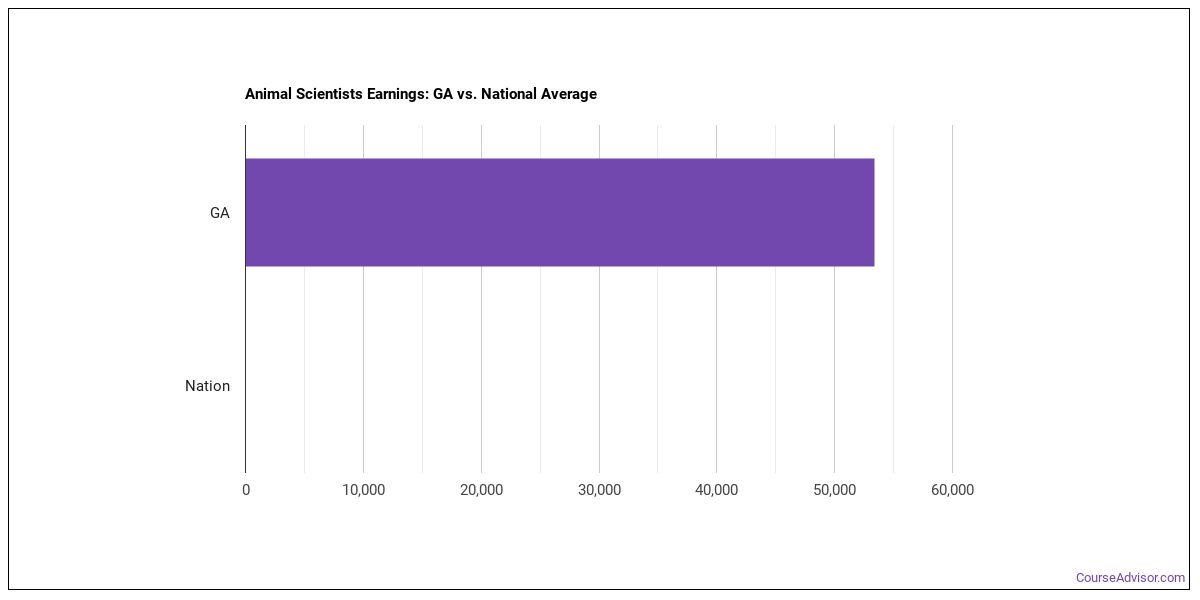
For animal scientists working in Georgia, the typical annual salary is $114,560 per year (or roughly $55.08/hour).Pay can range from $47,100 at the 10th percentile to $168,440 at the 90th percentile.
| Wage Statistic | Annual | Hourly |
|---|---|---|
| 10th percentile | $47,100 | $22.64 |
| 25th percentile | $47,100 | $22.64 |
| Median (50th) | $114,560 | $55.08 |
| 75th percentile | $134,090 | $64.47 |
| 90th percentile | $168,440 | $80.98 |

Location quotient — how concentrated this career is in Georgia relative to the national average — is 0.74, meaning fewer animal scientists per worker than the national average.
National Wage Comparison
Nationally, animal scientists earn a median of $93,823 per year ($45.11/hour), exceeding the Georgia median.
Employment Outlook
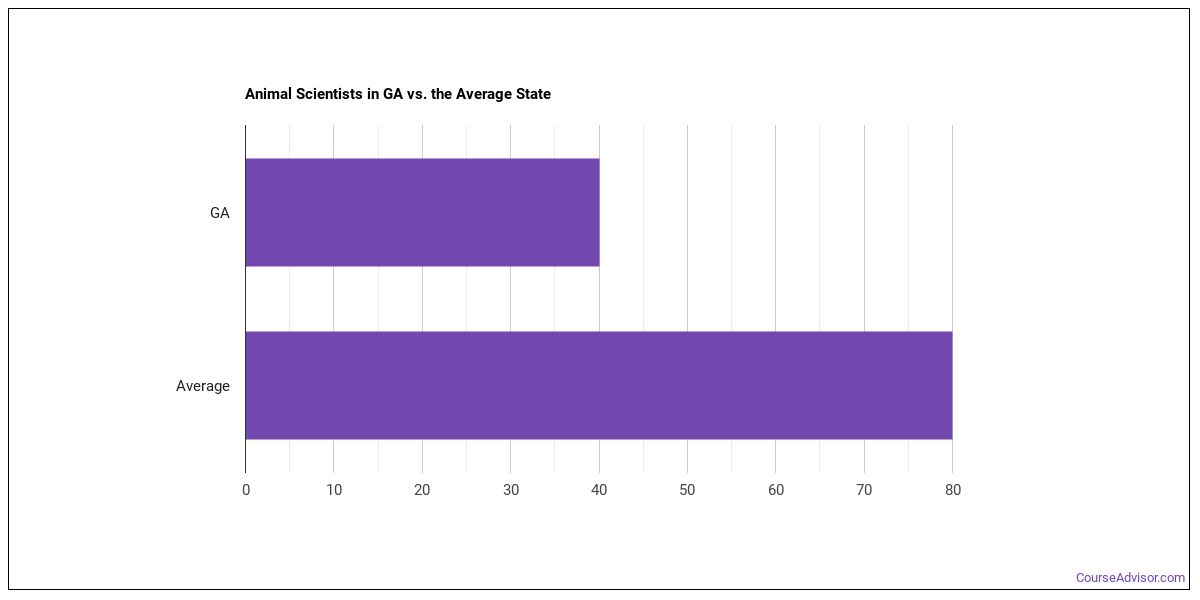
National employment for 78,475 animal scientists nationwide. In Georgia alone, about 60 people work in this role. That’s below the typical state, which employs around 90 animal scientists.

Top States for Animal Scientists Employment
The table below shows the states where the most animal scientists work.
| State | Number Employed |
|---|---|
| Wisconsin | 230 |
| Maryland | 200 |
| Nebraska | 190 |
| Illinois | 160 |
| Iowa | 130 |
| Michigan | 120 |
| Pennsylvania | 90 |
| South Dakota | 80 |
| Georgia | 60 |
| Texas | 60 |
| Minnesota | 60 |
| Washington | 40 |
| Ohio | 40 |
| Florida | 40 |
Highest-Paying States for Animal Scientists
The highest-paying states for animal scientists.
| State | Annual Median Salary |
|---|---|
| Minnesota | $138,030 |
| Missouri | $119,110 |
| Georgia | $114,560 |
| Iowa | $95,680 |
| New York | $87,390 |
| Texas | $84,010 |
| Wisconsin | $79,750 |
| Washington | $78,660 |
| Pennsylvania | $77,130 |
| Maryland | $73,560 |
Skills
The most important animal scientists skills, rated on an importance scale of 0 to 5:
Knowledge Areas
Key knowledge areas for this occupation, rated on an importance scale of 0 to 5:
Abilities
The abilities that matter most for animal scientists, rated on an importance scale of 0 to 5:
Daily Tasks
Animal Scientists typically:
- Study nutritional requirements of animals and nutritive values of animal feed materials.
- Write up or orally communicate research findings to the scientific community, producers, and the public.
- Develop improved practices in feeding, housing, sanitation, or parasite and disease control of animals.
- Advise producers about improved products and techniques that could enhance their animal production efforts.
- Conduct research concerning animal nutrition, breeding, or management to improve products or processes.
- Study effects of management practices, processing methods, feed, or environmental conditions on quality and quantity of animal products, such as eggs and milk.
- Research and control animal selection and breeding practices to increase production efficiency and improve animal quality.
- Determine genetic composition of animal populations and heritability of traits, using principles of genetics.
- Crossbreed animals with existing strains or cross strains to obtain new combinations of desirable characteristics.
Work Activities
- Analyzing Data or Information
- Working with Computers
- Making Decisions and Solving Problems
- Getting Information
- Processing Information
- Interpreting the Meaning of Information for Others
- Updating and Using Relevant Knowledge
- Thinking Creatively
- Providing Consultation and Advice to Others
- Training and Teaching Others
- Communicating with People Outside the Organization
- Identifying Objects, Actions, and Events
Tools & Technology
Software and systems commonly involved: Hot technologies: Autodesk AutoCAD, ESRI ArcGIS software
What Major Will Prepare You For This Career?
Programs that train for this career include:
- Animal Science
- General Agriculture
- Veterinary Biomedical and Clinical Sciences
- Plant Sciences
- Agricultural Production
- Anthrozoology
Featured schools near , edit
Related Careers
Related occupations to animal scientists include:
- Farmers, Ranchers, and Other Agricultural Managers
- Food Scientists and Technologists
- Soil and Plant Scientists
- Biochemists and Biophysicists
- Microbiologists
- Zoologists and Wildlife Biologists
Also Known As
Animal Anatomist, Animal Behaviorist, Animal Biologist, Animal Geneticist, Animal Nutrition Consultant, Animal Nutritionist, Animal Scientist, Bacteriologist, Beef Cattle Nutritionist, Beef Cattle Specialist, Behaviorist, Companion Animal Nutritionist, Dairy Bacteriologist, Dairy Nutrition Consultant, Dairy Nutrition Specialist.
References
- U.S. Bureau of Labor Statistics, Occupational Employment and Wage Statistics — https://www.bls.gov/oes/
- O*NET Online — https://www.onetonline.org/
- BLS Employment Projections — https://www.bls.gov/emp/
- O*NET-SOC code: 19-1011.00

Course Advisor provides higher-education, college and university, degree, program, career, salary, and other helpful information to students, faculty, institutions, and other internet audiences. Presented information and data are subject to change. Inclusion on this website does not imply or represent a direct relationship with the company, school, or brand. Information, though believed correct at time of publication, may not be correct, and no warranty is provided. Contact the schools to verify any information before relying on it. Financial aid may be available for those who qualify. The displayed options may include sponsored or recommended results, not necessarily based on your preferences.
© Course Advisor – All Rights Reserved.