Career/Technical Education Teachers, Postsecondary in Rhode Island
Want to work as a Career/Technical Education Teachers, Postsecondary in Rhode Island? Here’s what you need to know. Teach vocational courses intended to provide occupational training below the baccalaureate level in subjects such as construction, mechanics/repair, manufacturing, transportation, or cosmetology, primarily to students who have graduated from or left high school. Teaching takes place in public or private schools whose primary business is academic or vocational education. Excludes “Training and Development Specialists” (13-1151), “Adult Basic Education, Adult Secondary Education, and English as a Second Language Instructors” (25-3011), and postsecondary teachers classified elsewhere in the 25-1000 minor group. Flight instructors are included with “Aircraft Pilots and Flight Engineers” (53-2010).
What do Career/Technical Education Teachers, Postsecondary Make in Rhode Island?
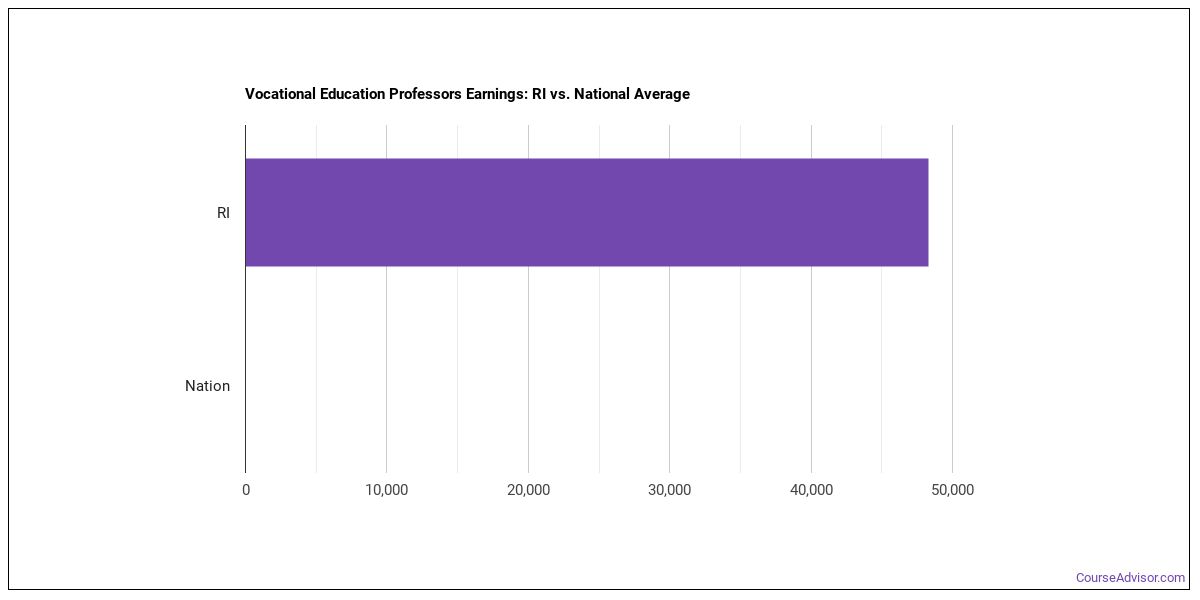
For a career/technical education teachers, postsecondary working in Rhode Island, the median annual wage is $63,100 per year (or about $30.34/hour).Earnings range from $47,870 at the 10th percentile to $96,040 at the 90th percentile.
| Wage Statistic | Annual | Hourly |
|---|---|---|
| 10th percentile | $47,870 | $23.01 |
| 25th percentile | $54,030 | $25.98 |
| Median (50th) | $63,100 | $30.34 |
| 75th percentile | $77,820 | $37.41 |
| 90th percentile | $96,040 | $46.17 |

The location quotient — a measure of how concentrated this occupation is in Rhode Island compared to the national average — is 0.84, suggesting fewer career/technical education teachers, postsecondary per worker than the national average.
National Wage Comparison
Nationally, career/technical education teachers, postsecondary earn a median of $86,398 per year ($41.54/hour), below the Rhode Island median.
Employment Outlook
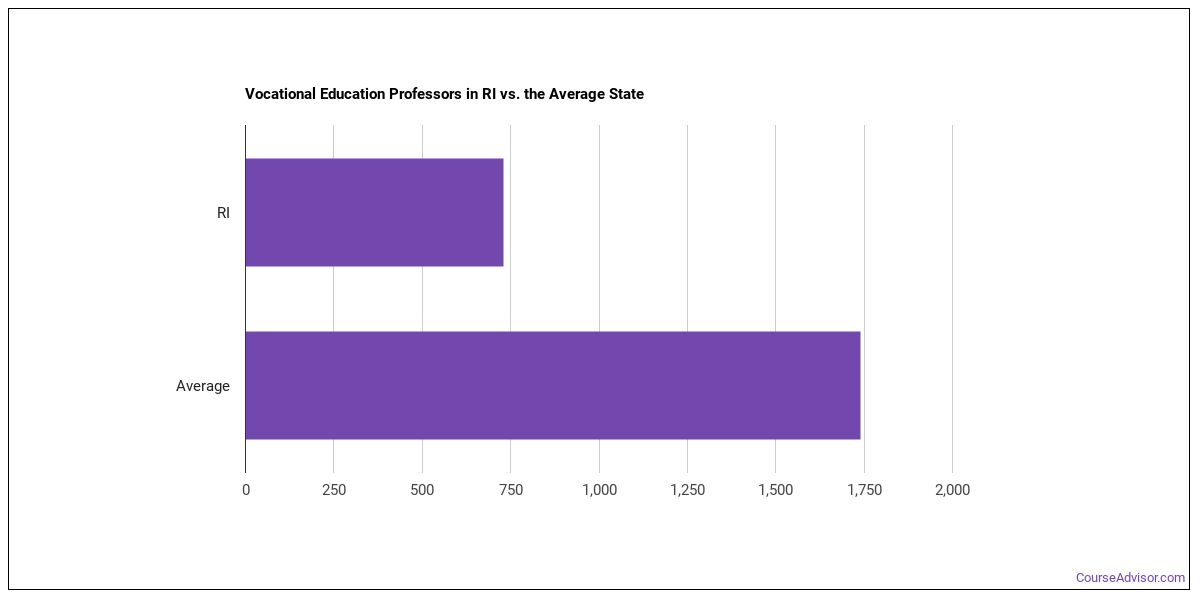
There are roughly 201,745 career/technical education teachers, postsecondary in the U.S.. In Rhode Island alone, approximately 300 people work in this role. That’s below the typical state, which employs around 1,340 career/technical education teachers, postsecondary.

Top Rhode Island Metros for Career/Technical Education Teachers, Postsecondary
The largest metro-area employers of career/technical education teachers, postsecondary in Rhode Island.
| Metro Area | Number Employed | Annual Median Salary |
|---|---|---|
| Providence-Warwick, RI-MA | 380 | $63,100 |
Top States for Career/Technical Education Teachers, Postsecondary Employment
These states have the highest employment of career/technical education teachers, postsecondary work.
| State | Number Employed |
|---|---|
| Texas | 12,150 |
| California | 9,110 |
| North Carolina | 7,660 |
| Florida | 7,300 |
| Pennsylvania | 4,890 |
| New York | 4,690 |
| Illinois | 4,590 |
| Ohio | 4,050 |
| Georgia | 4,010 |
| Washington | 3,610 |
| Michigan | 3,460 |
| Oklahoma | 2,890 |
| Utah | 2,800 |
| New Jersey | 2,620 |
| Virginia | 2,580 |
| Tennessee | 2,300 |
| Arizona | 2,250 |
| Indiana | 2,210 |
| Wisconsin | 2,000 |
| Alabama | 1,850 |
Highest-Paying States for Career/Technical Education Teachers, Postsecondary
Where career/technical education teachers, postsecondary earn the most: career/technical education teachers, postsecondary.
| State | Annual Median Salary |
|---|---|
| Wisconsin | $82,980 |
| New Hampshire | $81,330 |
| Oregon | $79,290 |
| New York | $76,980 |
| Massachusetts | $76,610 |
| Minnesota | $75,710 |
| California | $75,130 |
| South Carolina | $74,710 |
| New Jersey | $68,080 |
| Washington | $67,430 |
Skills
Key career/technical education teachers, postsecondary skills, rated on an importance scale of 0 to 5:
Knowledge Areas
Important knowledge areas for this occupation, rated on an importance scale of 0 to 5:
Abilities
Top abilities for career/technical education teachers, postsecondary, rated on an importance scale of 0 to 5:
Daily Tasks
Common tasks include:
- Observe and evaluate students' work to determine progress, provide feedback, and make suggestions for improvement.
- Present lectures and conduct discussions to increase students' knowledge and competence using visual aids, such as graphs, charts, videotapes, and slides.
- Supervise and monitor students' use of tools and equipment.
- Administer oral, written, or performance tests to measure progress and to evaluate training effectiveness.
- Provide individualized instruction and tutorial or remedial instruction.
- Prepare reports and maintain records, such as student grades, attendance rolls, and training activity details.
- Develop curricula and plan course content and methods of instruction.
- Determine training needs of students or workers.
- Supervise independent or group projects, field placements, laboratory work, or other training.
- Integrate academic and vocational curricula so that students can obtain a variety of skills.
- Select and assemble books, materials, supplies, and equipment for training, courses, or projects.
- Conduct on-the-job training classes or training sessions to teach and demonstrate principles, techniques, procedures, or methods of designated subjects.
Work Activities
- Training and Teaching Others
- Getting Information
- Updating and Using Relevant Knowledge
- Coaching and Developing Others
- Organizing, Planning, and Prioritizing Work
- Establishing and Maintaining Interpersonal Relationships
- Communicating with Supervisors, Peers, or Subordinates
- Evaluating Information to Determine Compliance with Standards
- Making Decisions and Solving Problems
- Interpreting the Meaning of Information for Others
- Providing Consultation and Advice to Others
- Communicating with People Outside the Organization
Tools & Technology
Technologies frequently used: Hot technologies: Google Docs In-demand technologies: Microsoft Office software
What Major Will Prepare You For This Career?
Related college programs include:
- Ground Transportation
- Computer Software Applications
- Teacher Education Subject Specific
- Fire Protection
- Animal Services
- Agricultural Mechanization
Featured schools near , edit
Related Careers
Careers similar to career/technical education teachers, postsecondary include:
- Training and Development Specialists
- Industrial Engineers
- Mechanical Engineers
- Industrial Engineering Technologists and Technicians
- Mechanical Engineering Technologists and Technicians
- Automotive Engineering Technicians
Also Known As
Accounting Teacher, Adjunct Instructor, Adult Education Instructor, Adult Education Teacher, After School Instructor, Apparel Machinery Instructor, Apparel Manufacture Instructor, Architectural Drafting Instructor, Assistant Professor, Associate Professor, Auto Body Repair Teacher, Auto Mechanics Teacher, Automotive Instructor, Automotive Service Management Teacher, Automotive Technology Instructor.
References
- U.S. Bureau of Labor Statistics, Occupational Employment and Wage Statistics — https://www.bls.gov/oes/
- O*NET Online — https://www.onetonline.org/
- BLS Employment Projections — https://www.bls.gov/emp/
- O*NET-SOC code: 25-1194.00

Course Advisor provides higher-education, college and university, degree, program, career, salary, and other helpful information to students, faculty, institutions, and other internet audiences. Presented information and data are subject to change. Inclusion on this website does not imply or represent a direct relationship with the company, school, or brand. Information, though believed correct at time of publication, may not be correct, and no warranty is provided. Contact the schools to verify any information before relying on it. Financial aid may be available for those who qualify. The displayed options may include sponsored or recommended results, not necessarily based on your preferences.
© Course Advisor – All Rights Reserved.