Transit and Railroad Police in Maryland
Considering working as a Transit and Railroad Police in Maryland? Here’s what you need to know. Protect and police railroad and transit property, employees, or passengers.
What do Transit and Railroad Police Make in Maryland?
The transit and railroad police working in Maryland, wages run about $86,650 per year (or about $41.66/hour).Pay can range from $64,150 at the 10th percentile to $120,700 at the 90th percentile.
| Wage Statistic | Annual | Hourly |
|---|---|---|
| 10th percentile | $64,150 | $30.84 |
| 25th percentile | $64,150 | $30.84 |
| Median (50th) | $86,650 | $41.66 |
| 75th percentile | $120,700 | $58.03 |
| 90th percentile | $120,700 | $58.03 |

Location quotient — how concentrated this career is in Maryland nationwide is 4.38, indicating that transit and railroad police are more concentrated here than the national average.
National Wage Comparison
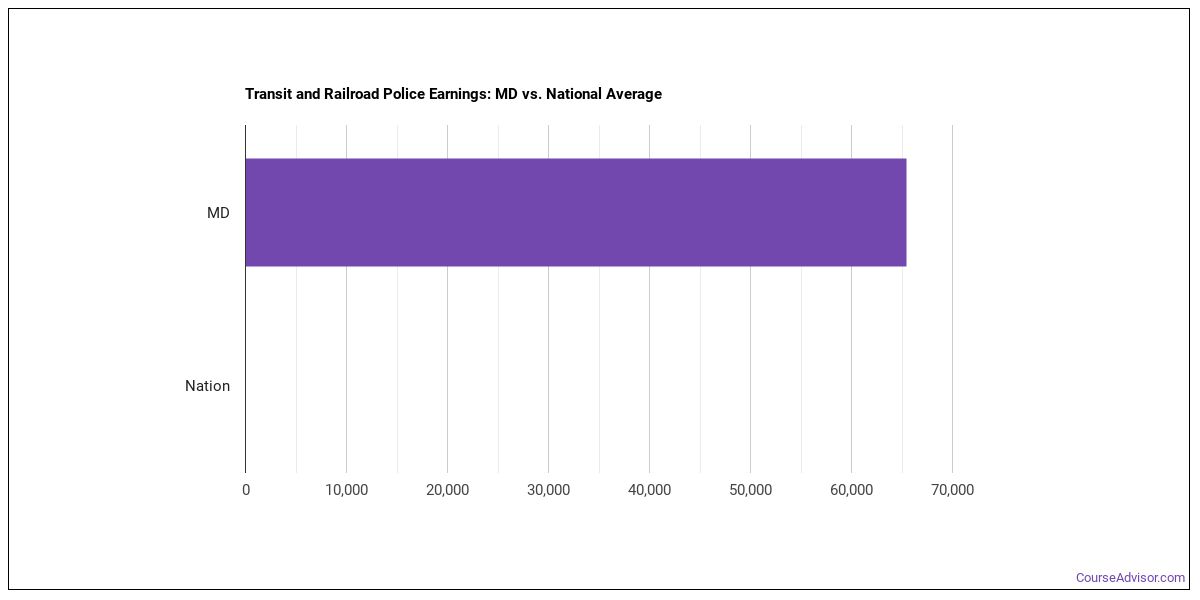
Nationally, transit and railroad police earn a median of $47,463 per year ($22.82/hour), above the Maryland median.
Employment Outlook
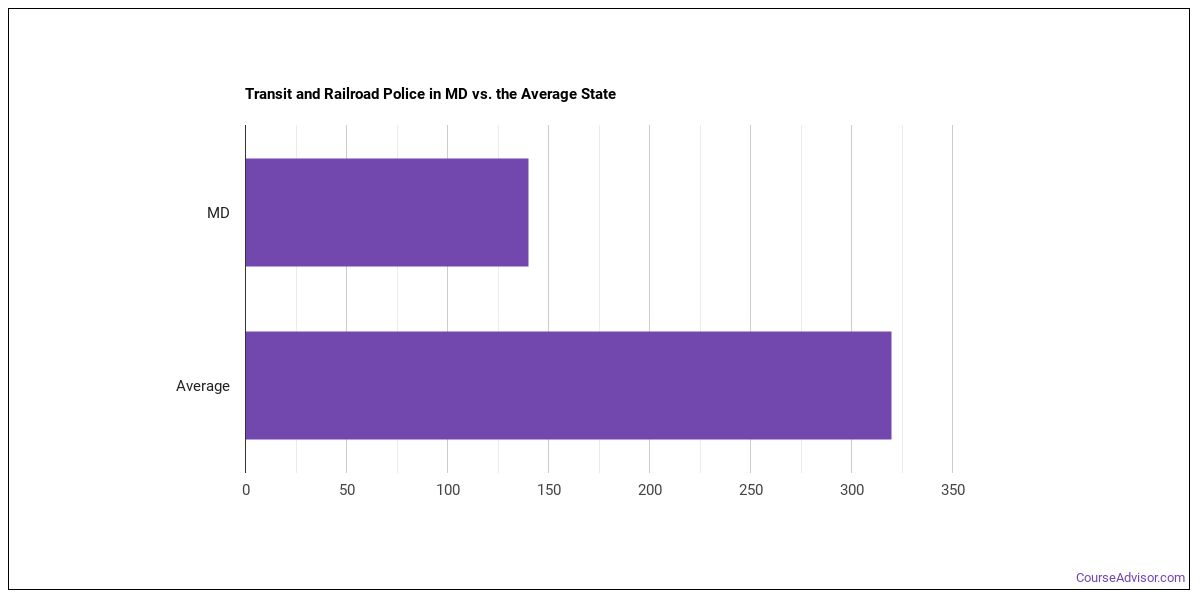
Nationally, total employment in this occupation is 151,400 transit and railroad police in the U.S.. In Maryland alone, about 230 people work in this role. That puts the state above the typical state, which employs around 100 transit and railroad police.

Top Maryland Metros for Transit and Railroad Police
These are the Maryland metros with the most transit and railroad police in Maryland.
| Metro Area | Number Employed | Annual Median Salary |
|---|---|---|
| Baltimore-Columbia-Towson, MD | 40 | $91,930 |
Top States for Transit and Railroad Police Employment
View the states that employ the most transit and railroad police work.
| State | Number Employed |
|---|---|
| New York | 970 |
| New Jersey | 320 |
| Maryland | 230 |
| California | 100 |
| Florida | 100 |
| Texas | 90 |
| Missouri | 80 |
| Colorado | 50 |
Highest-Paying States for Transit and Railroad Police
Where transit and railroad police earn the most: transit and railroad police.
| State | Annual Median Salary |
|---|---|
| California | $109,810 |
| Texas | $108,530 |
| New Jersey | $105,630 |
| New York | $105,510 |
| Maryland | $86,650 |
| Florida | $69,620 |
| Missouri | $68,640 |
| Colorado | $62,440 |
Skills
The most important transit and railroad police skills, rated on an importance scale of 0 to 5:
Knowledge Areas
Important knowledge areas for this occupation, rated on an importance scale of 0 to 5:
Abilities
The abilities that matter most for transit and railroad police, rated on an importance scale of 0 to 5:
Daily Tasks
Day-to-day, transit and railroad police typically:
- Prepare reports documenting investigation activities and results.
- Monitor transit areas and conduct security checks to protect railroad properties, patrons, and employees.
- Apprehend or remove trespassers or thieves from railroad property or coordinate with law enforcement agencies in apprehensions and removals.
- Direct security activities at derailments, fires, floods, or strikes involving railroad property.
- Patrol railroad yards, cars, stations, or other facilities to protect company property or shipments and to maintain order.
- Investigate or direct investigations of freight theft, suspicious damage or loss of passengers' valuables, or other crimes on railroad property.
- Examine credentials of unauthorized persons attempting to enter secured areas.
- Enforce traffic laws regarding the transit system and reprimand individuals who violate them.
- Provide training to the public or law enforcement personnel in railroad safety or security.
- Plan or implement special safety or preventive programs, such as fire or accident prevention.
- Direct or coordinate the daily activities or training of security staff.
- Interview neighbors, associates, or former employers of job applicants to verify personal references or to obtain work history data.
Work Activities
- Documenting/Recording Information
- Making Decisions and Solving Problems
- Resolving Conflicts and Negotiating with Others
- Performing for or Working Directly with the Public
- Processing Information
- Identifying Objects, Actions, and Events
- Communicating with Supervisors, Peers, or Subordinates
- Performing General Physical Activities
- Getting Information
- Updating and Using Relevant Knowledge
- Operating Vehicles, Mechanized Devices, or Equipment
- Assisting and Caring for Others
Tools & Technology
Technologies frequently used: Hot technologies: Microsoft Active Server Pages ASP
What Major Will Prepare You For This Career?
Related college programs include:
- Criminal Justice & Corrections
Featured schools near , edit
Related Careers
Related occupations to transit and railroad police include:
- Compliance Officers
- First-Line Supervisors of Police and Detectives
- First-Line Supervisors of Firefighting and Prevention Workers
- First-Line Supervisors of Security Workers
- Fire Inspectors and Investigators
- Correctional Officers and Jailers
Also Known As
Canine Officer (K-9 Officer), Field Training Advisor, Field Training Agent, Law Enforcement Officer, Officer, Patrol Man, Patrol Officer, Patroller, Patrolman, Police Captain, Police Specialist, Public Transit Specialist, Railroad Detective, Railroad Police, Railroad Police Officer.
References
- U.S. Bureau of Labor Statistics, Occupational Employment and Wage Statistics — https://www.bls.gov/oes/
- O*NET Online — https://www.onetonline.org/
- BLS Employment Projections — https://www.bls.gov/emp/
- O*NET-SOC code: 33-3052.00

Course Advisor provides higher-education, college and university, degree, program, career, salary, and other helpful information to students, faculty, institutions, and other internet audiences. Presented information and data are subject to change. Inclusion on this website does not imply or represent a direct relationship with the company, school, or brand. Information, though believed correct at time of publication, may not be correct, and no warranty is provided. Contact the schools to verify any information before relying on it. Financial aid may be available for those who qualify. The displayed options may include sponsored or recommended results, not necessarily based on your preferences.
© Course Advisor – All Rights Reserved.