Milling and Planing Machine Setters, Operators, and Tenders, Metal and Plastic in Wisconsin
Thinking about a career as a Milling and Planing Machine Setters, Operators, and Tenders, Metal and Plastic in Wisconsin? Here’s what the data says. Set up, operate, or tend milling or planing machines to mill, plane, shape, groove, or profile metal or plastic work pieces.
What do Milling and Planing Machine Setters, Operators, and Tenders, Metal and Plastic Make in Wisconsin?
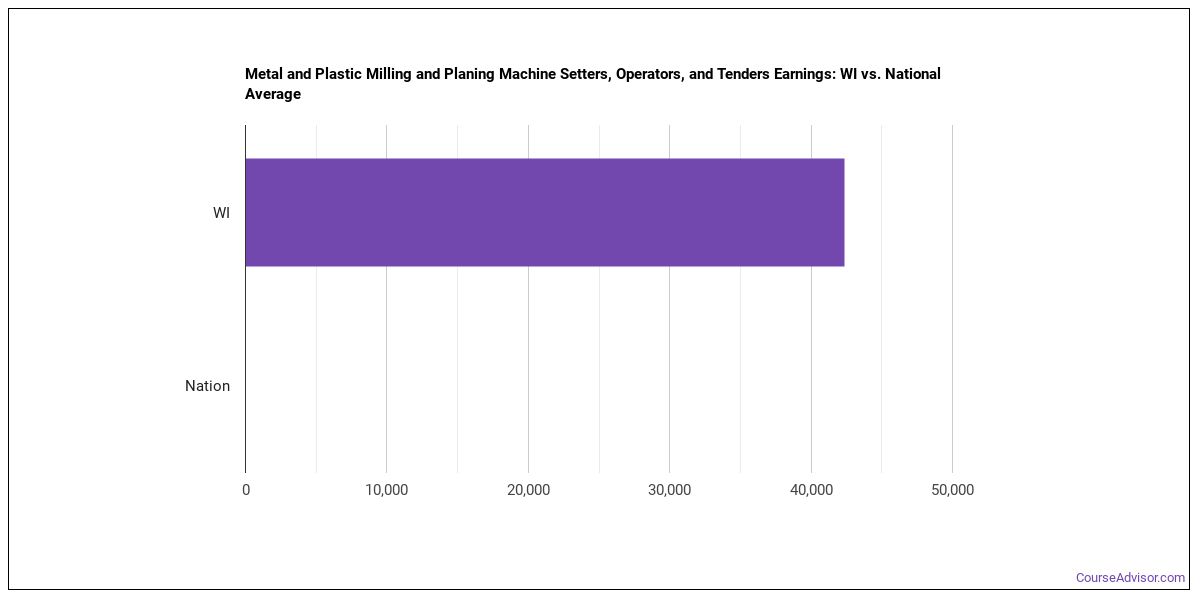
For milling and planing machine setters, operators, and tenders, metal and plastic working in Wisconsin, the median annual wage is $53,530 per year (or about $25.74/hour).Pay can range from $42,240 at the 10th percentile to $65,890 at the 90th percentile.
| Wage Statistic | Annual | Hourly |
|---|---|---|
| 10th percentile | $42,240 | $20.31 |
| 25th percentile | $44,780 | $21.53 |
| Median (50th) | $53,530 | $25.74 |
| 75th percentile | $57,890 | $27.83 |
| 90th percentile | $65,890 | $31.68 |

The location quotient — a measure of how concentrated this occupation is in Wisconsin nationwide is 0.85, meaning fewer milling and planing machine setters, operators, and tenders, metal and plastic per worker than the national average.
National Wage Comparison
Nationally, milling and planing machine setters, operators, and tenders, metal and plastic earn a median of $32,312 per year ($15.53/hour), exceeding the Wisconsin median.
Employment Outlook
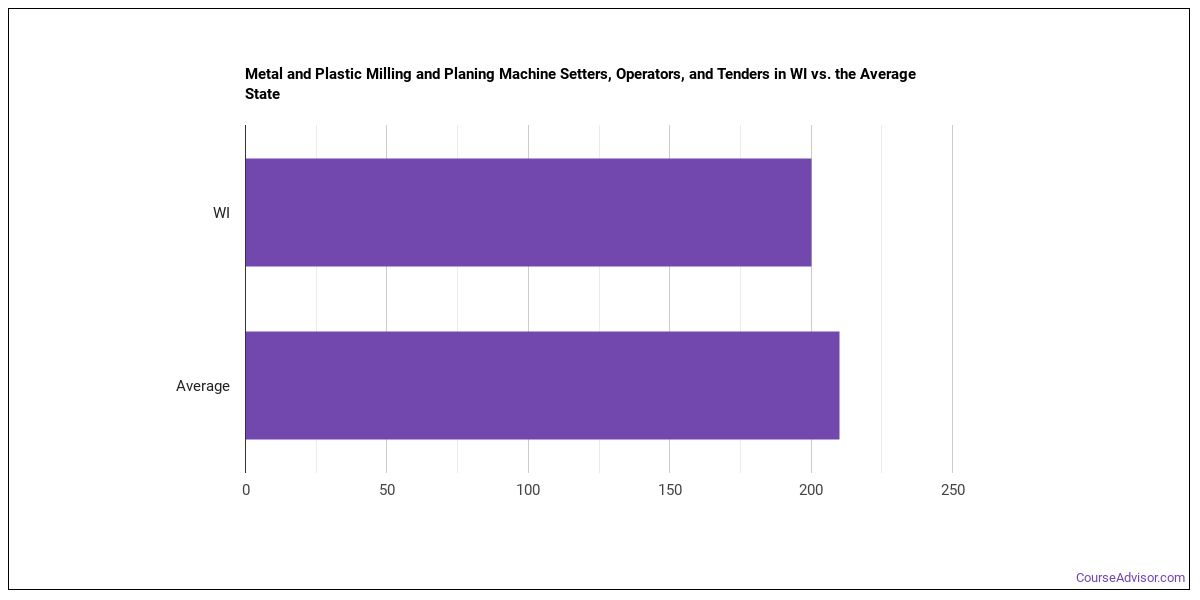
There are roughly 828,977 milling and planing machine setters, operators, and tenders, metal and plastic across the United States. In Wisconsin alone, about 220 people work in this role. That puts the state above the typical state, which employs around 180 milling and planing machine setters, operators, and tenders, metal and plastic.

Top States for Milling and Planing Machine Setters, Operators, and Tenders, Metal and Plastic Employment
The table below shows the states where the most milling and planing machine setters, operators, and tenders, metal and plastic work.
| State | Number Employed |
|---|---|
| California | 1,890 |
| Michigan | 1,370 |
| Tennessee | 1,280 |
| Ohio | 1,170 |
| Indiana | 790 |
| Texas | 680 |
| Illinois | 570 |
| New York | 560 |
| North Carolina | 440 |
| Missouri | 440 |
| Pennsylvania | 410 |
| Kentucky | 350 |
| Iowa | 320 |
| Massachusetts | 290 |
| Wisconsin | 220 |
| Florida | 200 |
| West Virginia | 190 |
| South Carolina | 180 |
| Oklahoma | 180 |
| Mississippi | 170 |
Highest-Paying States for Milling and Planing Machine Setters, Operators, and Tenders, Metal and Plastic
The highest-paying states for milling and planing machine setters, operators, and tenders, metal and plastic.
| State | Annual Median Salary |
|---|---|
| Washington | $83,240 |
| North Dakota | $64,150 |
| Illinois | $64,060 |
| Kansas | $62,570 |
| Maine | $62,290 |
| Connecticut | $61,140 |
| Kentucky | $60,270 |
| Arizona | $60,210 |
| Maryland | $58,540 |
| Nebraska | $57,980 |
Skills
Key milling and planing machine setters, operators, and tenders, metal and plastic skills, rated on an importance scale of 0 to 5:
Knowledge Areas
Key knowledge areas for this occupation, rated on an importance scale of 0 to 5:
Abilities
Top abilities for milling and planing machine setters, operators, and tenders, metal and plastic, rated on an importance scale of 0 to 5:
Daily Tasks
Common tasks include:
- Remove workpieces from machines, and check to ensure that they conform to specifications, using measuring instruments such as microscopes, gauges, calipers, and micrometers.
- Verify alignment of workpieces on machines, using measuring instruments such as rules, gauges, or calipers.
- Move controls to set cutting specifications, to position cutting tools and workpieces in relation to each other, and to start machines.
- Observe milling or planing machine operation, and adjust controls to ensure conformance with specified tolerances.
- Select and install cutting tools and other accessories according to specifications, using hand tools or power tools.
- Position and secure workpieces on machines, using holding devices, measuring instruments, hand tools, and hoists.
- Replace worn tools, using hand tools, and sharpen dull tools, using bench grinders.
- Study blueprints, layouts, sketches, or work orders to assess workpiece specifications and to determine tooling instructions, tools and materials needed, and sequences of operations.
- Compute dimensions, tolerances, and angles of workpieces or machines according to specifications and knowledge of metal properties and shop mathematics.
- Move cutters or material manually or by turning handwheels, or engage automatic feeding mechanisms to mill workpieces to specifications.
- Mount attachments and tools, such as pantographs, engravers, or routers, to perform other operations, such as drilling or boring.
- Select cutting speeds, feed rates, and depths of cuts, applying knowledge of metal properties and shop mathematics.
Work Activities
- Controlling Machines and Processes
- Making Decisions and Solving Problems
- Monitoring Processes, Materials, or Surroundings
- Inspecting Equipment, Structures, or Materials
- Handling and Moving Objects
- Processing Information
- Communicating with Supervisors, Peers, or Subordinates
- Evaluating Information to Determine Compliance with Standards
- Getting Information
- Performing General Physical Activities
- Repairing and Maintaining Mechanical Equipment
- Updating and Using Relevant Knowledge
Tools & Technology
Common tools and software used in this occupation include: Hot technologies: Autodesk AutoCAD
What Major Will Prepare You For This Career?
Several college majors map to this occupation:
- Precision Metal Working
Featured schools near , edit
Related Careers
Other careers like milling and planing machine setters, operators, and tenders, metal and plastic include:
- Industrial Machinery Mechanics
- Extruding and Drawing Machine Setters, Operators, and Tenders, Metal and Plastic
- Forging Machine Setters, Operators, and Tenders, Metal and Plastic
- Rolling Machine Setters, Operators, and Tenders, Metal and Plastic
- Cutting, Punching, and Press Machine Setters, Operators, and Tenders, Metal and Plastic
- Drilling and Boring Machine Tool Setters, Operators, and Tenders, Metal and Plastic
Also Known As
Barrel Rib Matting Machine Operator, Barrel Rifler, Boring Mill Operator, Broacher, Broaching Machine Operator, Broaching Machine Set Up Operator, CNC Licensed Mill Operator (Computer Numerical Control Licensed Mill Operator), CNC Mill Operator (Computer Numerical Control Mill Operator), CNC Mill Operator (Computerized Numerical Control Mill Operator), CNC Mill Set Up Operator (Computerized Numerical Control Mill Set Up Operator), CNC Milling Operator (Computer Numerical Control Milling Operator), Escape Wheel Tooth Cutter, Feed Mill Operator, File Cutter, Gear Milling Machine Set Up Operator.
References
- U.S. Bureau of Labor Statistics, Occupational Employment and Wage Statistics — https://www.bls.gov/oes/
- O*NET Online — https://www.onetonline.org/
- BLS Employment Projections — https://www.bls.gov/emp/
- O*NET-SOC code: 51-4035.00

Course Advisor provides higher-education, college and university, degree, program, career, salary, and other helpful information to students, faculty, institutions, and other internet audiences. Presented information and data are subject to change. Inclusion on this website does not imply or represent a direct relationship with the company, school, or brand. Information, though believed correct at time of publication, may not be correct, and no warranty is provided. Contact the schools to verify any information before relying on it. Financial aid may be available for those who qualify. The displayed options may include sponsored or recommended results, not necessarily based on your preferences.
© Course Advisor – All Rights Reserved.