Microbiologists in Montana
Considering working as a Microbiologists in Montana? Here’s what you need to know. Investigate the growth, structure, development, and other characteristics of microscopic organisms, such as bacteria, algae, or fungi. Includes medical microbiologists who study the relationship between organisms and disease or the effects of antibiotics on microorganisms.
What do Microbiologists Make in Montana?
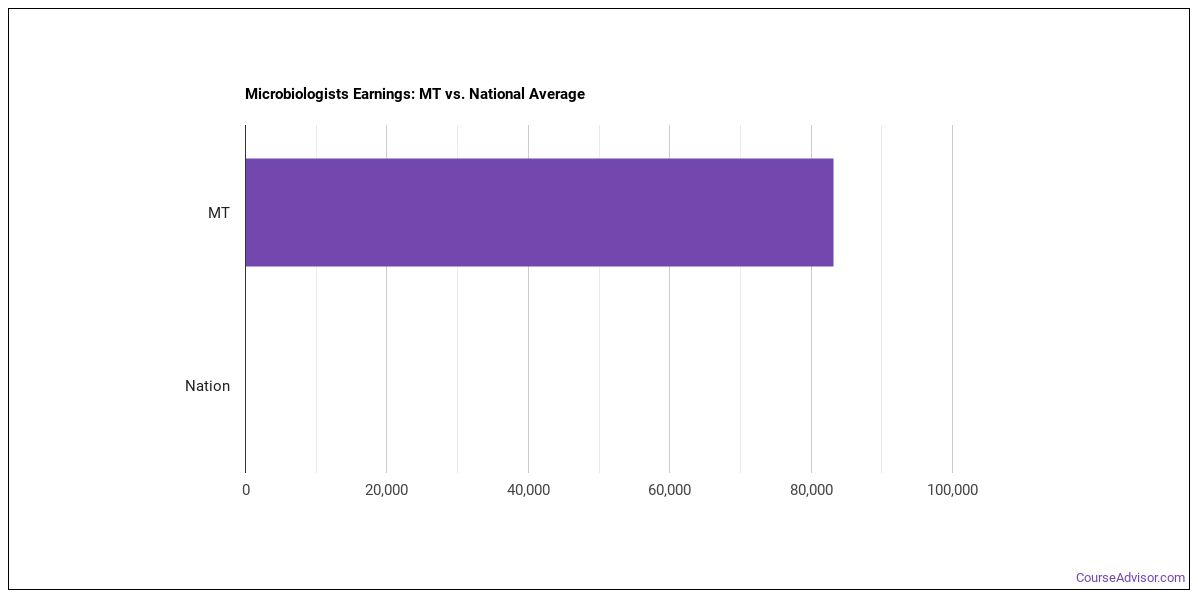
The microbiologists working in Montana, the median annual wage is $88,770 per year (or roughly $42.68/hour).Annual wages span from $48,970 at the 10th percentile to $162,260 at the 90th percentile.
| Wage Statistic | Annual | Hourly |
|---|---|---|
| 10th percentile | $48,970 | $23.54 |
| 25th percentile | $61,110 | $29.38 |
| Median (50th) | $88,770 | $42.68 |
| 75th percentile | $132,120 | $63.52 |
| 90th percentile | $162,260 | $78.01 |

The location quotient — a measure of how concentrated this occupation is in Montana compared to the national average — is 1.74, suggesting that microbiologists are more concentrated here than the national average.
National Wage Comparison
Nationally, microbiologists earn a median of $73,155 per year ($35.17/hour), above the Montana median.
Employment Outlook
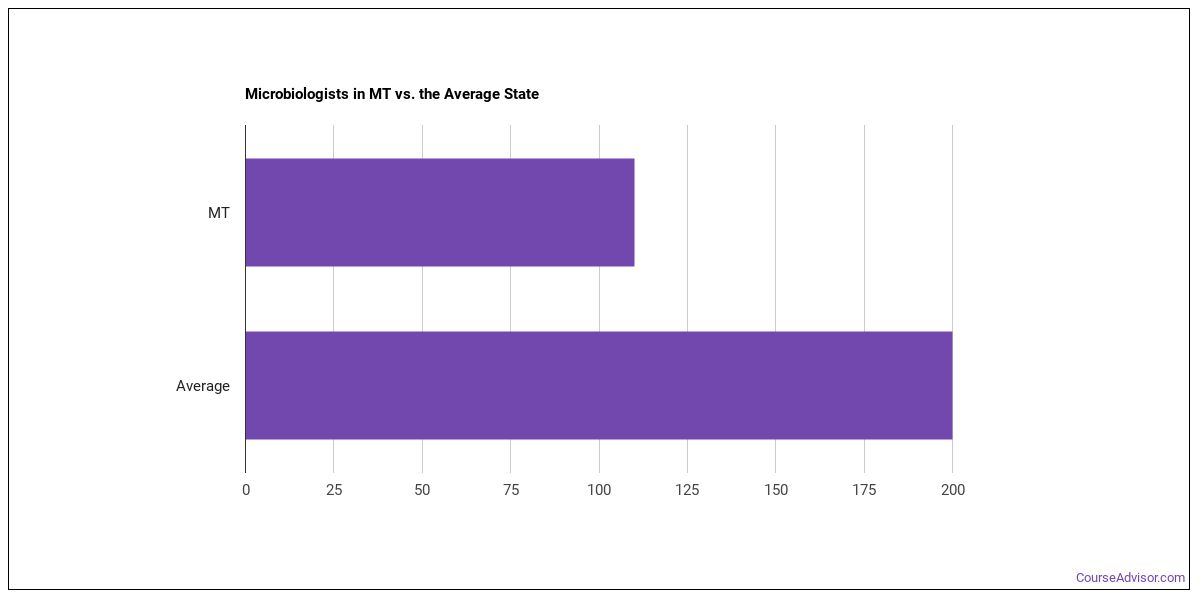
National employment for 144,066 microbiologists across the United States. In Montana alone, about 110 people work in this role. That’s fewer than the typical state, which employs around 170 microbiologists.

Top Montana Metros for Microbiologists
The metro areas below employ the most microbiologists in Montana.
| Metro Area | Number Employed | Annual Median Salary |
|---|---|---|
| Bozeman, MT | 40 | $61,110 |
Top States for Microbiologists Employment
The table below shows the states where the most microbiologists work.
| State | Number Employed |
|---|---|
| California | 2,510 |
| Massachusetts | 2,110 |
| Maryland | 2,040 |
| North Carolina | 1,320 |
| New York | 1,090 |
| New Jersey | 1,080 |
| Georgia | 990 |
| Illinois | 840 |
| Pennsylvania | 780 |
| Wisconsin | 690 |
| Texas | 690 |
| Ohio | 530 |
| Minnesota | 430 |
| Colorado | 370 |
| Washington | 350 |
| Michigan | 340 |
| Florida | 300 |
| Connecticut | 290 |
| Indiana | 230 |
| Tennessee | 190 |
Highest-Paying States for Microbiologists
Where microbiologists earn the most: microbiologists.
| State | Annual Median Salary |
|---|---|
| Massachusetts | $126,260 |
| California | $107,380 |
| Maryland | $101,060 |
| Georgia | $97,090 |
| Maine | $94,920 |
| Oregon | $89,220 |
| Montana | $88,770 |
| Virginia | $88,080 |
| New Hampshire | $86,380 |
| New York | $85,850 |
Skills
Top microbiologists skills, rated on an importance scale of 0 to 5:
Knowledge Areas
Important knowledge areas for this occupation, rated on an importance scale of 0 to 5:
Abilities
Top abilities for microbiologists, rated on an importance scale of 0 to 5:
Daily Tasks
Day-to-day, microbiologists typically:
- Isolate and maintain cultures of bacteria or other microorganisms in prescribed or developed media, controlling moisture, aeration, temperature, and nutrition.
- Provide laboratory services for health departments, community environmental health programs, and physicians needing information for diagnosis and treatment.
- Monitor and perform tests on water, food, and the environment to detect harmful microorganisms or to obtain information about sources of pollution, contamination, or infection.
- Examine physiological, morphological, and cultural characteristics, using microscope, to identify and classify microorganisms in human, water, and food specimens.
- Supervise biological technologists and technicians and other scientists.
- Use a variety of specialized equipment, such as electron microscopes, gas and high-pressure liquid chromatographs, electrophoresis units, thermocyclers, fluorescence-activated cell sorters, and phosphorimagers.
- Investigate the relationship between organisms and disease, including the control of epidemics and the effects of antibiotics on microorganisms.
- Prepare technical reports and recommendations, based upon research outcomes.
- Observe action of microorganisms upon living tissues of plants, higher animals, and other microorganisms, and on dead organic matter.
- Study growth, structure, development, and general characteristics of bacteria and other microorganisms to understand their relationship to human, plant, and animal health.
- Study the structure and function of human, animal, and plant tissues, cells, pathogens, and toxins.
- Develop new products and procedures for sterilization, food and pharmaceutical supply preservation, or microbial contamination detection.
Work Activities
- Working with Computers
- Analyzing Data or Information
- Documenting/Recording Information
- Getting Information
- Evaluating Information to Determine Compliance with Standards
- Organizing, Planning, and Prioritizing Work
- Communicating with Supervisors, Peers, or Subordinates
- Processing Information
- Monitoring Processes, Materials, or Surroundings
- Making Decisions and Solving Problems
- Identifying Objects, Actions, and Events
- Interpreting the Meaning of Information for Others
Tools & Technology
Technologies frequently used: Hot technologies: Microsoft Access In-demand technologies: Microsoft Excel
What Major Will Prepare You For This Career?
Related college programs include:
- Microbiology Science & Immunology
- Cell Biology & Anatomical Sciences
- Biochemistry & Biophysics
- Soil Sciences
Featured schools near , edit
Related Careers
Related occupations to microbiologists include:
- Bioengineers and Biomedical Engineers
- Nanotechnology Engineering Technologists and Technicians
- Soil and Plant Scientists
- Biochemists and Biophysicists
- Bioinformatics Scientists
- Molecular and Cellular Biologists
Also Known As
Bacteriologist, Clinical Laboratory Scientist (Clinical Lab Scientist), Clinical Microbiologist, Cytologist, Electron Microscopist, Medical Lab Scientist (Medical Laboratory Scientist), Medical Microbiologist, Medical Technologist, Microbiological Analyst, Microbiologist, Microbiology Analyst, Microbiology Scientist, Microbiology Specialist, Microscopist, Pharmaceutical Microbiologist.
References
- U.S. Bureau of Labor Statistics, Occupational Employment and Wage Statistics — https://www.bls.gov/oes/
- O*NET Online — https://www.onetonline.org/
- BLS Employment Projections — https://www.bls.gov/emp/
- O*NET-SOC code: 19-1022.00

Course Advisor provides higher-education, college and university, degree, program, career, salary, and other helpful information to students, faculty, institutions, and other internet audiences. Presented information and data are subject to change. Inclusion on this website does not imply or represent a direct relationship with the company, school, or brand. Information, though believed correct at time of publication, may not be correct, and no warranty is provided. Contact the schools to verify any information before relying on it. Financial aid may be available for those who qualify. The displayed options may include sponsored or recommended results, not necessarily based on your preferences.
© Course Advisor – All Rights Reserved.