Materials Engineers in Arizona
Want to work as a Materials Engineers in Arizona? Below are the key facts. Evaluate materials and develop machinery and processes to manufacture materials for use in products that must meet specialized design and performance specifications. Develop new uses for known materials. Includes those engineers working with composite materials or specializing in one type of material, such as graphite, metal and metal alloys, ceramics and glass, plastics and polymers, and naturally occurring materials. Includes metallurgists and metallurgical engineers, ceramic engineers, and welding engineers.
What do Materials Engineers Make in Arizona?
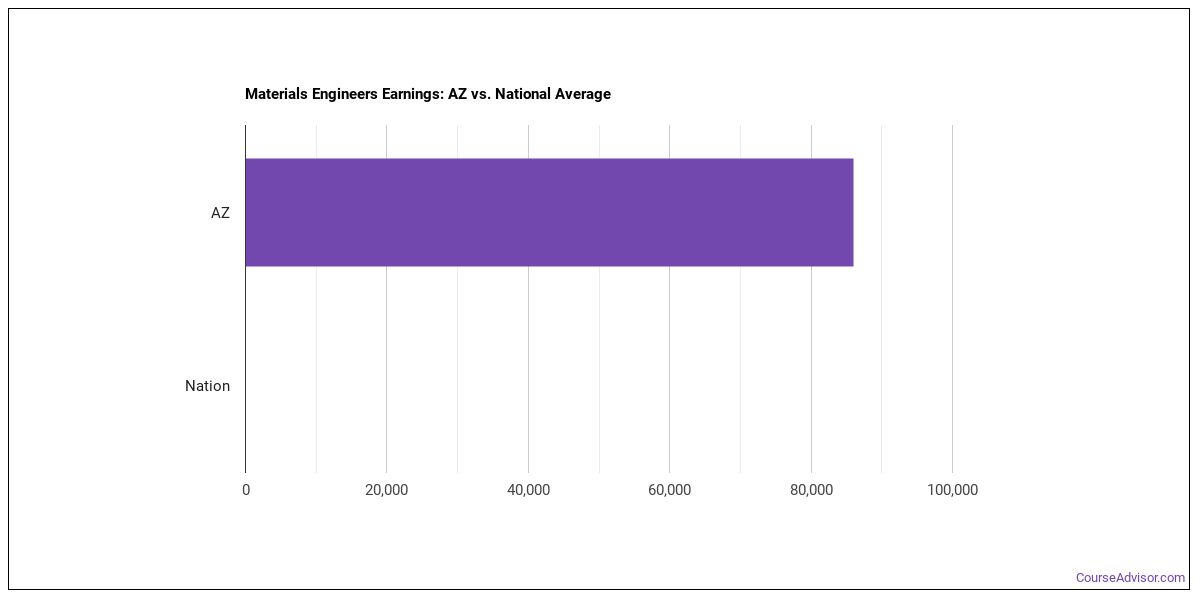
For materials engineers working in Arizona, the typical annual salary is $108,260 per year (or roughly $52.05/hour).Pay can range from $79,290 at the 10th percentile to $164,160 at the 90th percentile.
| Wage Statistic | Annual | Hourly |
|---|---|---|
| 10th percentile | $79,290 | $38.12 |
| 25th percentile | $96,320 | $46.31 |
| Median (50th) | $108,260 | $52.05 |
| 75th percentile | $138,370 | $66.52 |
| 90th percentile | $164,160 | $78.93 |

The job concentration index in Arizona compared to the national average — is 0.81, suggesting fewer materials engineers per worker than the national average.
National Wage Comparison
Nationally, materials engineers earn a median of $52,129 per year ($25.06/hour), exceeding the Arizona median.
Employment Outlook
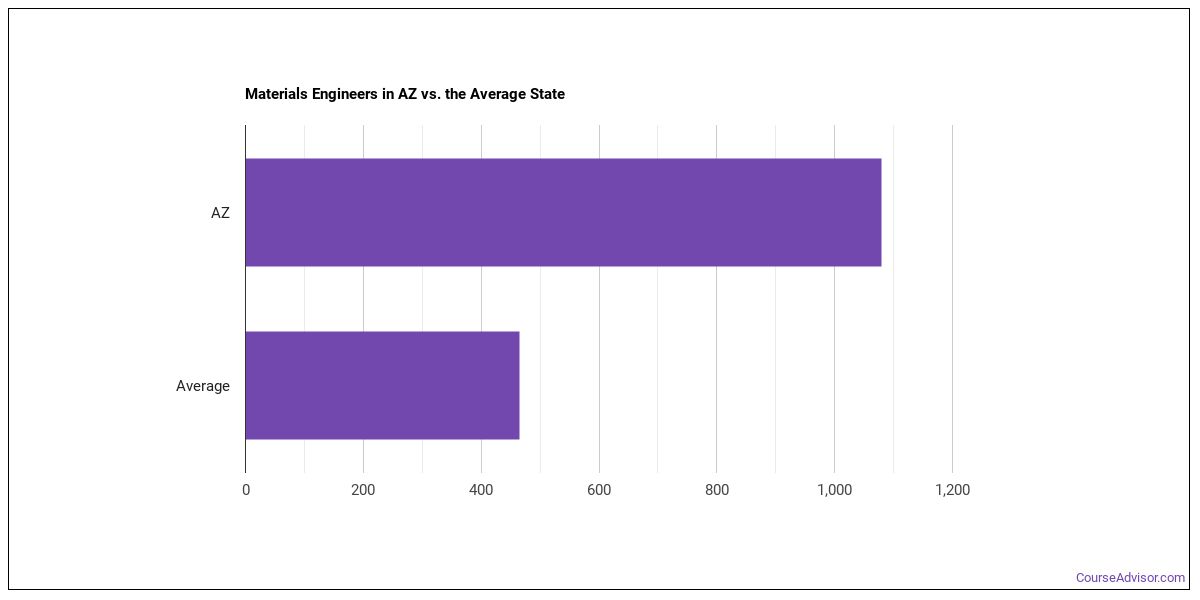
National employment for 43,114 materials engineers in the U.S.. In Arizona alone, around 380 people work in this role. That’s higher than the typical state, which employs around 310 materials engineers.

Top Arizona Metros for Materials Engineers
The largest metro-area employers of materials engineers in Arizona.
| Metro Area | Number Employed | Annual Median Salary |
|---|---|---|
| Phoenix-Mesa-Chandler, AZ | 240 | $109,390 |
Top States for Materials Engineers Employment
These states have the highest employment of materials engineers work.
| State | Number Employed |
|---|---|
| California | 2,760 |
| Ohio | 1,770 |
| Texas | 1,730 |
| Washington | 1,240 |
| Massachusetts | 1,060 |
| Michigan | 1,030 |
| Maryland | 960 |
| Pennsylvania | 780 |
| North Carolina | 770 |
| New York | 750 |
| Florida | 680 |
| Alabama | 660 |
| Virginia | 620 |
| Georgia | 550 |
| Tennessee | 550 |
| Colorado | 540 |
| Utah | 490 |
| Indiana | 470 |
| South Carolina | 440 |
| Connecticut | 400 |
Highest-Paying States for Materials Engineers
Where materials engineers earn the most: materials engineers.
| State | Annual Median Salary |
|---|---|
| Washington | $140,810 |
| Maryland | $130,920 |
| Delaware | $127,640 |
| California | $127,550 |
| Oregon | $127,360 |
| New York | $121,980 |
| Colorado | $121,430 |
| Alaska | $120,540 |
| Texas | $116,170 |
| Wyoming | $114,370 |
Skills
Key materials engineers skills, rated on an importance scale of 0 to 5:
Knowledge Areas
Important knowledge areas for this occupation, rated on an importance scale of 0 to 5:
Abilities
Top abilities for materials engineers, rated on an importance scale of 0 to 5:
Daily Tasks
Common tasks include:
- Analyze product failure data and laboratory test results to determine causes of problems and develop solutions.
- Design and direct the testing or control of processing procedures.
- Monitor material performance, and evaluate its deterioration.
- Conduct or supervise tests on raw materials or finished products to ensure their quality.
- Evaluate technical specifications and economic factors relating to process or product design objectives.
- Modify properties of metal alloys, using thermal and mechanical treatments.
- Determine appropriate methods for fabricating and joining materials.
- Guide technical staff in developing materials for specific uses in projected products or devices.
- Review new product plans, and make recommendations for material selection, based on design objectives such as strength, weight, heat resistance, electrical conductivity, and cost.
- Supervise the work of technologists, technicians, and other engineers and scientists.
- Plan and implement laboratory operations to develop material and fabrication procedures that meet cost, product specification, and performance standards.
- Plan and evaluate new projects, consulting with other engineers and corporate executives, as necessary.
Work Activities
- Analyzing Data or Information
- Making Decisions and Solving Problems
- Getting Information
- Updating and Using Relevant Knowledge
- Identifying Objects, Actions, and Events
- Monitoring Processes, Materials, or Surroundings
- Inspecting Equipment, Structures, or Materials
- Thinking Creatively
- Working with Computers
- Documenting/Recording Information
- Processing Information
- Organizing, Planning, and Prioritizing Work
Tools & Technology
Technologies frequently used: Hot technologies: Autodesk AutoCAD, C++ In-demand technologies: Microsoft Excel
What Major Will Prepare You For This Career?
Programs that train for this career include:
- Materials Engineering
- Textile Engineering
- Polymer & Plastics Engineering
- Metallurgical Engineering
- Ceramic Engineering
Featured schools near , edit
Related Careers
Careers similar to materials engineers include:
- Architectural and Engineering Managers
- Bioengineers and Biomedical Engineers
- Chemical Engineers
- Electrical Engineers
- Electronics Engineers, Except Computer
- Industrial Engineers
Also Known As
Automotive Sheet Metal Engineer, Ceramic Design Engineer, Ceramic Engineer, Ceramic Research Engineer, Ceramics Test Engineer, Corrosion Engineer, Design Engineer, Engineer, Extractive Metallurgist, Extrusion Engineer, Failure Analysis Engineer, Forensic Materials Engineer, Foundry Metallurgist, Foundry Process Engineer, Glass Science Engineer.
References
- U.S. Bureau of Labor Statistics, Occupational Employment and Wage Statistics — https://www.bls.gov/oes/
- O*NET Online — https://www.onetonline.org/
- BLS Employment Projections — https://www.bls.gov/emp/
- O*NET-SOC code: 17-2131.00

Course Advisor provides higher-education, college and university, degree, program, career, salary, and other helpful information to students, faculty, institutions, and other internet audiences. Presented information and data are subject to change. Inclusion on this website does not imply or represent a direct relationship with the company, school, or brand. Information, though believed correct at time of publication, may not be correct, and no warranty is provided. Contact the schools to verify any information before relying on it. Financial aid may be available for those who qualify. The displayed options may include sponsored or recommended results, not necessarily based on your preferences.
© Course Advisor – All Rights Reserved.