Geoscientists, Except Hydrologists and Geographers: Career Overview
Study the composition, structure, and other physical aspects of the Earth. May use geological, physics, and mathematics knowledge in exploration for oil, gas, minerals, or underground water; or in waste disposal, land reclamation, or other environmental problems. May study the Earth's internal composition, atmospheres, and oceans, and its magnetic, electrical, and gravitational forces. Includes mineralogists, paleontologists, stratigraphers, geodesists, and seismologists.
Featured schools near , edit
What Tasks Do Geoscientists, Except Hydrologists and Geographers Do?
Typical responsibilities of geoscientists, except hydrologists and geographers cover:
- Plan or conduct geological, geochemical, or geophysical field studies or surveys, sample collection, or drilling and testing programs used to collect data for research or application.
- Analyze and interpret geological data, using computer software.
- Investigate the composition, structure, or history of the Earth's crust through the collection, examination, measurement, or classification of soils, minerals, rocks, or fossil remains.
- Analyze and interpret geological, geochemical, or geophysical information from sources, such as survey data, well logs, bore holes, or aerial photos.
- Identify risks for natural disasters, such as mudslides, earthquakes, or volcanic eruptions.
- Prepare geological maps, cross-sectional diagrams, charts, or reports concerning mineral extraction, land use, or resource management, using results of fieldwork or laboratory research.
- Communicate geological findings by writing research papers, participating in conferences, or teaching geological science at universities.
- Locate and estimate probable natural gas, oil, or mineral ore deposits or underground water resources, using aerial photographs, charts, or research or survey results.
Key Skills and Knowledge
Successful geoscientists, except hydrologists and geographers rely on a mix of skills and domain knowledge.
Top Skills
These are the skills that matter most in this role, rated on an importance scale of 0 to 5:
Top Knowledge Areas
Types of Geoscientists, Except Hydrologists and Geographers Jobs
Common job titles for this role include:
- Consultant Geologist
- Core Analysis Operator
- Core Analyst
- Crystallographer
- Development Geologist
- Engineering Geologist
- Environmental Engineer
- Environmental Geologist
How Many Geoscientists, Except Hydrologists and Geographers Are There?
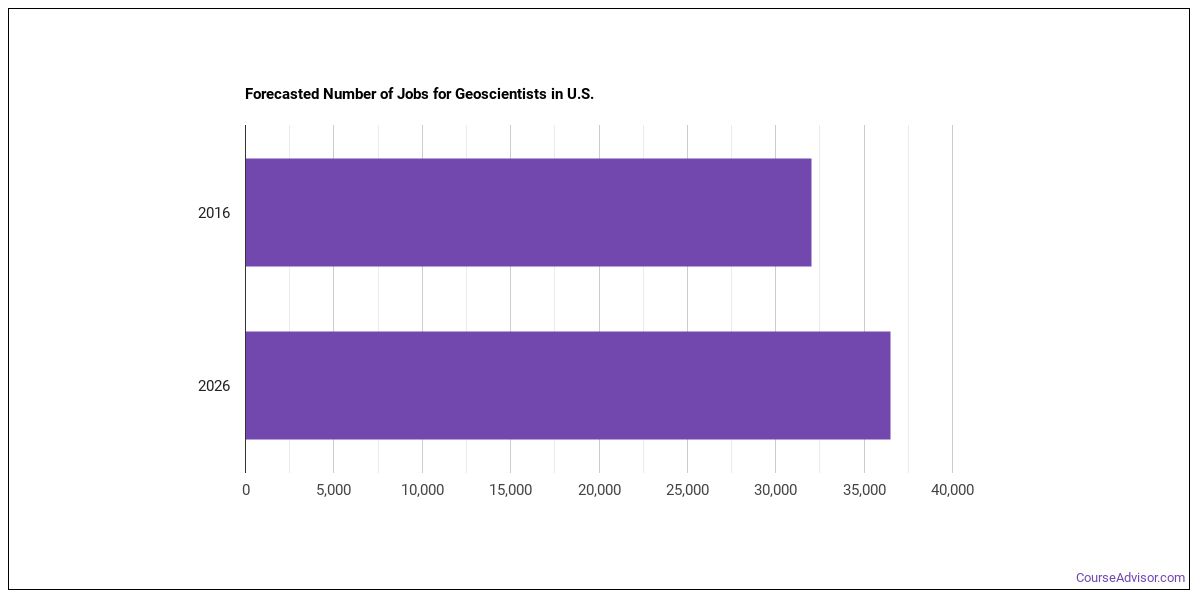
The U.S. employs around 144,001 geoscientists, except hydrologists and geographers working in the United States today. This occupation is expected to grow by +4.5% over the projection horizon.
How Much Do Geoscientists, Except Hydrologists and Geographers Make?
| Statistic | Value |
|---|---|
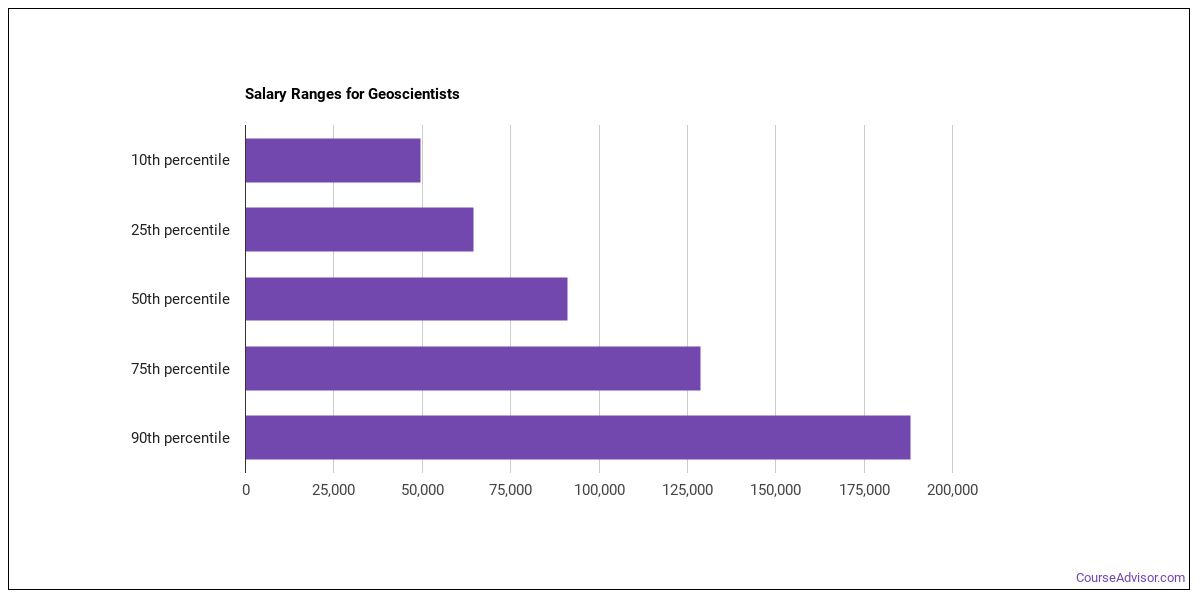
| Annual median | $58,500 |
| Hourly median | $28.13 |
| 10th percentile | $35,398 |
| 25th percentile | $46,949 |
| 75th percentile | $70,052 |
| 90th percentile | $81,603 |
Pay can vary substantially based on experience, location, and industry.
How Much Do Geoscientists, Except Hydrologists and Geographers Make in Different U.S. States?
| State | Annual median salary |
|---|---|
| Texas | $155,330 |
| Rhode Island | $128,870 |
| Oklahoma | $128,240 |
| Mississippi | $113,730 |
| California | $111,400 |
| Alaska | $105,910 |
| Utah | $104,000 |
| Vermont | $102,190 |
| Hawaii | $100,690 |
| Colorado | $99,900 |
| Washington | $99,780 |
| Maryland | $99,200 |
| Massachusetts | $98,720 |
| West Virginia | $95,640 |
| Missouri | $95,210 |
| Oregon | $95,120 |
| Florida | $95,110 |
| Nevada | $95,090 |
| Virginia | $94,160 |
| New Mexico | $93,720 |
| North Dakota | $90,770 |
| Idaho | $89,860 |
| Nebraska | $85,500 |
| Illinois | $85,420 |
| New York | $84,910 |
| Montana | $84,630 |
| Arizona | $83,630 |
| Delaware | $82,970 |
| Michigan | $81,800 |
| Wisconsin | $80,610 |
| Alabama | $80,310 |
| North Carolina | $79,710 |
| Indiana | $79,290 |
| Pennsylvania | $78,890 |
| New Jersey | $78,840 |
| Connecticut | $78,460 |
| New Hampshire | $78,050 |
| Maine | $77,210 |
| Kansas | $76,980 |
| Tennessee | $76,610 |
| South Carolina | $76,600 |
| Ohio | $73,120 |
| Iowa | $73,070 |
| Wyoming | $72,590 |
| Minnesota | $72,490 |
| Louisiana | $72,340 |
| South Dakota | $72,280 |
| Kentucky | $68,990 |
| Puerto Rico | $68,830 |
| Arkansas | $65,250 |
| Georgia | $62,850 |
Pay by U.S. Region
Compensation for geoscientists, except hydrologists and geographers shift depending on where you work. Top regions by median wage:
| Region | Median annual wage | Share of U.S. jobs | Location quotient |
|---|---|---|---|
| Southwest | $142,315 | 23.8% | 2.04 |
| Far Western US | $106,110 | 25.3% | 1.86 |
| Rocky Mountains | $95,305 | 11.3% | 3.28 |
| New England | $94,765 | 1.4% | 0.49 |
| Middle Atlantic | $84,179 | 10.5% | 0.72 |
| Southeast | $83,705 | 16.4% | 0.76 |
| Great Lakes | $79,724 | 6.9% | 0.49 |
| Plains States | $79,432 | 4.4% | 0.81 |
Highest-Paying Metro Areas for Geoscientists, Except Hydrologists and Geographers
| Metro area | State | Median annual wage | Employment |
|---|---|---|---|
| Houston-Pasadena-The Woodlands, TX | TX | $168,280 | 1,760 |
| Midland, TX | TX | $165,830 | 250 |
| Palm Bay-Melbourne-Titusville, FL | FL | $142,150 | 60 |
| Dallas-Fort Worth-Arlington, TX | TX | $136,250 | 430 |
| Washington-Arlington-Alexandria, DC-VA-MD-WV | DC | $130,580 | 330 |
| Santa Cruz-Watsonville, CA | CA | $129,880 | 50 |
| Providence-Warwick, RI-MA | RI | $129,730 | |
| San Jose-Sunnyvale-Santa Clara, CA | CA | $128,710 | 150 |
Industry Breakdown
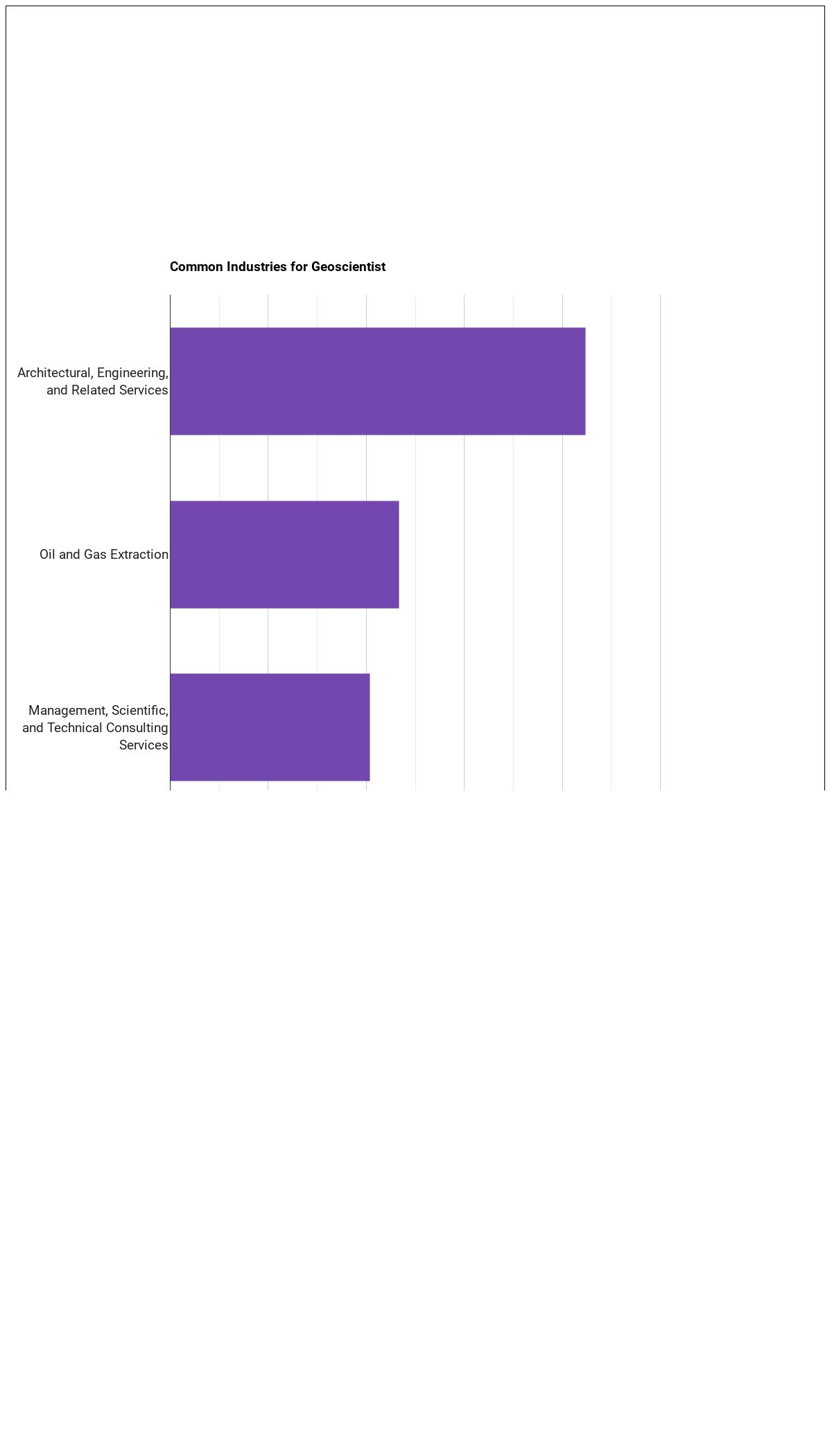
The largest employers of geoscientists, except hydrologists and geographers work in these industries:
| Industry | Employment | Median annual wage |
|---|---|---|
| Professional, Scientific, and Technical Services | 11,580 | $87,190 |
| Mining, Quarrying, and Oil and Gas Extraction | 3,370 | $148,760 |
| Educational Services | 1,240 | $82,420 |
| Management of Companies and Enterprises | 1,000 | $160,770 |
| Administrative and Support and Waste Management and Remediation Services | 310 | $95,730 |
| Manufacturing | 160 | $133,590 |
| Utilities | 80 | $126,100 |
| Construction | 70 | $77,200 |
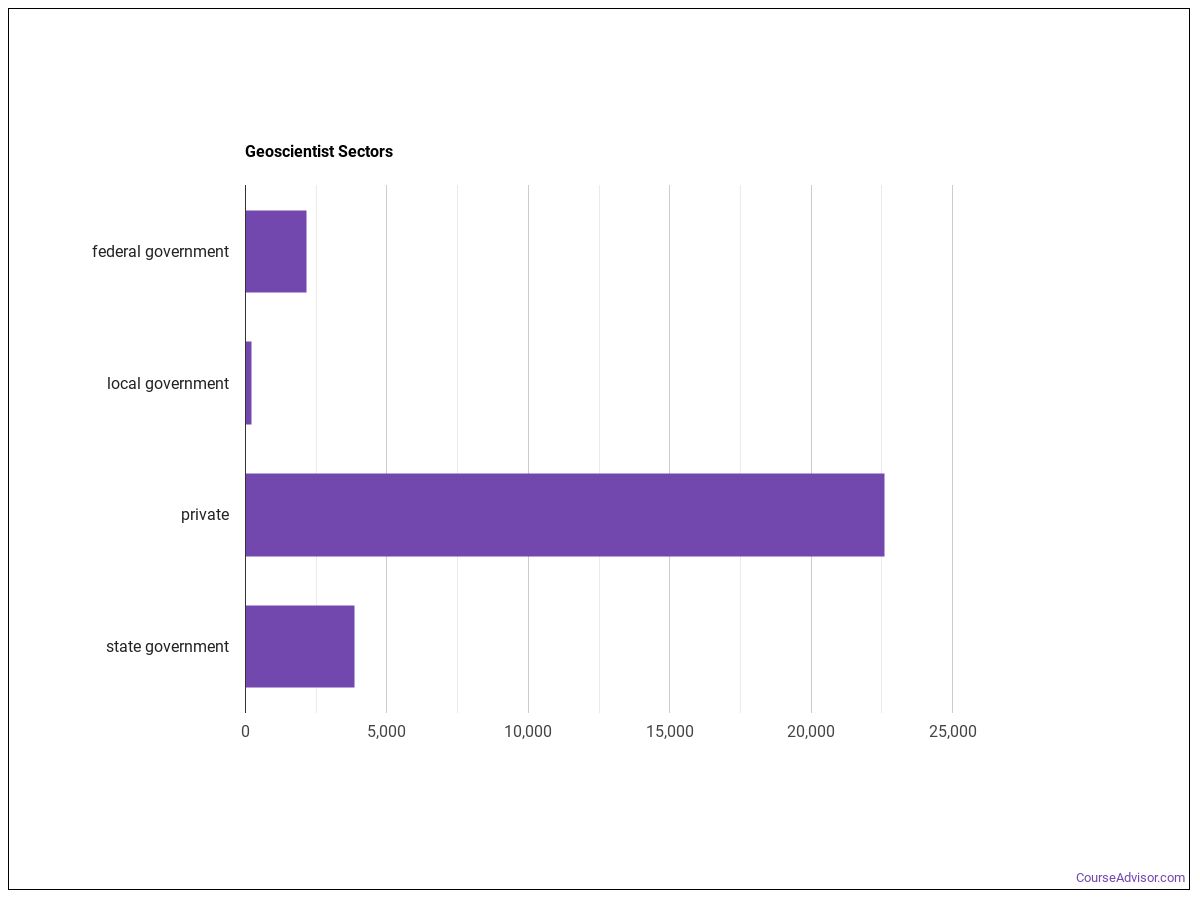
The table below shows some of the most common industries where those employed in this career field work.
Tech Stack
- Document management software: Adobe Acrobat (hot technology)
- Graphics or photo imaging software: Adobe Photoshop (hot technology)
- Computer aided design CAD software: Autodesk AutoCAD (hot technology)
- Geographic information system: ESRI ArcGIS software (hot technology)
- File versioning software: Git (hot technology)
- Data base user interface and query software: Microsoft Access (hot technology)
- Web platform development software: Microsoft Active Server Pages ASP (hot technology)
- Spreadsheet software: Microsoft Excel (hot technology)
- Office suite software: Microsoft Office software (hot technology)
- Electronic mail software: Microsoft Outlook (hot technology)
- Presentation software: Microsoft PowerPoint (hot technology)
- Project management software: Microsoft Project (hot technology)
The Day-to-Day Environment
The on-the-job environment of geoscientists, except hydrologists and geographers is shaped by the following characteristics:
- Face-to-Face Discussions with Individuals and Within Teams
- Freedom to Make Decisions
- Determine Tasks, Priorities and Goals
- Telephone Conversations
How to Become Geoscientists, Except Hydrologists and Geographers
Most geoscientists, except hydrologists and geographers positions require a doctoral or professional degree as the typical entry-level education. The role falls in Extensive Preparation Needed (Job Zone 5), reflecting the level of preparation typically expected.
Related Careers
Similar Occupations
- Water Resource Specialists (Supplemental)
- Data Scientists (Primary-Long)
- Surveyors (Supplemental)
- Geodetic Surveyors (Supplemental)
- Mining and Geological Engineers, Including Mining Safety Engineers (Primary-Long)
- Petroleum Engineers (Supplemental)
- Surveying and Mapping Technicians (Supplemental)
- Soil and Plant Scientists (Primary-Short)
Degree Programs
Aspiring geoscientists, except hydrologists and geographers often complete programs in:
Physical Sciences
7 programs across 1 majors
Multi/Interdisciplinary Studies
5 programs across 5 majors
About the Data
Statistics shown above are sourced from the following authoritative sources:
- U.S. Bureau of Labor Statistics — Occupational Employment and Wage Statistics (OEWS) for employment and wage data by state and industry.
- BLS Employment Projections for total employment and growth forecasts.
- O*NET (Occupational Information Network) for skills, knowledge, tasks, work activities, work context, technology, and education-zone data.
SOC code: 19-2042.00 (Geoscientists, Except Hydrologists and Geographers).

Course Advisor provides higher-education, college and university, degree, program, career, salary, and other helpful information to students, faculty, institutions, and other internet audiences. Presented information and data are subject to change. Inclusion on this website does not imply or represent a direct relationship with the company, school, or brand. Information, though believed correct at time of publication, may not be correct, and no warranty is provided. Contact the schools to verify any information before relying on it. Financial aid may be available for those who qualify. The displayed options may include sponsored or recommended results, not necessarily based on your preferences.
© Course Advisor – All Rights Reserved.