Electronics Engineers, Except Computer in Tennessee
Considering working as an Electronics Engineers, Except Computer in Tennessee? Here’s what the data says. Research, design, develop, or test electronic components and systems for commercial, industrial, military, or scientific use employing knowledge of electronic theory and materials properties. Design electronic circuits and components for use in fields such as telecommunications, aerospace guidance and propulsion control, acoustics, or instruments and controls. Excludes “Computer Hardware Engineers” (17-2061).
What do Electronics Engineers, Except Computer Make in Tennessee?
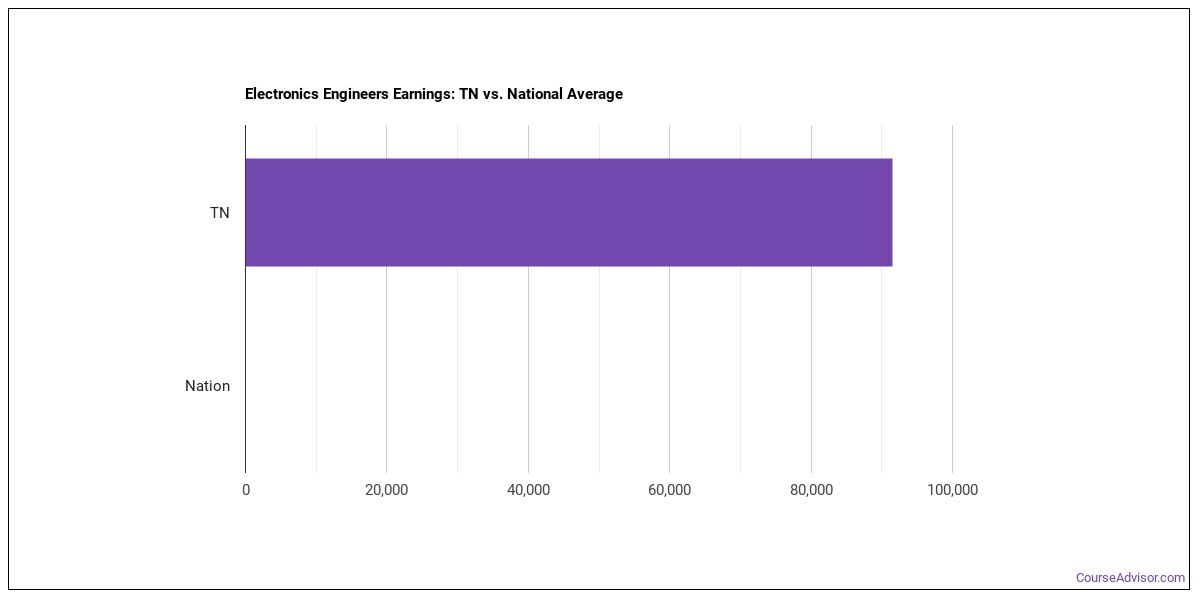
The electronics engineers, except computer working in Tennessee, the median annual wage is $105,390 per year (or about $50.67/hour).Annual wages span from $78,020 at the 10th percentile to $150,160 at the 90th percentile.
| Wage Statistic | Annual | Hourly |
|---|---|---|
| 10th percentile | $78,020 | $37.51 |
| 25th percentile | $90,910 | $43.71 |
| Median (50th) | $105,390 | $50.67 |
| 75th percentile | $135,100 | $64.95 |
| 90th percentile | $150,160 | $72.19 |

Location quotient — how concentrated this career is in Tennessee nationwide is 0.36, suggesting fewer electronics engineers, except computer per worker than the national average.
National Wage Comparison
Nationally, electronics engineers, except computer earn a median of $122,969 per year ($59.12/hour), lower than the Tennessee median.
Employment Outlook
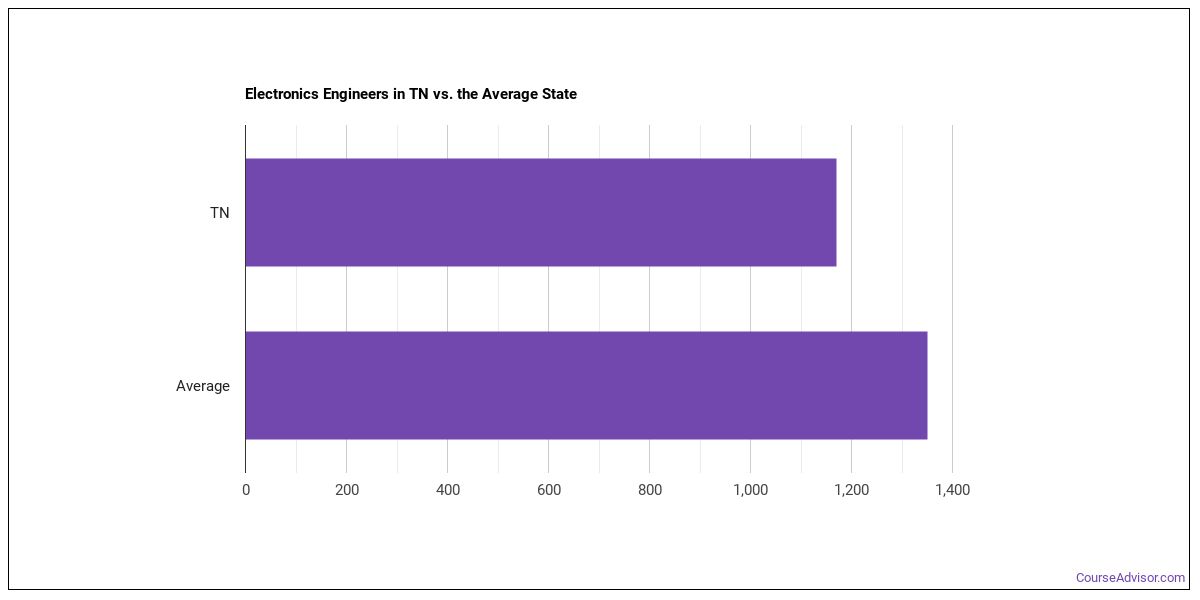
Nationally, total employment in this occupation is 74,309 electronics engineers, except computer nationwide. In Tennessee alone, approximately 720 people work in this role. That trails the typical state, which employs around 980 electronics engineers, except computer.

Top Tennessee Metros for Electronics Engineers, Except Computer
The largest metro-area employers of electronics engineers, except computer in Tennessee.
| Metro Area | Number Employed | Annual Median Salary |
|---|---|---|
| Nashville-Davidson–Murfreesboro–Franklin, TN | 180 | $135,740 |
| Knoxville, TN | 100 | $101,500 |
| Memphis, TN-MS-AR | 80 | $114,550 |
| Chattanooga, TN-GA | 70 | $104,050 |
| Kingsport-Bristol, TN-VA | 50 | $103,330 |
Top States for Electronics Engineers, Except Computer Employment
The table below shows the states where the most electronics engineers, except computer work.
| State | Number Employed |
|---|---|
| California | 19,560 |
| Texas | 9,070 |
| Colorado | 5,730 |
| Massachusetts | 5,580 |
| Florida | 4,930 |
| Ohio | 3,860 |
| Maryland | 3,850 |
| Michigan | 3,390 |
| Georgia | 2,740 |
| Virginia | 2,530 |
| Arizona | 2,360 |
| Washington | 2,270 |
| New York | 2,180 |
| New Jersey | 1,950 |
| Indiana | 1,820 |
| Alabama | 1,780 |
| Pennsylvania | 1,380 |
| Oklahoma | 1,380 |
| North Carolina | 1,350 |
| Connecticut | 1,220 |
Highest-Paying States for Electronics Engineers, Except Computer
Where electronics engineers, except computer earn the most: electronics engineers, except computer.
| State | Annual Median Salary |
|---|---|
| District of Columbia | $161,570 |
| New Jersey | $155,860 |
| California | $154,670 |
| Maryland | $144,990 |
| Washington | $136,930 |
| Arizona | $135,200 |
| Maine | $134,140 |
| Massachusetts | $133,840 |
| Rhode Island | $132,330 |
| Oregon | $129,920 |
Skills
Top electronics engineers, except computer skills, rated on an importance scale of 0 to 5:
Knowledge Areas
Important knowledge areas for this occupation, rated on an importance scale of 0 to 5:
Abilities
Top abilities for electronics engineers, except computer, rated on an importance scale of 0 to 5:
Daily Tasks
Day-to-day, electronics engineers, except computer typically:
- Design electronic components, software, products, or systems for commercial, industrial, medical, military, or scientific applications.
- Operate computer-assisted engineering or design software or equipment to perform electronics engineering tasks.
- Evaluate project work to ensure effectiveness, technical adequacy, or compatibility in the resolution of complex electronics engineering problems.
- Direct or coordinate activities concerned with manufacture, construction, installation, maintenance, operation, or modification of electronic equipment, products, or systems.
- Confer with engineers, customers, vendors, or others to discuss existing or potential electronics engineering projects or products.
- Provide technical support or instruction to staff or customers regarding electronics equipment standards.
- Recommend repair or design modifications of electronics components or systems, based on factors such as environment, service, cost, or system capabilities.
- Prepare documentation containing information such as confidential descriptions or specifications of proprietary hardware or software, product development or introduction schedules, product costs, or information about product performance weaknesses.
- Develop or perform operational, maintenance, or testing procedures for electronic products, components, equipment, or systems.
- Analyze electronics system requirements, capacity, cost, or customer needs to determine project feasibility.
- Prepare, review, or maintain maintenance schedules, design documentation, or operational reports or charts.
- Inspect electronic equipment, instruments, products, or systems to ensure conformance to specifications, safety standards, or applicable codes or regulations.
Work Activities
- Working with Computers
- Analyzing Data or Information
- Drafting, Laying Out, and Specifying Technical Devices, Parts, and Equipment
- Making Decisions and Solving Problems
- Getting Information
- Processing Information
- Identifying Objects, Actions, and Events
- Documenting/Recording Information
- Thinking Creatively
- Communicating with Supervisors, Peers, or Subordinates
- Evaluating Information to Determine Compliance with Standards
- Updating and Using Relevant Knowledge
Tools & Technology
Software and systems commonly involved: Hot technologies: Apache Subversion SVN, Autodesk AutoCAD, C In-demand technologies: Microsoft Excel
What Major Will Prepare You For This Career?
Programs that train for this career include:
- Electrical Engineering
Featured schools near , edit
Related Careers
Other careers like electronics engineers, except computer include:
- Computer Hardware Engineers
- Electrical Engineers
- Radio Frequency Identification Device Specialists
- Industrial Engineers
- Mechanical Engineers
- Mechatronics Engineers
Also Known As
Antenna Engineer, Audio Visual Engineer (AV Engineer), Audio Visual Manager, Automation Engineer, Central Office Equipment Engineer, Central Office Facilities Planning Engineer, Circuit Design Engineer, Circuit Designer, Commercial Engineer, Communications Engineer, Compatibility Test Engineer, Control Systems Engineer, Customer Equipment Engineer, Design Engineer, Dial Equipment Engineer.
References
- U.S. Bureau of Labor Statistics, Occupational Employment and Wage Statistics — https://www.bls.gov/oes/
- O*NET Online — https://www.onetonline.org/
- BLS Employment Projections — https://www.bls.gov/emp/
- O*NET-SOC code: 17-2072.00

Course Advisor provides higher-education, college and university, degree, program, career, salary, and other helpful information to students, faculty, institutions, and other internet audiences. Presented information and data are subject to change. Inclusion on this website does not imply or represent a direct relationship with the company, school, or brand. Information, though believed correct at time of publication, may not be correct, and no warranty is provided. Contact the schools to verify any information before relying on it. Financial aid may be available for those who qualify. The displayed options may include sponsored or recommended results, not necessarily based on your preferences.
© Course Advisor – All Rights Reserved.