Electricians in Colorado
Thinking about a career as an Electricians in Colorado? Here’s what the data says. Install, maintain, and repair electrical wiring, equipment, and fixtures. Ensure that work is in accordance with relevant codes. May install or service street lights, intercom systems, or electrical control systems. Excludes “Security and Fire Alarm Systems Installers” (49-2098).
What do Electricians Make in Colorado?
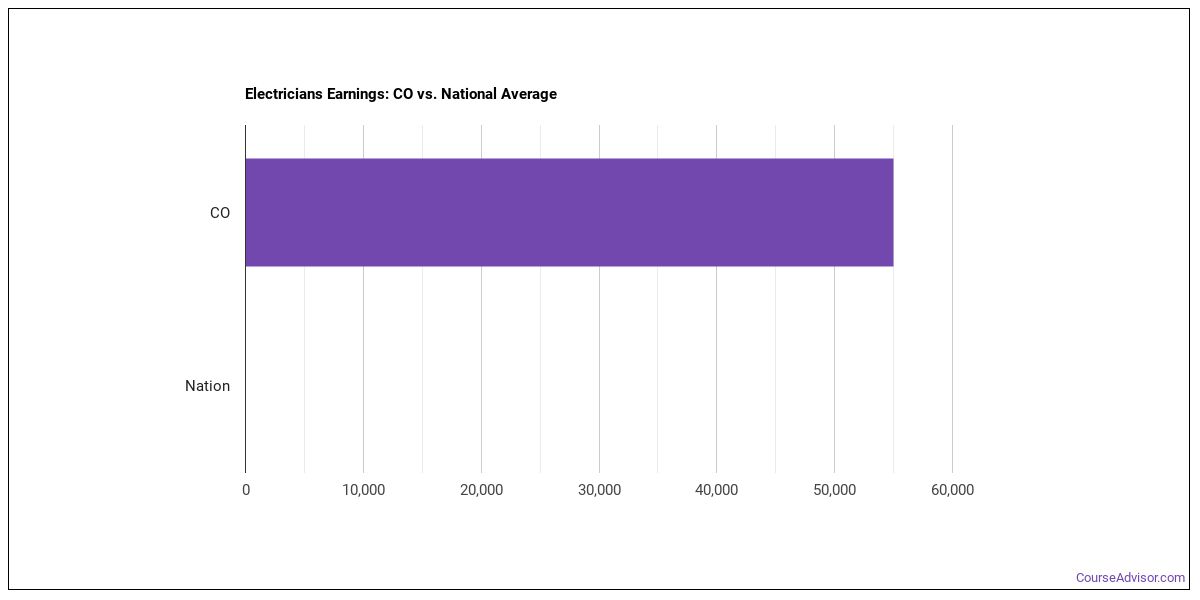
For electricians working in Colorado, the median annual wage is $62,090 per year (or about $29.85/hour).Earnings range from $42,360 at the 10th percentile to $90,120 at the 90th percentile.
| Wage Statistic | Annual | Hourly |
|---|---|---|
| 10th percentile | $42,360 | $20.37 |
| 25th percentile | $48,350 | $23.25 |
| Median (50th) | $62,090 | $29.85 |
| 75th percentile | $77,440 | $37.23 |
| 90th percentile | $90,120 | $43.33 |

Location quotient — how concentrated this career is in Colorado compared to the national average — is 1.23, indicating that electricians are more concentrated here than the national average.
National Wage Comparison
Nationally, electricians earn a median of $57,376 per year ($27.59/hour), above the Colorado median.
Employment Outlook
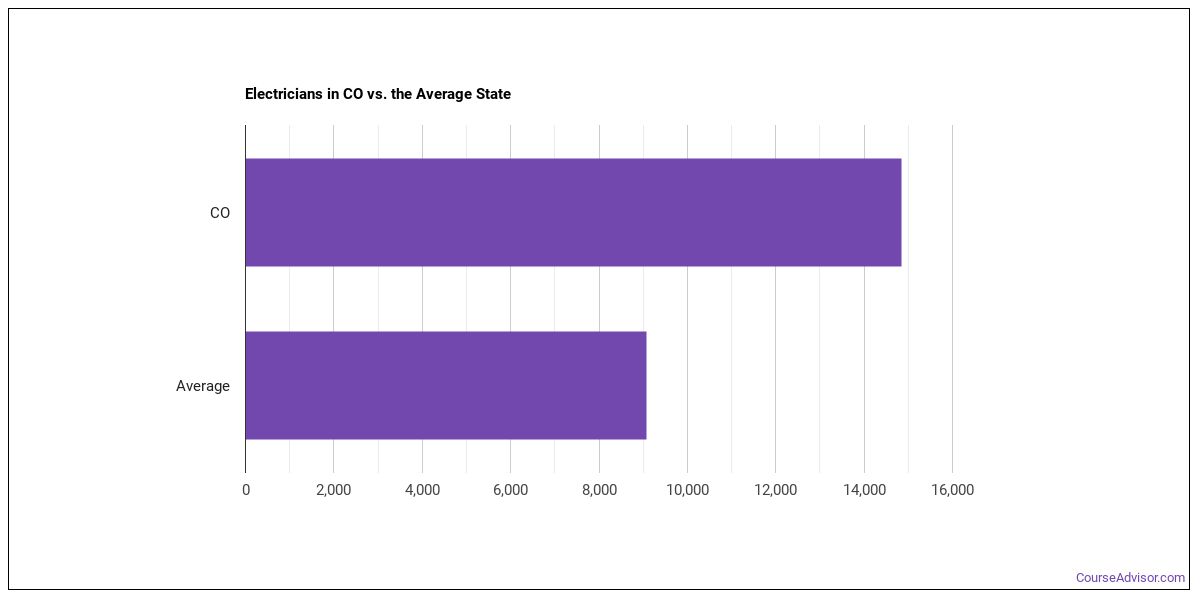
Nationally, total employment in this occupation is 267,745 electricians across the United States. In Colorado alone, around 17,140 people work in this role. That’s higher than the typical state, which employs around 9,740 electricians.

Top Colorado Metros for Electricians
The largest metro-area employers of electricians in Colorado.
| Metro Area | Number Employed | Annual Median Salary |
|---|---|---|
| Denver-Aurora-Centennial, CO | 10,600 | $63,010 |
| Colorado Springs, CO | 1,230 | $59,620 |
| Greeley, CO | 1,120 | $61,130 |
| Fort Collins-Loveland, CO | 830 | $59,840 |
| Boulder, CO | 450 | $62,570 |
| Grand Junction, CO | 430 | $57,340 |
| Pueblo, CO | 400 | $59,700 |
Top States for Electricians Employment
The table below shows the states where the most electricians work.
| State | Number Employed |
|---|---|
| California | 73,420 |
| Texas | 71,880 |
| Florida | 47,980 |
| New York | 40,380 |
| Ohio | 27,150 |
| Michigan | 24,670 |
| Virginia | 24,300 |
| North Carolina | 23,660 |
| Illinois | 22,880 |
| Pennsylvania | 21,860 |
| Arizona | 21,280 |
| Georgia | 20,740 |
| Tennessee | 19,500 |
| Washington | 18,380 |
| Indiana | 17,370 |
| Colorado | 17,140 |
| Massachusetts | 16,570 |
| New Jersey | 15,230 |
| Maryland | 14,750 |
| Minnesota | 12,970 |
Highest-Paying States for Electricians
Where electricians earn the most: electricians.
| State | Annual Median Salary |
|---|---|
| Oregon | $97,320 |
| Washington | $96,530 |
| Illinois | $96,360 |
| Hawaii | $83,200 |
| Massachusetts | $82,120 |
| District of Columbia | $81,950 |
| Alaska | $81,860 |
| Minnesota | $81,430 |
| New York | $77,460 |
| Connecticut | $76,790 |
Skills
The most important electricians skills, rated on an importance scale of 0 to 5:
Knowledge Areas
Important knowledge areas for this occupation, rated on an importance scale of 0 to 5:
Abilities
Top abilities for electricians, rated on an importance scale of 0 to 5:
Daily Tasks
Day-to-day, electricians typically:
- Prepare sketches or follow blueprints to determine the location of wiring or equipment and to ensure conformance to building and safety codes.
- Place conduit, pipes, or tubing, inside designated partitions, walls, or other concealed areas, and pull insulated wires or cables through the conduit to complete circuits between boxes.
- Work from ladders, scaffolds, or roofs to install, maintain, or repair electrical wiring, equipment, or fixtures.
- Use a variety of tools or equipment, such as power construction equipment, measuring devices, power tools, and testing equipment, such as oscilloscopes, ammeters, or test lamps.
- Assemble, install, test, or maintain electrical or electronic wiring, equipment, appliances, apparatus, or fixtures, using hand tools or power tools.
- Connect wires to circuit breakers, transformers, or other components.
- Maintain current electrician's license or identification card to meet governmental regulations.
- Plan layout and installation of electrical wiring, equipment, or fixtures, based on job specifications and local codes.
- Direct or train workers to install, maintain, or repair electrical wiring, equipment, or fixtures.
- Test electrical systems or continuity of circuits in electrical wiring, equipment, or fixtures, using testing devices, such as ohmmeters, voltmeters, or oscilloscopes, to ensure compatibility and safety of system.
- Diagnose malfunctioning systems, apparatus, or components, using test equipment and hand tools to locate the cause of a breakdown and correct the problem.
- Inspect electrical systems, equipment, or components to identify hazards, defects, or the need for adjustment or repair, and to ensure compliance with codes.
Work Activities
- Performing General Physical Activities
- Communicating with Supervisors, Peers, or Subordinates
- Organizing, Planning, and Prioritizing Work
- Getting Information
- Monitoring Processes, Materials, or Surroundings
- Updating and Using Relevant Knowledge
- Establishing and Maintaining Interpersonal Relationships
- Handling and Moving Objects
- Coordinating the Work and Activities of Others
- Inspecting Equipment, Structures, or Materials
- Identifying Objects, Actions, and Events
- Making Decisions and Solving Problems
Tools & Technology
Common tools and software used in this occupation include: Hot technologies: Adobe Acrobat
What Major Will Prepare You For This Career?
Programs that train for this career include:
- Electrical & Power Installation
Featured schools near , edit
Related Careers
Related occupations to electricians include:
- Lighting Technicians
- Boilermakers
- Carpenters
- Insulation Workers, Mechanical
- Plumbers, Pipefitters, and Steamfitters
- Sheet Metal Workers
Also Known As
Airport Electrician, Antenna Installer, Antenna Rigger, Commercial Electrician, Conduit Installer, Conduit Mechanic, Construction Electrician, Control Electrician, Conventional System Lightning Protection Technician, Diesel Electrician, Diesel Maintenance Electrician, Electric Sign Wirer, Electric Stop Installer, Electric Wirer, Electrical Installer.
References
- U.S. Bureau of Labor Statistics, Occupational Employment and Wage Statistics — https://www.bls.gov/oes/
- O*NET Online — https://www.onetonline.org/
- BLS Employment Projections — https://www.bls.gov/emp/
- O*NET-SOC code: 47-2111.00

Course Advisor provides higher-education, college and university, degree, program, career, salary, and other helpful information to students, faculty, institutions, and other internet audiences. Presented information and data are subject to change. Inclusion on this website does not imply or represent a direct relationship with the company, school, or brand. Information, though believed correct at time of publication, may not be correct, and no warranty is provided. Contact the schools to verify any information before relying on it. Financial aid may be available for those who qualify. The displayed options may include sponsored or recommended results, not necessarily based on your preferences.
© Course Advisor – All Rights Reserved.