Vehicle Repair Schools in Arkansas
In 2022-2023, 1,006 students earned their Vehicle Repair degrees in AR.
As a degree choice, Vehicle Repair is the 93rd most popular major in the state.
Education Levels of Vehicle Repair Majors in Arkansas
Vehicle Repair majors in the state tend to have the following degree levels:
| Education Level | Number of Grads |
|---|---|
| Award Taking Less Than 1 Year | 638 |
| Award Taking 1 to 2 Years | 312 |
| Award Taking 2 to 4 Years | 312 |
| Associate Degree | 56 |
Gender Distribution
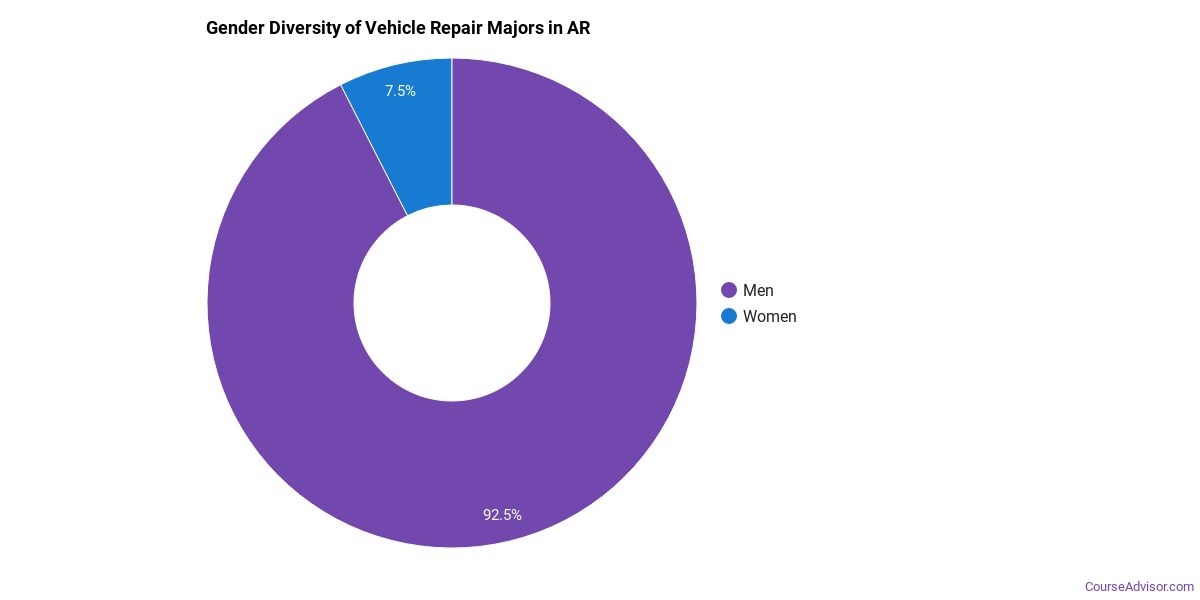
In Arkansas, a vehicle repair major is more popular with men than with women.
Racial Distribution
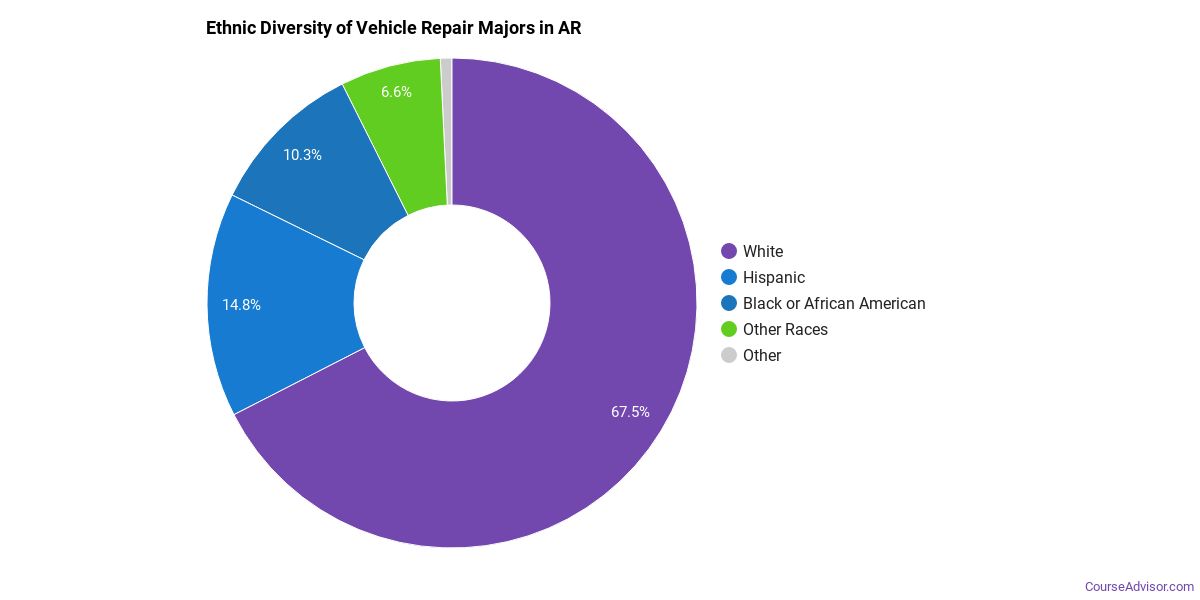
The racial distribution of vehicle repair majors in Arkansas is as follows:
- Asian: 2.3%
- Black or African American: 11.8%
- Hispanic or Latino: 15.2%
- White: 65.0%
- Non-Resident Alien: 0.0%
- Other Races: 5.7%
Jobs for Vehicle Repair Grads in Arkansas
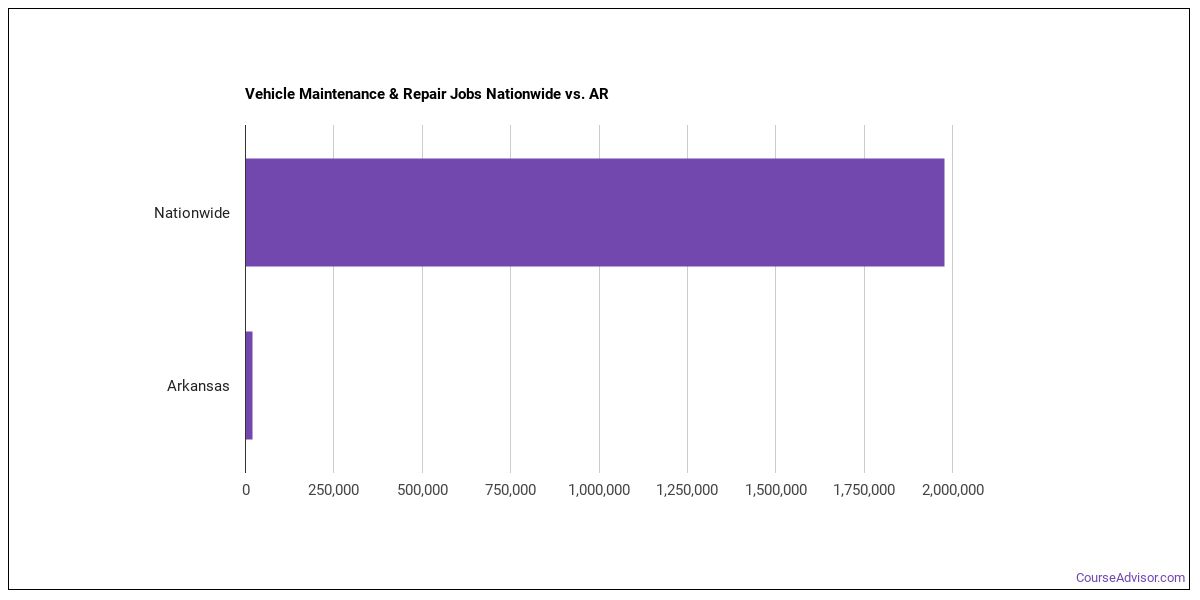
In this state, there are 19,110 people employed in jobs related to a vehicle repair degree, compared to 1,978,690 nationwide.
Wages for Vehicle Repair Jobs in Arkansas
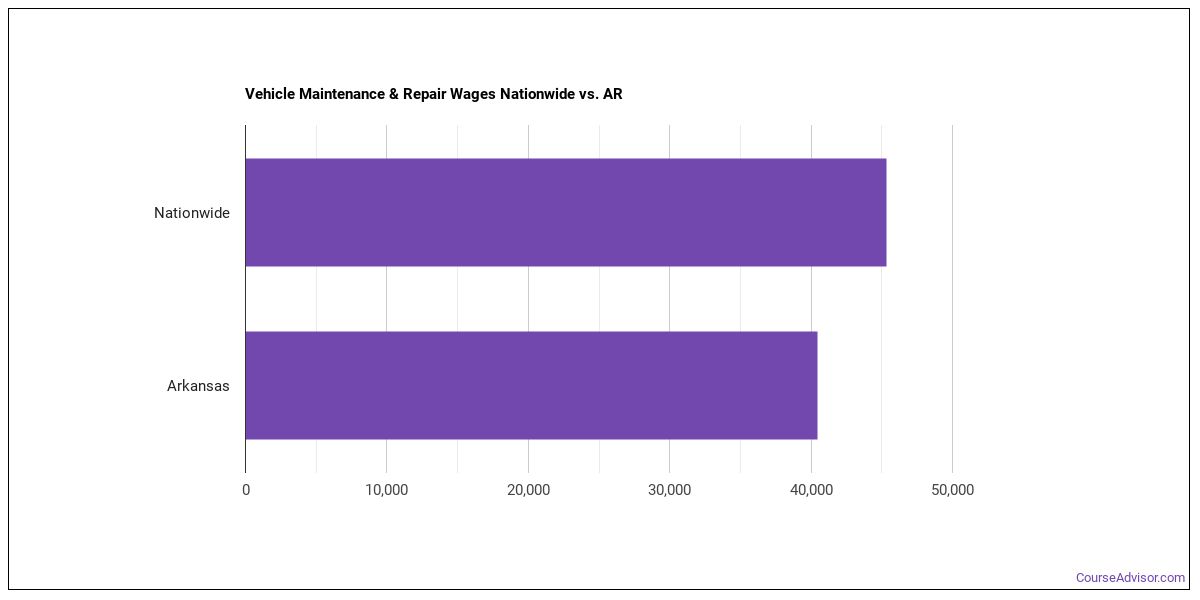
Vehicle Repair grads earn an average of $40,440 in the state and $45,330 nationwide.
Most Popular Vehicle Repair Programs in AR
There are 10 colleges in Arkansas that offer vehicle repair degrees. Learn about the most popular 10 below:

The average student takes 4.48 years to complete their degree at ATU. The full-time teacher rate is 100%. Students enjoy a student to faculty ratio of 18 to 1.
Request Information
100% of students are awarded financial aid at this school. The student to faculty ratio is 15 to 1. This public college charges it's students an average net price of $10,067.
Request Information
Of all the teachers who work at the school, 48% are considered full time. The student to faculty ratio is 14 to 1. 100% of students are awarded financial aid at this school.
Request Information
A typical student attending National Park College will pay a net price of $8,030. Seeking financial aid? At this school, 92% of students receive it. The full-time teacher rate is 100%.
Request Information
The full-time teacher rate is 100%. Students enjoy a student to faculty ratio of 20 to 1. A typical student attending UACCM will pay a net price of $7,371.
Request Information
51% of the teachers are full time. 100% of students are awarded financial aid at this school. 11 to 1 is the student to faculty ratio.
Request Information
The full-time teacher rate is 100%. The student to faculty ratio is 15 to 1. This public school has an average net price of $13,070.
Request Information
Of all the teachers who work at the school, 48% are considered full time. 100% of students are awarded financial aid at this school. This public college charges it's students an average net price of $8,480.
Request Information
75% of the teachers are full time. A typical student attending SAU Tech will pay a net price of $4,084. Of all the students who attend this school, 95% get financial aid.
Request Information
Students enjoy a student to faculty ratio of 13 to 1. 91% of students are awarded financial aid at this school. 51% of the teachers are full time.
Request InformationVehicle Repair Careers in AR
Some of the careers vehicle repair majors go into include:
| Job Title | AR Job Growth | AR Median Salary |
|---|---|---|
| Motorboat Mechanics and Service Technicians | 10% | $32,970 |
| Mechanic, and Repairer Supervisors | 10% | $57,280 |
Related Majors in Arkansas
Below are some popular majors in the state that are similar to vehicle repair.
| Major | Annual Graduates in AR |
|---|---|
| Heavy Equipment Maintenance | 48 |
| Electronics Maintenance & Repair | 28 |
| Heating, Ventilation, Air & Cooling | 28 |
| Mechanics & Repairers | 16 |
| Other Mechanic Technologies | 2 |
View all majors related to Vehicle Repair
Explore Major by State
Alabama
Arkansas
Connecticut
Florida
Idaho
Iowa
Louisiana
Massachusetts
Mississippi
Nebraska
New Jersey
North Carolina
Oklahoma
Rhode Island
Tennessee
Vermont
West Virginia
View Nationwide Vehicle Repair Report
References
- College Factual
- National Center for Education Statistics
- O*NET Online
- Image Credit: By Airman 1st Class Nigel Sandridge under License
More about our data sources and methodologies.

Course Advisor provides higher-education, college and university, degree, program, career, salary, and other helpful information to students, faculty, institutions, and other internet audiences. Presented information and data are subject to change. Inclusion on this website does not imply or represent a direct relationship with the company, school, or brand. Information, though believed correct at time of publication, may not be correct, and no warranty is provided. Contact the schools to verify any information before relying on it. Financial aid may be available for those who qualify. The displayed options may include sponsored or recommended results, not necessarily based on your preferences.
© Course Advisor – All Rights Reserved.