Telshe Yeshiva - Chicago Overview
Located in Chicago, Illinois, Telshe Yeshiva - Chicago is a private not-for-profit institution. The location of Telshe Yeshiva - Chicago is great for students who prefer living in an urban area.
What Is Telshe Yeshiva - Chicago Known For?
- The master's degree is the highest award offered at Telshe Yeshiva - Chicago.
- In a recent academic period89% of the faculty were full-time.
Where Is Telshe Yeshiva - Chicago?
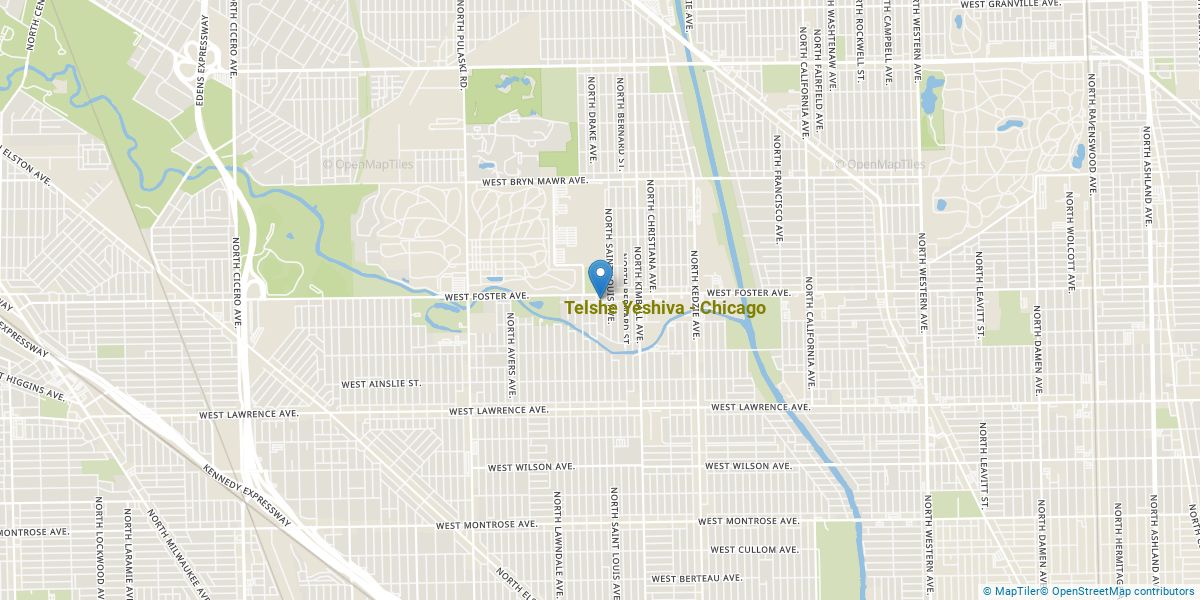
Contact details for Telshe Yeshiva - Chicago are given below.
| Contact Details | |
|---|---|
| Address: | 3535 West Foster, Chicago, IL 60625 |
| Phone: | 773-463-7738 |
| Website: | telsheyeshivachicago.com |
Admission Requirements for Telshe Yeshiva - Chicago
| Submission | Required? |
|---|---|
| High School GPA | 5 |
| High School Rank | 3 |
| High School Transcript | 5 |
| College Prep Program | 1 |
| Recommendations | 1 |
| SAT or ACT Scores | 3 |
| TOEFL | 3 |
How Hard Is It To Get Into Telshe Yeshiva - Chicago?
Can I Afford Telshe Yeshiva - Chicago?
Explore Best Ranked Schools for You
Telshe Yeshiva - Chicago Undergraduate Student Diversity
Racial-Ethnic Diversity
The racial-ethnic breakdown of Telshe Yeshiva - Chicago students is as follows.
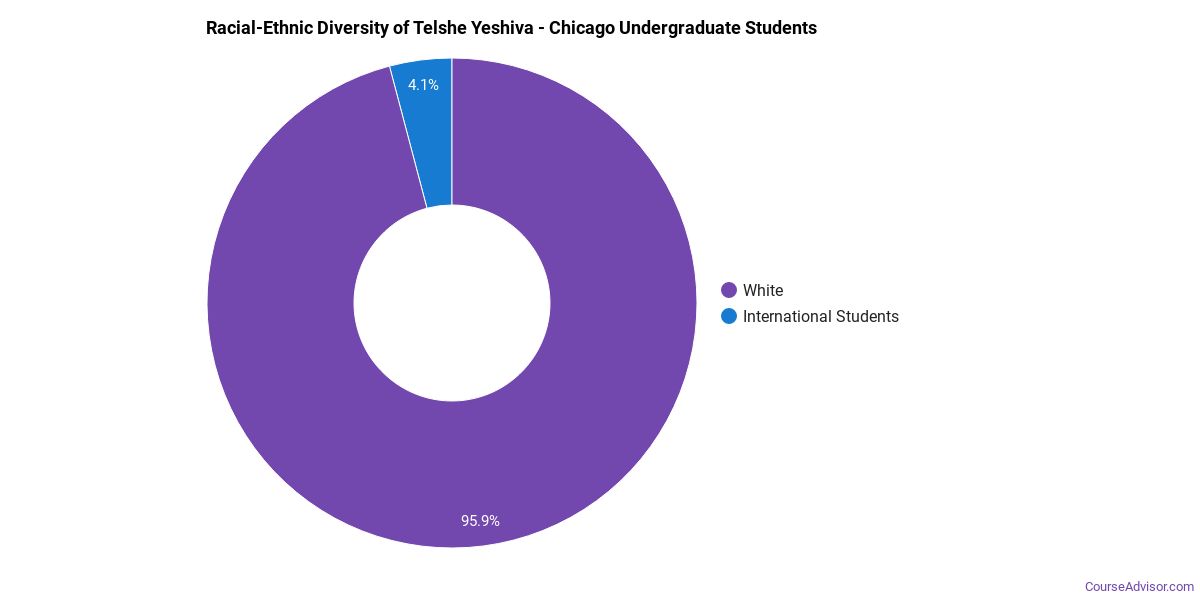
| Race/Ethnicity | Number of Grads |
|---|---|
| Asian | 0 |
| Black or African American | 0 |
| Hispanic or Latino | 0 |
| White | 80 |
| International Students | 2 |
| Other Races/Ethnicities | 0 |
Geographic Diversity
Illinois students aren't the only ones who study at Telshe Yeshiva - Chicago. At this time, 5 states are represented by the student population at the school.
Telshe Yeshiva - Chicago Undergraduate Concentrations
The table below shows the number of awards for each concentration.
| Major | Bachelor’s | Master’s | TOTAL |
|---|---|---|---|
| Religious Studies | 10 | 2 | 12 |
| TOTAL | 10 | 2 | 12 |
References
*The racial-ethnic minorities count is calculated by taking the total number of students and subtracting white students, international students, and students whose race/ethnicity was unknown. This number is then divided by the total number of students at the school to obtain the racial-ethnic minorities percentage.
More about our data sources and methodologies.

Course Advisor provides higher-education, college and university, degree, program, career, salary, and other helpful information to students, faculty, institutions, and other internet audiences. Presented information and data are subject to change. Inclusion on this website does not imply or represent a direct relationship with the company, school, or brand. Information, though believed correct at time of publication, may not be correct, and no warranty is provided. Contact the schools to verify any information before relying on it. Financial aid may be available for those who qualify. The displayed options may include sponsored or recommended results, not necessarily based on your preferences.
© Course Advisor – All Rights Reserved.