Wind Energy Engineers: Career Profile
Design underground or overhead wind farm collector systems and prepare and develop site specifications.
Featured schools near , edit
What Do Wind Energy Engineers Take On?
The core tasks performed by wind energy engineers span:
- Create or maintain wind farm layouts, schematics, or other visual documentation for wind farms.
- Recommend process or infrastructure changes to improve wind turbine performance, reduce operational costs, or comply with regulations.
- Create models to optimize the layout of wind farm access roads, crane pads, crane paths, collection systems, substations, switchyards, or transmission lines.
What Wind Energy Engineers Need to Know
Top wind energy engineers draw on a mix of skills and domain knowledge.
Key Skills
The competencies most central to this role, rated on an importance scale of 0 to 5:
Knowledge Areas
Other Wind Energy Engineers Job Titles
People in this occupation may also be known by titles such as:
- Engineer
- Project Engineer
- SCADA Engineer (Supervisory Control and Data Acquisition)
- Turbine Engineer
- Turbine Measurements Engineer
- Utility Engineer
- Wind Energy Consultant
- Wind Energy Engineer
Employment and Demand
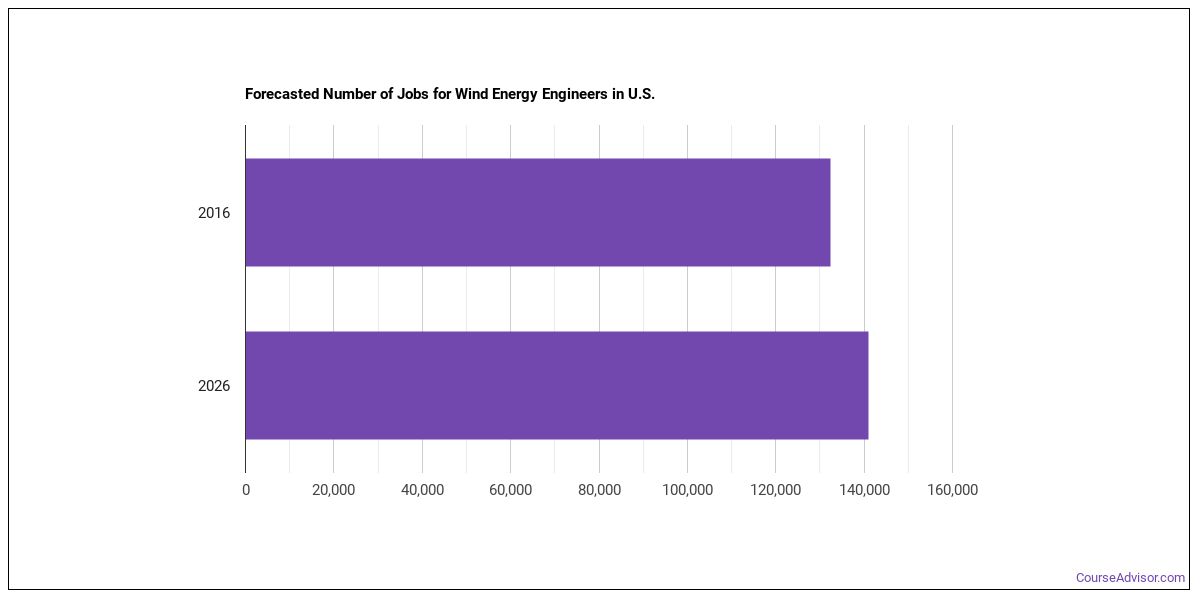
There are about 313,540 wind energy engineers working in the United States today. This occupation is expected to grow by +12.7% over the projection horizon.
Wind Energy Engineers Pay
| Statistic | Value |
|---|---|
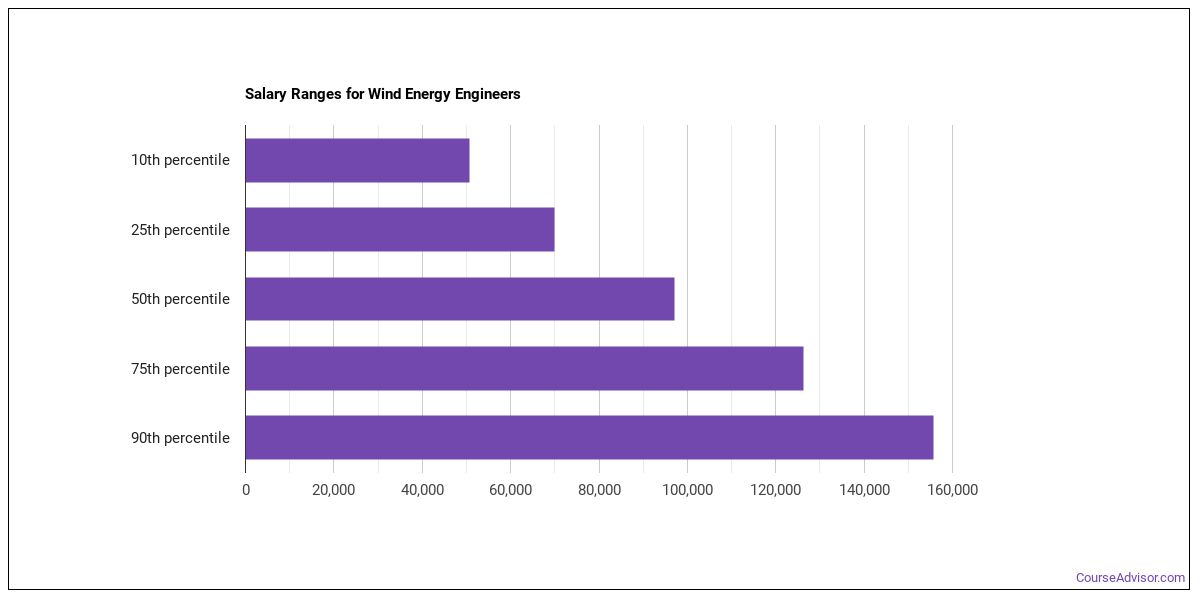
| Annual median | $98,460 |
| Hourly median | $47.34 |
| 10th percentile | $59,125 |
| 25th percentile | $78,793 |
| 75th percentile | $118,128 |
| 90th percentile | $137,795 |
Compensation varies based on experience, location, and industry.
How Much Do Wind Energy Engineers Make in Different U.S. States?
| State | Annual median salary |
|---|---|
| District of Columbia | $167,270 |
| Alabama | $146,480 |
| New Mexico | $142,520 |
| Virginia | $142,110 |
| Wyoming | $139,010 |
| Maryland | $135,990 |
| Alaska | $132,410 |
| Massachusetts | $132,020 |
| New Jersey | $131,960 |
| Rhode Island | $131,830 |
| Idaho | $131,390 |
| California | $128,830 |
| Oregon | $125,920 |
| Colorado | $125,330 |
| Washington | $125,080 |
| Hawaii | $120,330 |
| Connecticut | $119,220 |
| New Hampshire | $118,630 |
| South Carolina | $117,980 |
| Minnesota | $116,660 |
| Texas | $115,950 |
| Georgia | $115,790 |
| Maine | $114,610 |
| Ohio | $113,880 |
| New York | $113,380 |
| Utah | $113,290 |
| Mississippi | $112,100 |
| Oklahoma | $111,230 |
| Vermont | $110,640 |
| Arizona | $110,160 |
| Illinois | $109,380 |
| Wisconsin | $107,400 |
| North Carolina | $106,960 |
| Indiana | $106,040 |
| Florida | $103,920 |
| Michigan | $103,800 |
| Pennsylvania | $103,580 |
| West Virginia | $103,400 |
| Nevada | $101,660 |
| Iowa | $100,200 |
| Tennessee | $97,990 |
| Louisiana | $95,550 |
| Missouri | $93,020 |
| Kentucky | $89,650 |
| Guam | $89,440 |
| North Dakota | $88,100 |
| Montana | $87,130 |
| Delaware | $85,530 |
| South Dakota | $82,970 |
| Nebraska | $76,910 |
| Arkansas | $75,000 |
| Kansas | $69,210 |
| Puerto Rico | $58,710 |
Pay by U.S. Region
Compensation for wind energy engineers shift depending on where you work. The following regions pay the most:
| Region | Median annual wage | Share of U.S. jobs | Location quotient |
|---|---|---|---|
| Far Western US | $127,455 | 22.6% | 1.41 |
| Middle Atlantic | $127,069 | 15.3% | 1.60 |
| New England | $124,655 | 4.3% | 0.92 |
| Rocky Mountains | $120,932 | 3.4% | 0.87 |
| Southwest | $117,599 | 10.1% | 0.89 |
| Southeast | $111,896 | 28.2% | 1.65 |
| Great Lakes | $108,385 | 12.1% | 1.08 |
| Plains States | $95,614 | 3.6% | 0.55 |
Where the Jobs Cluster
| Metro area | State | Median annual wage | Employment |
|---|---|---|---|
| Washington-Arlington-Alexandria, DC-VA-MD-WV | DC | $162,610 | 7,950 |
| San Jose-Sunnyvale-Santa Clara, CA | CA | $157,770 | 3,490 |
| Lexington Park, MD | MD | $157,330 | 1,090 |
| San Francisco-Oakland-Fremont, CA | CA | $156,140 | 5,060 |
| Charlottesville, VA | VA | $152,840 | 70 |
| Wilmington, NC | NC | $148,580 | 90 |
| Huntsville, AL | AL | $148,430 | 3,120 |
| Albuquerque, NM | NM | $143,050 | 1,080 |
Industry Breakdown
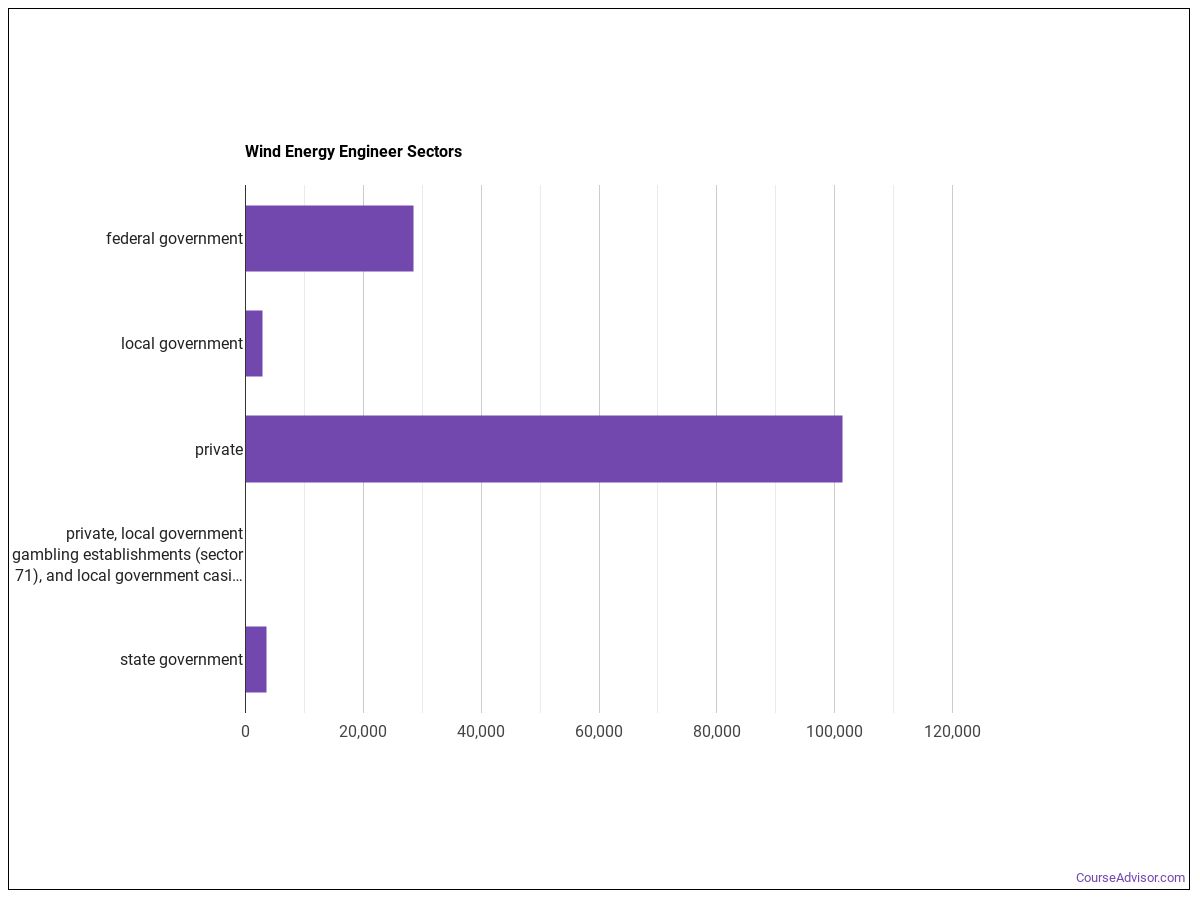
The largest employers of wind energy engineers work in these industries:
| Industry | Employment | Median annual wage |
|---|---|---|
| Professional, Scientific, and Technical Services | 37,330 | $112,040 |
| Manufacturing | 36,850 | $107,590 |
| Wholesale Trade | 6,470 | $103,760 |
| Administrative and Support and Waste Management and Remediation Services | 6,030 | $95,040 |
| Management of Companies and Enterprises | 5,210 | $122,930 |
| Information | 3,800 | $159,700 |
| Construction | 3,520 | $81,570 |
| Utilities | 2,970 | $118,630 |
Wind Energy Engineers work in the following industries:
Tools and Technology
- Data base user interface and query software: Amazon Web Services AWS software (hot technology)
- File versioning software: Apache Subversion SVN (hot technology)
- Computer aided design CAD software: Autodesk AutoCAD (hot technology)
- Computer aided design CAD software: Bentley MicroStation (hot technology)
- Object or component oriented development software: C# (hot technology)
- Object or component oriented development software: C++ (hot technology)
- Computer aided design CAD software: Dassault Systemes SolidWorks (hot technology)
- Geographic information system: ESRI ArcGIS software (hot technology)
- Enterprise application integration software: Extensible markup language XML (hot technology)
- File versioning software: Git (hot technology)
- Program testing software: JUnit (hot technology)
- Operating system software: Linux (hot technology)
Work Environment
The on-the-job environment of wind energy engineers is shaped by the following characteristics:
- Spend Time Sitting
- Telephone Conversations
- Face-to-Face Discussions with Individuals and Within Teams
- Determine Tasks, Priorities and Goals
How to Become Wind Energy Engineers
Most wind energy engineers positions require a bachelor’s degree as the typical entry-level education. This occupation sits in Considerable Preparation Needed (Job Zone 4), indicating the level of preparation typically expected.
Other Careers to Consider
Similar Occupations
- Geothermal Production Managers (Supplemental)
- Biomass Power Plant Managers (Supplemental)
- Hydroelectric Production Managers (Supplemental)
- Wind Energy Operations Managers (Supplemental)
- Wind Energy Development Managers (Primary-Short)
- Aerospace Engineers (Primary-Long)
- Civil Engineers (Primary-Long)
- Water/Wastewater Engineers (Primary-Long)
Top Programs to Study For This Career
Future wind energy engineers typically earn programs in:
Engineering
29 programs across 24 majors
- General Engineering
- Systems Engineering
- Other Engineering
- Electrical and Computer Engineering
- Robotics Engineering
- Construction Engineering
- Engineering Science
- Architectural Engineering
- Engineering Physics
- Manufacturing Engineering
- Biological Engineering
- Electrical Engineering
- Geoscience Engineering
- Chemical Engineering
- Ocean Engineering
- Engineering Mechanics
- Energy Systems Engineering
- Biochemical Engineering
- Surveying Engineering
- Civil Engineering
- Electromechanical Engineering
- Forest Engineering
- Paper Science & Engineering
- Engineering Chemistry
Engineering Technologies and Engineering-Related Fields
2 programs across 2 majors
Health Professions and Related Programs
1 programs across 1 majors
References
Data on this page comes from the following authoritative sources:
- U.S. Bureau of Labor Statistics — Occupational Employment and Wage Statistics (OEWS) for employment and wage data by state and industry.
- BLS Employment Projections for total employment and growth forecasts.
- O*NET (Occupational Information Network) for skills, knowledge, tasks, work activities, work context, technology, and education-zone data.
SOC code: 17-2199.10 (Engineers, All Other).

Course Advisor provides higher-education, college and university, degree, program, career, salary, and other helpful information to students, faculty, institutions, and other internet audiences. Presented information and data are subject to change. Inclusion on this website does not imply or represent a direct relationship with the company, school, or brand. Information, though believed correct at time of publication, may not be correct, and no warranty is provided. Contact the schools to verify any information before relying on it. Financial aid may be available for those who qualify. The displayed options may include sponsored or recommended results, not necessarily based on your preferences.
© Course Advisor – All Rights Reserved.