Transportation Inspectors in Louisiana
Considering working as a Transportation Inspectors in Louisiana? Here’s what the data says. Inspect equipment or goods in connection with the safe transport of cargo or people. Includes rail transportation inspectors, such as freight inspectors, rail inspectors, and other inspectors of transportation vehicles not elsewhere classified. Excludes “Transportation Security Screeners” (33-9093).
What do Transportation Inspectors Make in Louisiana?
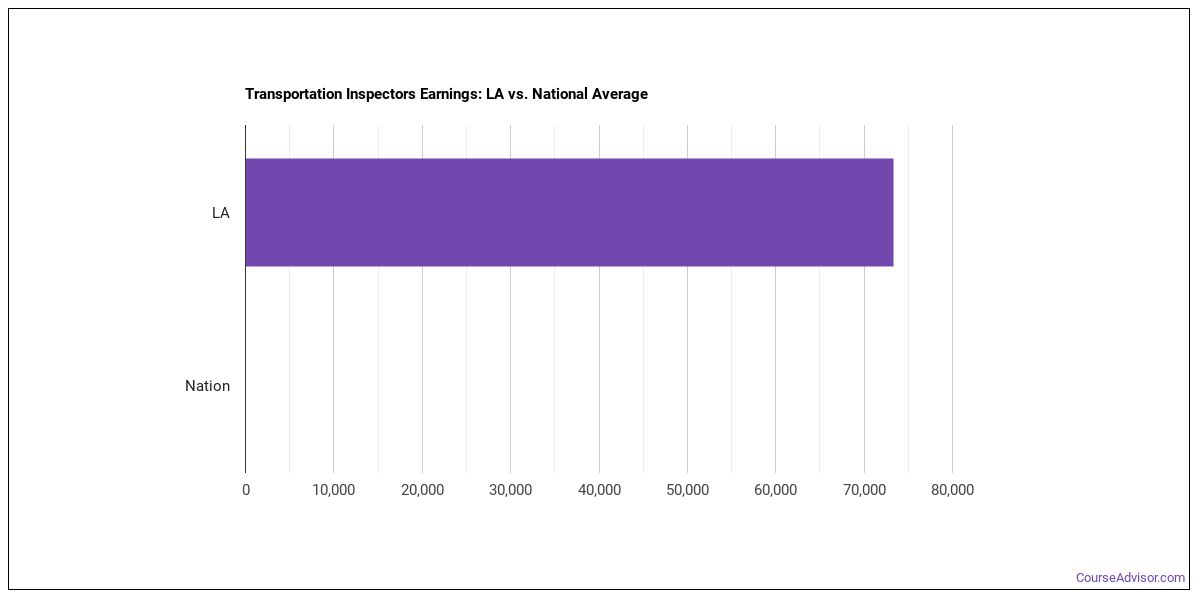
The transportation inspectors working in Louisiana, the typical annual salary is $79,280 per year (or roughly $38.12/hour).Annual wages span from $35,240 at the 10th percentile to $134,410 at the 90th percentile.
| Wage Statistic | Annual | Hourly |
|---|---|---|
| 10th percentile | $35,240 | $16.94 |
| 25th percentile | $50,340 | $24.20 |
| Median (50th) | $79,280 | $38.12 |
| 75th percentile | $103,400 | $49.71 |
| 90th percentile | $134,410 | $64.62 |

Location quotient — how concentrated this career is in Louisiana compared to the national average — is 0.51, suggesting fewer transportation inspectors per worker than the national average.
National Wage Comparison
Nationally, transportation inspectors earn a median of $41,904 per year ($20.15/hour), above the Louisiana median.
Employment Outlook
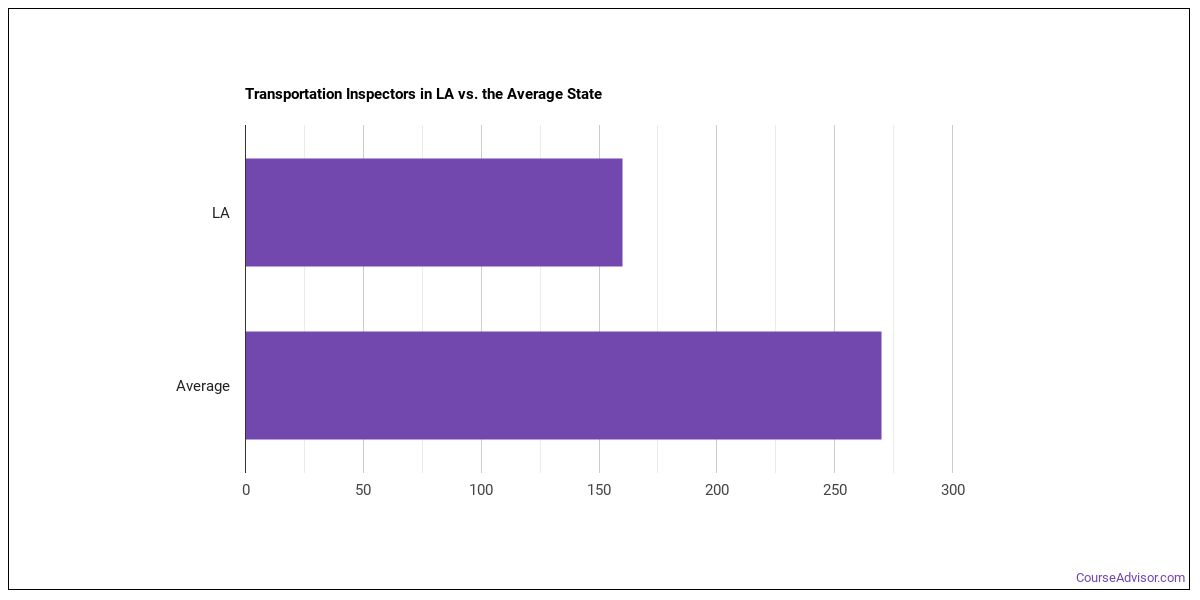
Nationally, total employment in this occupation is 754,294 transportation inspectors across the United States. In Louisiana alone, approximately 150 people work in this role. That’s fewer than the typical state, which employs around 240 transportation inspectors.

Top Louisiana Metros for Transportation Inspectors
These are the Louisiana metros with the most transportation inspectors in Louisiana.
| Metro Area | Number Employed | Annual Median Salary |
|---|---|---|
| Baton Rouge, LA | 40 | $113,030 |
Top States for Transportation Inspectors Employment
The table below shows the states where the most transportation inspectors work.
| State | Number Employed |
|---|---|
| New York | 3,730 |
| Texas | 2,890 |
| California | 1,900 |
| Florida | 1,670 |
| New Jersey | 1,020 |
| Illinois | 980 |
| Arizona | 930 |
| Georgia | 830 |
| Massachusetts | 510 |
| North Carolina | 450 |
| Ohio | 440 |
| Tennessee | 430 |
| Washington | 420 |
| Colorado | 420 |
| South Carolina | 350 |
| Virginia | 340 |
| Missouri | 340 |
| Indiana | 320 |
| Michigan | 310 |
| Pennsylvania | 310 |
Highest-Paying States for Transportation Inspectors
The highest-paying states for transportation inspectors.
| State | Annual Median Salary |
|---|---|
| Alaska | $138,030 |
| Idaho | $107,440 |
| Hawaii | $105,650 |
| Oklahoma | $104,490 |
| North Dakota | $104,330 |
| District of Columbia | $103,970 |
| Kansas | $103,810 |
| Wisconsin | $100,310 |
| Georgia | $98,150 |
| Nevada | $97,880 |
Skills
Key transportation inspectors skills, rated on an importance scale of 0 to 5:
Knowledge Areas
Important knowledge areas for this occupation, rated on an importance scale of 0 to 5:
Abilities
The abilities that matter most for transportation inspectors, rated on an importance scale of 0 to 5:
Daily Tasks
Day-to-day, transportation inspectors typically:
- Prepare and submit reports after completion of freight shipments.
- Inspect shipments to ensure that freight is securely braced and blocked.
- Record details about freight conditions, handling of freight, and any problems encountered.
- Advise crews in techniques of stowing dangerous and heavy cargo.
- Observe loading of freight to ensure that crews comply with procedures.
- Recommend remedial procedures to correct any violations found during inspections.
- Inspect loaded cargo, cargo lashed to decks or in storage facilities, and cargo handling devices to determine compliance with health and safety regulations and need for maintenance.
- Notify workers of any special treatment required for shipments.
- Direct crews to reload freight or to insert additional bracing or packing as necessary.
- Check temperatures and humidities of shipping and storage areas to ensure that they are at appropriate levels to protect cargo.
- Determine cargo transportation capabilities by reading documents that set forth cargo loading and securing procedures, capacities, and stability factors.
- Read draft markings to determine depths of vessels in water.
Work Activities
- Getting Information
- Identifying Objects, Actions, and Events
- Evaluating Information to Determine Compliance with Standards
- Inspecting Equipment, Structures, or Materials
- Communicating with Supervisors, Peers, or Subordinates
- Making Decisions and Solving Problems
- Documenting/Recording Information
- Monitoring Processes, Materials, or Surroundings
- Estimating the Quantifiable Characteristics of Products, Events, or Information
- Organizing, Planning, and Prioritizing Work
- Updating and Using Relevant Knowledge
- Communicating with People Outside the Organization
Tools & Technology
Technologies frequently used: Hot technologies: Adobe Acrobat In-demand technologies: Microsoft Excel
Related Careers
Related occupations to transportation inspectors include:
- Transportation, Storage, and Distribution Managers
- Government Property Inspectors and Investigators
- Marine Engineers and Naval Architects
- Occupational Health and Safety Specialists
- Cargo and Freight Agents
- Freight Forwarders
Also Known As
Admeasurer, Bridge Inspector, Cargo Inspector, Cargo Surveyor, Container Inspector, Damaged Freight Inspector, Equipment Inspector, Freight Car Inspector, Freight Inspector, Freight Service Inspector, Freight Specialist, Heavy Check Inspector, Inspections Specialist, Inspector, Loading Inspector.
References
- U.S. Bureau of Labor Statistics, Occupational Employment and Wage Statistics — https://www.bls.gov/oes/
- O*NET Online — https://www.onetonline.org/
- BLS Employment Projections — https://www.bls.gov/emp/
- O*NET-SOC code: 53-6051.00

Course Advisor provides higher-education, college and university, degree, program, career, salary, and other helpful information to students, faculty, institutions, and other internet audiences. Presented information and data are subject to change. Inclusion on this website does not imply or represent a direct relationship with the company, school, or brand. Information, though believed correct at time of publication, may not be correct, and no warranty is provided. Contact the schools to verify any information before relying on it. Financial aid may be available for those who qualify. The displayed options may include sponsored or recommended results, not necessarily based on your preferences.
© Course Advisor – All Rights Reserved.