Textile Knitting and Weaving Machine Setters, Operators, and Tenders: Career Overview
Set up, operate, or tend machines that knit, loop, weave, or draw in textiles.
Featured schools near , edit
What Do Textile Knitting and Weaving Machine Setters, Operators, and Tenders Take On?
Typical responsibilities of textile knitting and weaving machine setters, operators, and tenders cover:
- Observe woven cloth to detect weaving defects.
- Thread yarn, thread, and fabric through guides, needles, and rollers of machines for weaving, knitting, or other processing.
- Remove defects in cloth by cutting and pulling out filling.
- Examine looms to determine causes of loom stoppage, such as warp filling, harness breaks, or mechanical defects.
- Inspect products to ensure that specifications are met and to determine if machines need adjustment.
- Notify supervisors or repair staff of mechanical malfunctions.
- Start machines, monitor operations, and make adjustments as needed.
- Stop machines when specified amounts of product have been produced.
Skills and Knowledge
Top textile knitting and weaving machine setters, operators, and tenders combine a mix of skills and domain knowledge.
Key Skills
The abilities most central to this role, rated on an importance scale of 0 to 5:
Top Knowledge Areas
Types of Textile Knitting and Weaving Machine Setters, Operators, and Tenders Jobs
People in this occupation may also be known by titles such as:
- Automated Weaver
- Automatic Full-Fashioned Hosiery Knitting Machine Operator
- Automatic Pad-Making Machine Operator
- Belt Weaver
- Blanket Weaver
- Braid Pattern Setter
- Broadloom Weaver
- Carpet Loom Fixer
Employment and Demand
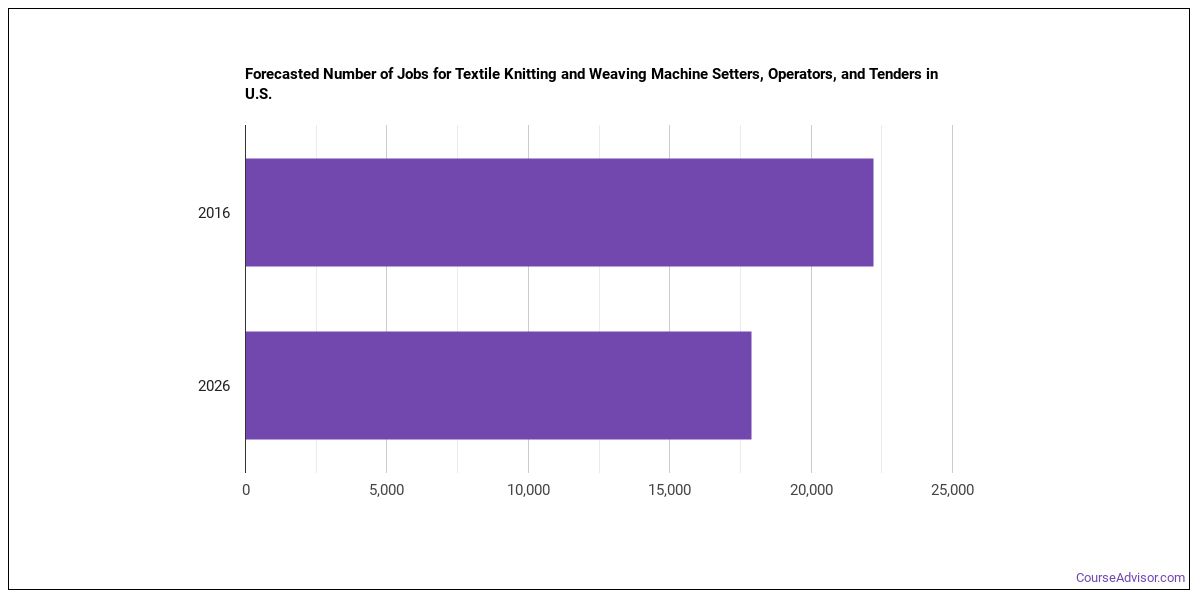
The U.S. employs around 209,222 textile knitting and weaving machine setters, operators, and tenders working in the United States today. Employment is projected to grow by +5.9% over the projection horizon.
Textile Knitting and Weaving Machine Setters, Operators, and Tenders Pay
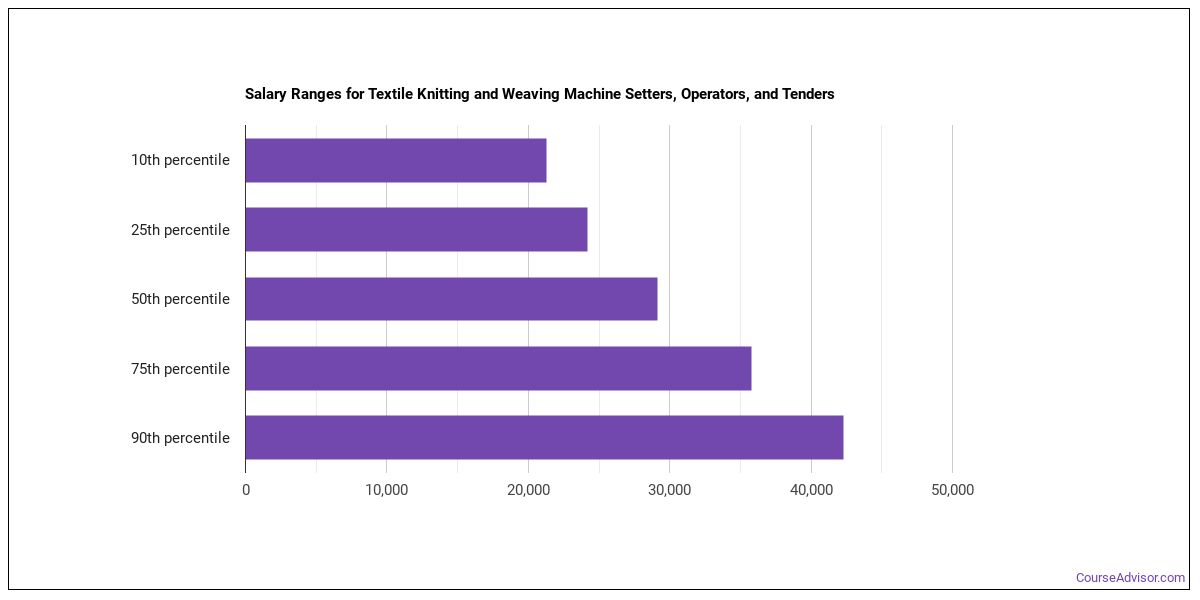
| Statistic | Value |
|---|---|
| Annual median | $52,453 |
| Hourly median | $25.22 |
| 10th percentile | $36,475 |
| 25th percentile | $44,464 |
| 75th percentile | $60,442 |
| 90th percentile | $68,431 |
Wages vary widely based on experience, location, and industry.
How Much Do Textile Knitting and Weaving Machine Setters, Operators, and Tenders Make in Different U.S. States?
| State | Annual median salary |
|---|---|
| Wisconsin | $65,820 |
| Mississippi | $49,720 |
| New York | $47,970 |
| Maine | $47,320 |
| New Hampshire | $47,170 |
| Washington | $46,700 |
| Minnesota | $43,950 |
| Michigan | $43,410 |
| Pennsylvania | $42,040 |
| Massachusetts | $40,030 |
| South Carolina | $39,680 |
| Georgia | $38,630 |
| Virginia | $38,570 |
| New Jersey | $38,390 |
| Ohio | $38,280 |
| Alabama | $37,860 |
| California | $37,290 |
| North Carolina | $36,520 |
| Indiana | $36,350 |
| Louisiana | $35,740 |
| Texas | $33,690 |
| Tennessee | $32,500 |
| Rhode Island | $31,420 |
Where Textile Knitting and Weaving Machine Setters, Operators, and Tenders Earn the Most
Pay for textile knitting and weaving machine setters, operators, and tenders vary by region. The following regions pay the most:
| Region | Median annual wage | Share of U.S. jobs | Location quotient |
|---|---|---|---|
| Great Lakes | $50,212 | 3.3% | 0.41 |
| Plains States | $43,950 | 0.5% | 0.26 |
| Middle Atlantic | $43,695 | 6.9% | 0.73 |
| New England | $38,897 | 4.7% | 3.31 |
| Far Western US | $38,719 | 5.6% | 0.39 |
| Southeast | $37,972 | 77.1% | 6.92 |
| Southwest | $33,690 | 1.8% | 0.19 |
Top Metro Areas
| Metro area | State | Median annual wage | Employment |
|---|---|---|---|
| Reading, PA | PA | $64,540 | 50 |
| Minneapolis-St. Paul-Bloomington, MN-WI | MN | $51,890 | 30 |
| Boston-Cambridge-Newton, MA-NH | MA | $47,610 | 90 |
| New York-Newark-Jersey City, NY-NJ | NY | $45,260 | 170 |
| Detroit-Warren-Dearborn, MI | MI | $43,410 | 70 |
| Greenville-Anderson-Greer, SC | SC | $42,770 | 650 |
| Philadelphia-Camden-Wilmington, PA-NJ-DE-MD | PA | $41,940 | 140 |
| Atlanta-Sandy Springs-Roswell, GA | GA | $41,630 | 750 |
Industry Breakdown
Most textile knitting and weaving machine setters, operators, and tenders are found across these industries:
| Industry | Employment | Median annual wage |
|---|---|---|
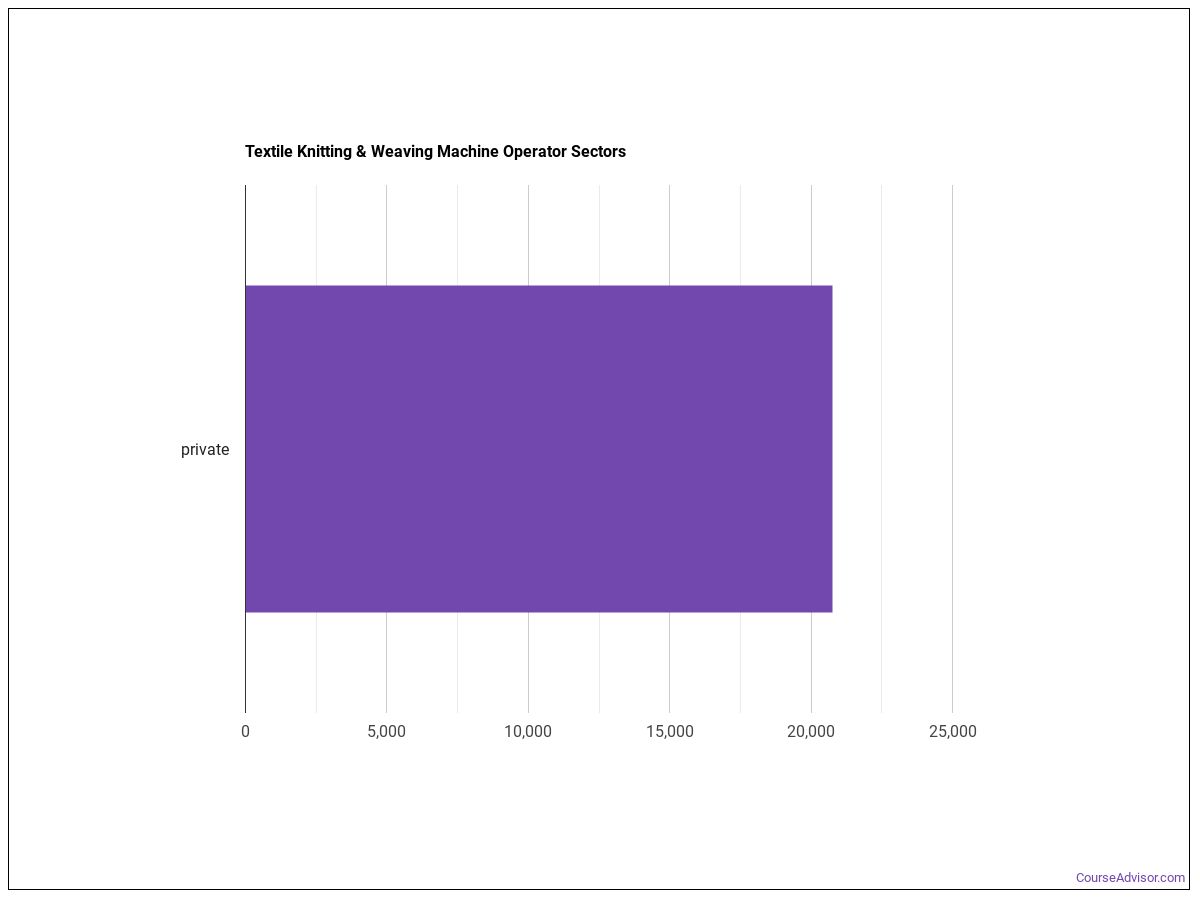
| Manufacturing | 13,880 | $38,280 |
| Wholesale Trade | 340 | $35,260 |
| Administrative and Support and Waste Management and Remediation Services | 260 | $35,430 |
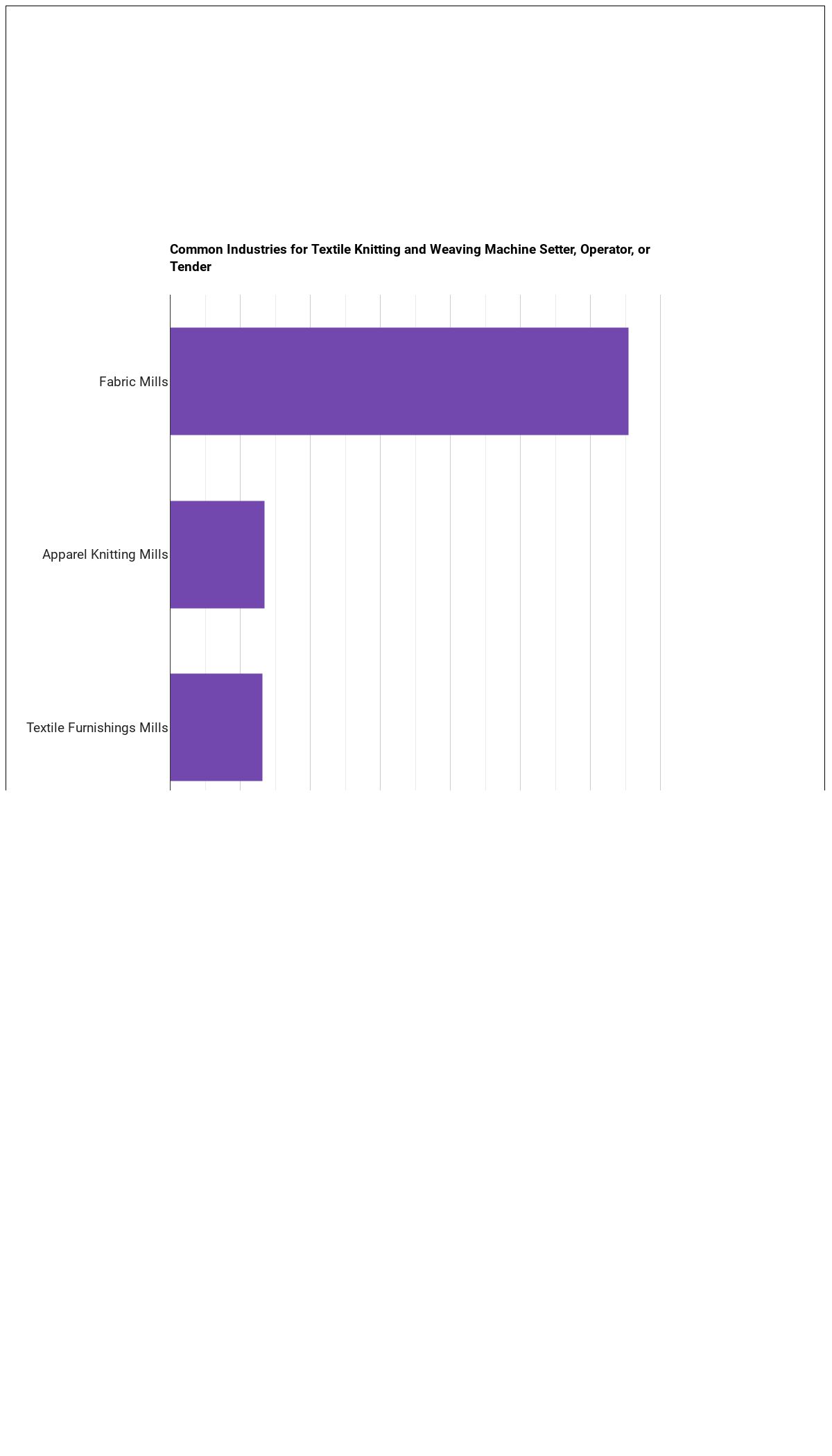
The table below shows some of the most common industries where those employed in this career field work.
Tech Stack
- Spreadsheet software: Microsoft Excel (hot technology)
- Office suite software: Microsoft Office software (hot technology)
- Electronic mail software: Microsoft Outlook (hot technology)
- Presentation software: Microsoft PowerPoint (hot technology)
- Word processing software: Microsoft Word (hot technology)
What the Workplace Is Like
The on-the-job environment of textile knitting and weaving machine setters, operators, and tenders is shaped by the following characteristics:
- Spend Time Using Your Hands to Handle, Control, or Feel Objects, Tools, or Controls
- Wear Common Protective or Safety Equipment such as Safety Shoes, Glasses, Gloves, Hearing Protection, Hard Hats, or Life Jackets
- Exposed to Sounds, Noise Levels that are Distracting or Uncomfortable
- Face-to-Face Discussions with Individuals and Within Teams
- Pace Determined by Speed of Equipment
Getting Started in This Career
Typical textile knitting and weaving machine setters, operators, and tenders positions require a high school diploma or equivalent as the typical entry-level education. The role falls in Some Preparation Needed (Job Zone 2), signaling the level of preparation typically expected.
Other Careers to Consider
Similar Occupations
- Industrial Machinery Mechanics (Supplemental)
- Extruding and Drawing Machine Setters, Operators, and Tenders, Metal and Plastic (Supplemental)
- Rolling Machine Setters, Operators, and Tenders, Metal and Plastic (Supplemental)
- Cutting, Punching, and Press Machine Setters, Operators, and Tenders, Metal and Plastic (Supplemental)
- Grinding, Lapping, Polishing, and Buffing Machine Tool Setters, Operators, and Tenders, Metal and Plastic (Supplemental)
- Print Binding and Finishing Workers (Primary-Long)
- Sewing Machine Operators (Primary-Short)
- Shoe Machine Operators and Tenders (Primary-Long)
References
Statistics shown above are sourced from the following authoritative sources:
- U.S. Bureau of Labor Statistics — Occupational Employment and Wage Statistics (OEWS) for employment and wage data by state and industry.
- BLS Employment Projections for total employment and growth forecasts.
- O*NET (Occupational Information Network) for skills, knowledge, tasks, work activities, work context, technology, and education-zone data.
SOC code: 51-6063.00 (Textile Knitting and Weaving Machine Setters, Operators, and Tenders).

Course Advisor provides higher-education, college and university, degree, program, career, salary, and other helpful information to students, faculty, institutions, and other internet audiences. Presented information and data are subject to change. Inclusion on this website does not imply or represent a direct relationship with the company, school, or brand. Information, though believed correct at time of publication, may not be correct, and no warranty is provided. Contact the schools to verify any information before relying on it. Financial aid may be available for those who qualify. The displayed options may include sponsored or recommended results, not necessarily based on your preferences.
© Course Advisor – All Rights Reserved.