Structural Iron and Steel Workers in Nebraska
Want to work as a Structural Iron and Steel Workers in Nebraska? Here’s what the data says. Raise, place, and unite iron or steel girders, columns, and other structural members to form completed structures or structural frameworks. May erect metal storage tanks and assemble prefabricated metal buildings. Excludes “Reinforcing Iron and Rebar Workers” (47-2171).
What do Structural Iron and Steel Workers Make in Nebraska?
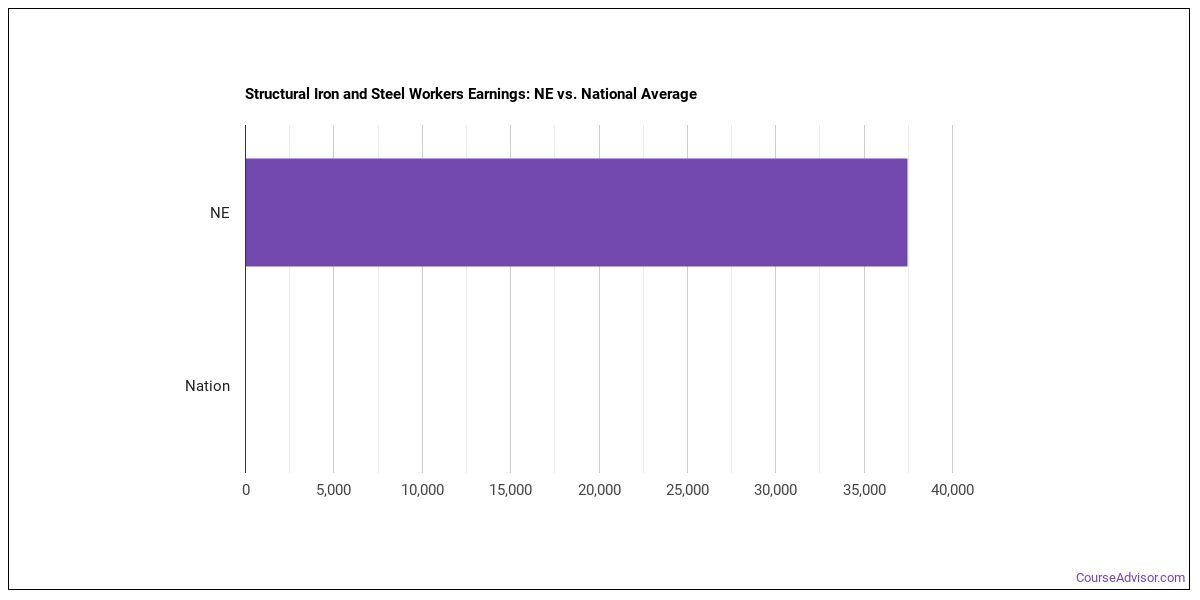
For a structural iron and steel workers working in Nebraska, the median annual wage is $62,000 per year (or about $29.81/hour).Earnings range from $48,310 at the 10th percentile to $75,670 at the 90th percentile.
| Wage Statistic | Annual | Hourly |
|---|---|---|
| 10th percentile | $48,310 | $23.23 |
| 25th percentile | $51,260 | $24.64 |
| Median (50th) | $62,000 | $29.81 |
| 75th percentile | $74,590 | $35.86 |
| 90th percentile | $75,670 | $36.38 |

The job concentration index in Nebraska relative to the national average — is 1.26, meaning that structural iron and steel workers are more concentrated here than the national average.
National Wage Comparison
Nationally, structural iron and steel workers earn a median of $59,092 per year ($28.41/hour), above the Nebraska median.
Employment Outlook
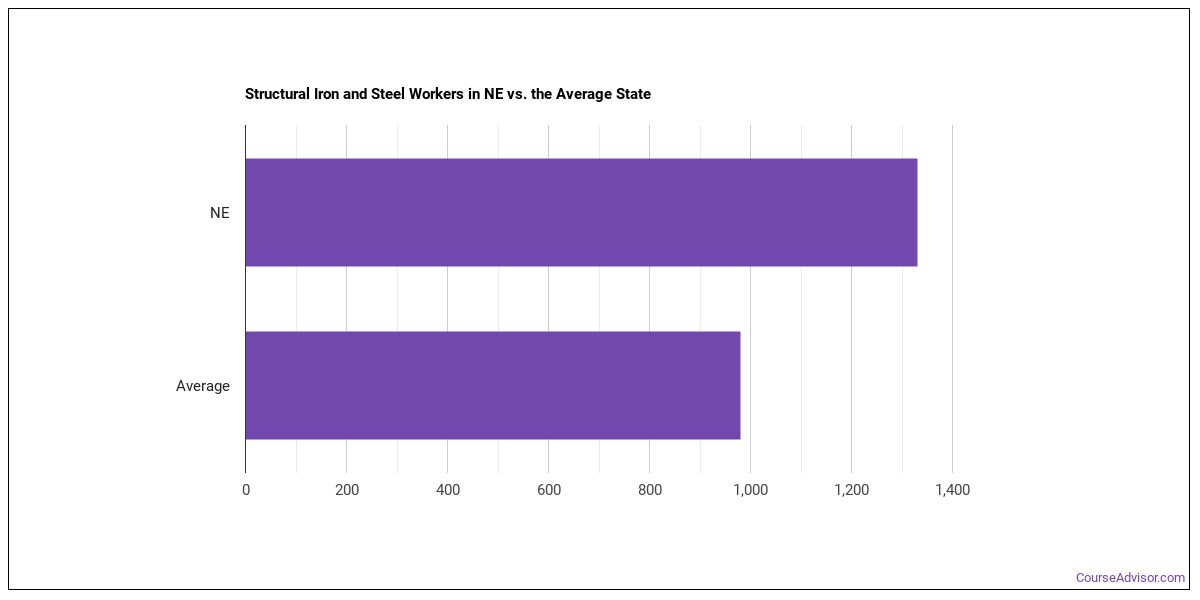
There are roughly 389,038 structural iron and steel workers nationwide. In Nebraska alone, around 540 people work in this role. That’s below the typical state, which employs around 810 structural iron and steel workers.

Top Nebraska Metros for Structural Iron and Steel Workers
These are the Nebraska metros with the most structural iron and steel workers in Nebraska.
| Metro Area | Number Employed | Annual Median Salary |
|---|---|---|
| Omaha, NE-IA | 260 | $73,890 |
| Lincoln, NE | 110 | $51,470 |
Top States for Structural Iron and Steel Workers Employment
View the states that employ the most structural iron and steel workers work.
| State | Number Employed |
|---|---|
| Texas | 10,090 |
| California | 6,970 |
| Illinois | 3,250 |
| New York | 3,190 |
| Arizona | 3,110 |
| Indiana | 2,530 |
| Massachusetts | 2,160 |
| Florida | 2,040 |
| Michigan | 2,010 |
| Ohio | 1,920 |
| Louisiana | 1,560 |
| North Carolina | 1,540 |
| Tennessee | 1,320 |
| Pennsylvania | 1,290 |
| New Jersey | 1,250 |
| Utah | 1,200 |
| Virginia | 1,190 |
| Alabama | 1,160 |
| Washington | 1,140 |
| Nevada | 1,050 |
Highest-Paying States for Structural Iron and Steel Workers
These states pay the most for structural iron and steel workers.
| State | Annual Median Salary |
|---|---|
| Massachusetts | $116,630 |
| New Jersey | $111,800 |
| Washington | $105,970 |
| Illinois | $101,030 |
| Hawaii | $99,370 |
| Rhode Island | $95,800 |
| New York | $95,370 |
| Minnesota | $93,240 |
| Wisconsin | $91,920 |
| Oregon | $90,060 |
Skills
Top structural iron and steel workers skills, rated on an importance scale of 0 to 5:
Knowledge Areas
Important knowledge areas for this occupation, rated on an importance scale of 0 to 5:
Abilities
Top abilities for structural iron and steel workers, rated on an importance scale of 0 to 5:
Daily Tasks
Day-to-day, structural iron and steel workers typically:
- Read specifications or blueprints to determine the locations, quantities, or sizes of materials required.
- Connect columns, beams, and girders with bolts, following blueprints and instructions from supervisors.
- Bolt aligned structural steel members in position for permanent riveting, bolting, or welding into place.
- Fasten structural steel members to hoist cables, using chains, cables, or rope.
- Hoist steel beams, girders, or columns into place, using cranes or signaling hoisting equipment operators to lift and position structural steel members.
- Verify vertical and horizontal alignment of structural steel members, using plumb bobs, laser equipment, transits, or levels.
- Cut, bend, or weld steel pieces, using metal shears, torches, or welding equipment.
- Erect metal or precast concrete components for structures, such as buildings, bridges, dams, towers, storage tanks, fences, or highway guard rails.
- Force structural steel members into final positions, using turnbuckles, crowbars, jacks, or hand tools.
- Pull, push, or pry structural steel members into approximate positions for bolting into place.
- Unload and position prefabricated steel units for hoisting, as needed.
- Drive drift pins through rivet holes to align rivet holes in structural steel members with corresponding holes in previously placed members.
Work Activities
- Handling and Moving Objects
- Inspecting Equipment, Structures, or Materials
- Performing General Physical Activities
- Getting Information
- Communicating with Supervisors, Peers, or Subordinates
- Operating Vehicles, Mechanized Devices, or Equipment
- Controlling Machines and Processes
- Making Decisions and Solving Problems
- Identifying Objects, Actions, and Events
- Organizing, Planning, and Prioritizing Work
- Evaluating Information to Determine Compliance with Standards
- Monitoring Processes, Materials, or Surroundings
Tools & Technology
Common tools and software used in this occupation include: Hot technologies: Microsoft Outlook
What Major Will Prepare You For This Career?
Several college majors map to this occupation:
- Building Management & Inspection
Featured schools near , edit
Related Careers
Other careers like structural iron and steel workers include:
- Boilermakers
- Brickmasons and Blockmasons
- Carpenters
- Cement Masons and Concrete Finishers
- Construction Laborers
- Drywall and Ceiling Tile Installers
Also Known As
Assembler, Awnings Mechanic, Billboard Erector, Billboard Installer, Billboard Mechanic, Bolter, Bridge Ironworker, Bridge Maintainer, Bridgeman, Building Construction Ironworker, Combination Worker, Construction Ironworker, Erector, Fitter, Guard Rail Installer.
References
- U.S. Bureau of Labor Statistics, Occupational Employment and Wage Statistics — https://www.bls.gov/oes/
- O*NET Online — https://www.onetonline.org/
- BLS Employment Projections — https://www.bls.gov/emp/
- O*NET-SOC code: 47-2221.00

Course Advisor provides higher-education, college and university, degree, program, career, salary, and other helpful information to students, faculty, institutions, and other internet audiences. Presented information and data are subject to change. Inclusion on this website does not imply or represent a direct relationship with the company, school, or brand. Information, though believed correct at time of publication, may not be correct, and no warranty is provided. Contact the schools to verify any information before relying on it. Financial aid may be available for those who qualify. The displayed options may include sponsored or recommended results, not necessarily based on your preferences.
© Course Advisor – All Rights Reserved.