Sewing Machine Operators: Career Profile
Operate or tend sewing machines to join, reinforce, decorate, or perform related sewing operations in the manufacture of garment or nongarment products.
Featured schools near , edit
What Tasks Do Sewing Machine Operators Do?
Typical responsibilities of sewing machine operators span:
- Monitor machine operation to detect problems such as defective stitching, breaks in thread, or machine malfunctions.
- Place spools of thread, cord, or other materials on spindles, insert bobbins, and thread ends through machine guides and components.
- Position items under needles, using marks on machines, clamps, templates, or cloth as guides.
- Guide garments or garment parts under machine needles and presser feet to sew parts together.
- Remove holding devices and finished items from machines.
- Match cloth pieces in correct sequences prior to sewing them, and verify that dye lots and patterns match.
- Fold or stretch edges or lengths of items while sewing to facilitate forming specified sections.
- Cut excess material or thread from finished products.
Skills and Knowledge
Effective sewing machine operators rely on a mix of skills and domain knowledge.
Most Important Skills
The competencies that matter most in this role, rated on an importance scale of 0 to 5:
Core Knowledge
Other Sewing Machine Operators Job Titles
This career also goes by job titles like:
- Appliquer
- Apron Operator
- Armhole Sewer
- Automat Watcher
- Automatic Hemmer
- Automatic Seamer
- Automatic Serging Machine Operator
- Automatic Shirring Machine Operator
How Many Sewing Machine Operators Are There?
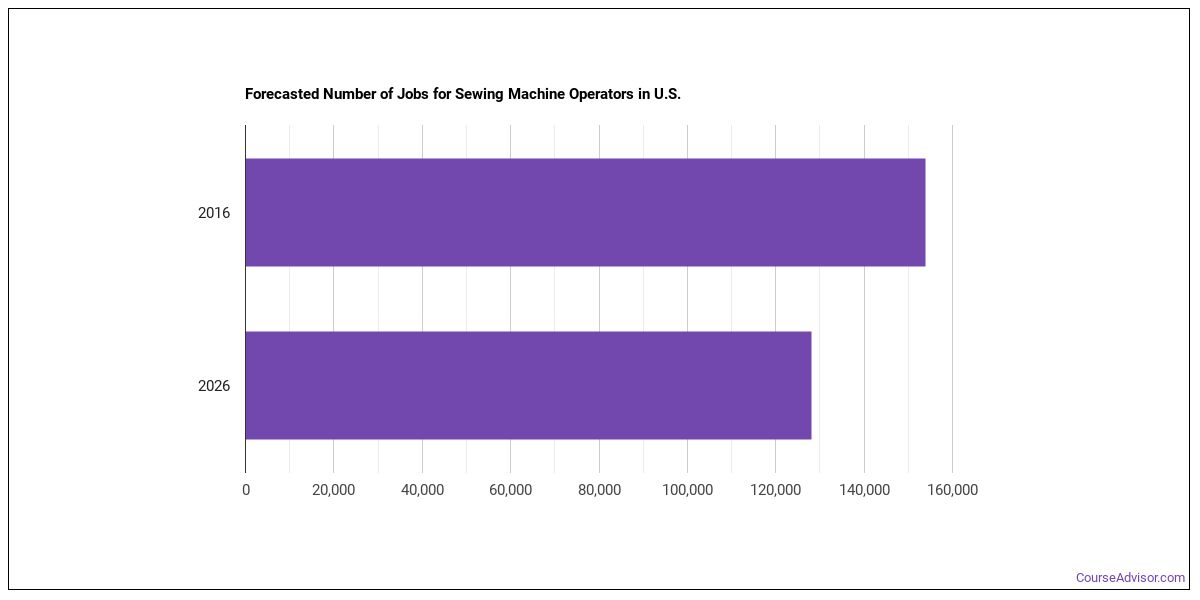
The U.S. employs around 425,426 sewing machine operators working in the United States today. Demand is forecast to grow by +1.8% over the projection horizon.
Salary for Sewing Machine Operators
| Statistic | Value |
|---|---|
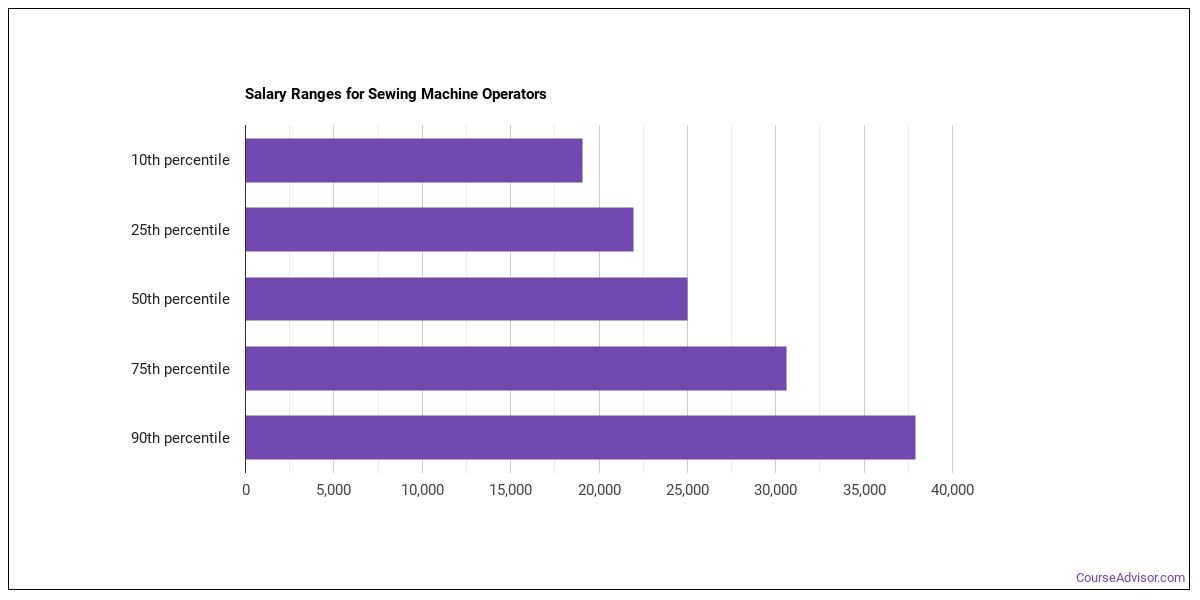
| Annual median | $31,213 |
| Hourly median | $15.01 |
| 10th percentile | $21,621 |
| 25th percentile | $26,417 |
| 75th percentile | $36,010 |
| 90th percentile | $40,806 |
Wages vary widely based on experience, location, and industry.
Sewing Machine Operators Salary by State
| State | Annual median salary |
|---|---|
| Alaska | $42,800 |
| Washington | $41,530 |
| New Hampshire | $41,410 |
| Rhode Island | $41,290 |
| Nevada | $40,550 |
| Minnesota | $40,510 |
| Massachusetts | $40,370 |
| Maine | $40,170 |
| Vermont | $39,870 |
| Arizona | $39,240 |
| North Dakota | $39,110 |
| Wisconsin | $38,940 |
| Mississippi | $38,690 |
| Colorado | $38,580 |
| South Dakota | $38,120 |
| Oregon | $37,940 |
| New York | $37,810 |
| Michigan | $37,600 |
| Utah | $37,480 |
| Montana | $37,240 |
| Connecticut | $37,220 |
| Indiana | $37,070 |
| California | $37,010 |
| Iowa | $36,790 |
| Hawaii | $36,500 |
| Nebraska | $36,370 |
| Pennsylvania | $36,310 |
| Illinois | $35,540 |
| Ohio | $35,400 |
| Maryland | $35,390 |
| Delaware | $35,320 |
| North Carolina | $35,170 |
| New Jersey | $35,080 |
| Missouri | $34,910 |
| Wyoming | $34,840 |
| Kansas | $34,800 |
| South Carolina | $34,640 |
| Idaho | $34,510 |
| New Mexico | $34,230 |
| Georgia | $33,710 |
| Virginia | $33,280 |
| Tennessee | $32,250 |
| Oklahoma | $32,250 |
| West Virginia | $31,770 |
| Florida | $31,340 |
| Arkansas | $30,630 |
| Texas | $30,480 |
| Alabama | $30,140 |
| Kentucky | $29,040 |
| Louisiana | $28,670 |
| Puerto Rico | $20,040 |
Where Sewing Machine Operators Earn the Most
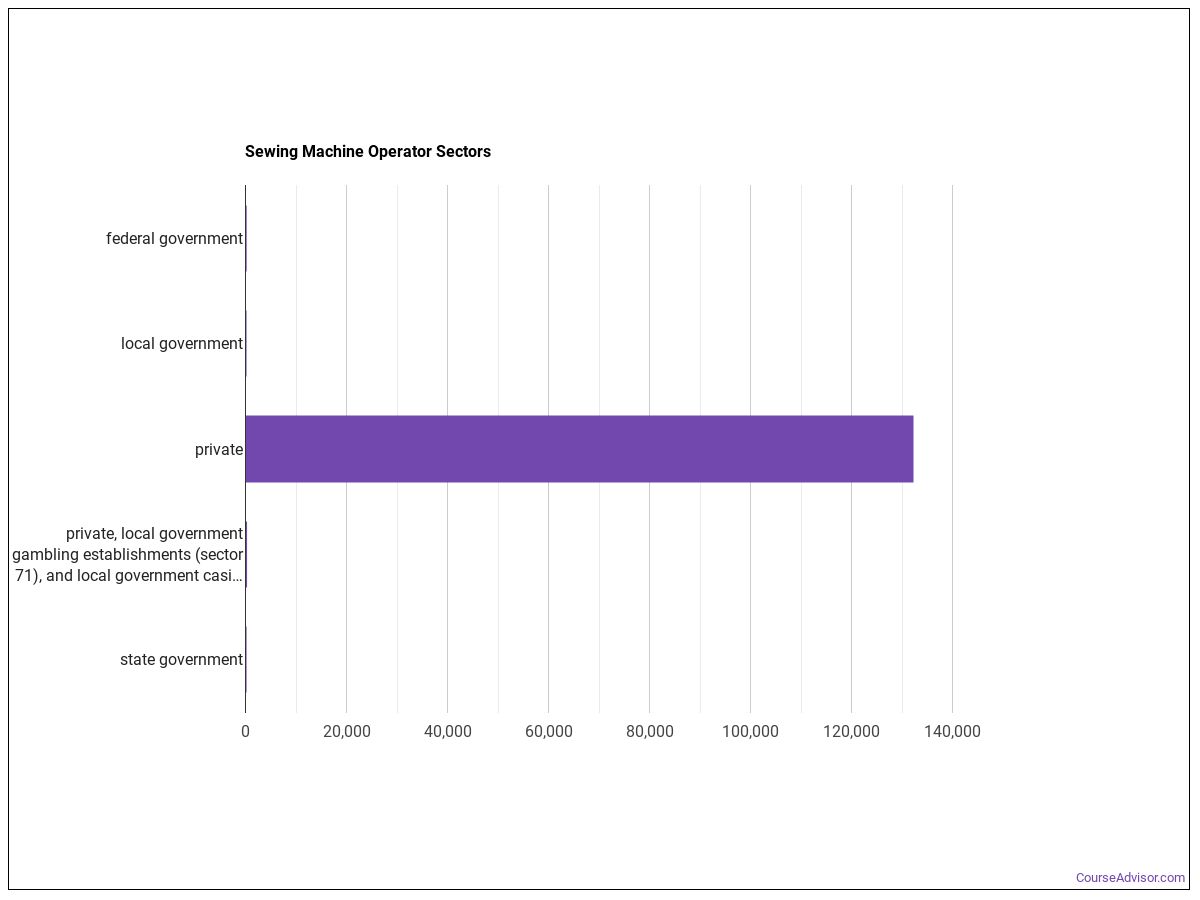
Pay for sewing machine operators shift depending on where you work. These regions lead on median pay:
| Region | Median annual wage | Share of U.S. jobs | Location quotient |
|---|---|---|---|
| New England | $40,120 | 3.8% | 1.00 |
| Far Western US | $37,739 | 16.8% | 1.09 |
| Rocky Mountains | $37,394 | 2.3% | 0.69 |
| Plains States | $37,239 | 6.1% | 1.02 |
| Great Lakes | $36,687 | 15.2% | 1.15 |
| Middle Atlantic | $36,548 | 12.5% | 0.92 |
| Southeast | $33,020 | 30.3% | 1.68 |
| Southwest | $32,085 | 7.3% | 0.61 |
Top Metro Areas
| Metro area | State | Median annual wage | Employment |
|---|---|---|---|
| Appleton, WI | WI | $48,880 | 150 |
| Glens Falls, NY | NY | $48,380 | 50 |
| Santa Cruz-Watsonville, CA | CA | $46,990 | 40 |
| Hickory-Lenoir-Morganton, NC | NC | $46,360 | 1,980 |
| Kingston, NY | NY | $46,170 | 30 |
| San Jose-Sunnyvale-Santa Clara, CA | CA | $45,910 | 270 |
| Champaign-Urbana, IL | IL | $45,410 | 120 |
| Iowa City, IA | IA | $45,410 | 40 |
Industry Breakdown
The largest employers of sewing machine operators are found across these industries:
| Industry | Employment | Median annual wage |
|---|---|---|
| Manufacturing | 79,690 | $36,080 |
| Retail Trade | 7,410 | $35,790 |
| Wholesale Trade | 5,660 | $36,750 |
| Health Care and Social Assistance | 3,660 | $29,250 |
| Professional, Scientific, and Technical Services | 3,310 | $38,750 |
| Administrative and Support and Waste Management and Remediation Services | 3,310 | $32,790 |
| Other Services (except Public Administration) | 2,930 | $38,410 |
| Transportation and Warehousing | 1,900 | $39,280 |
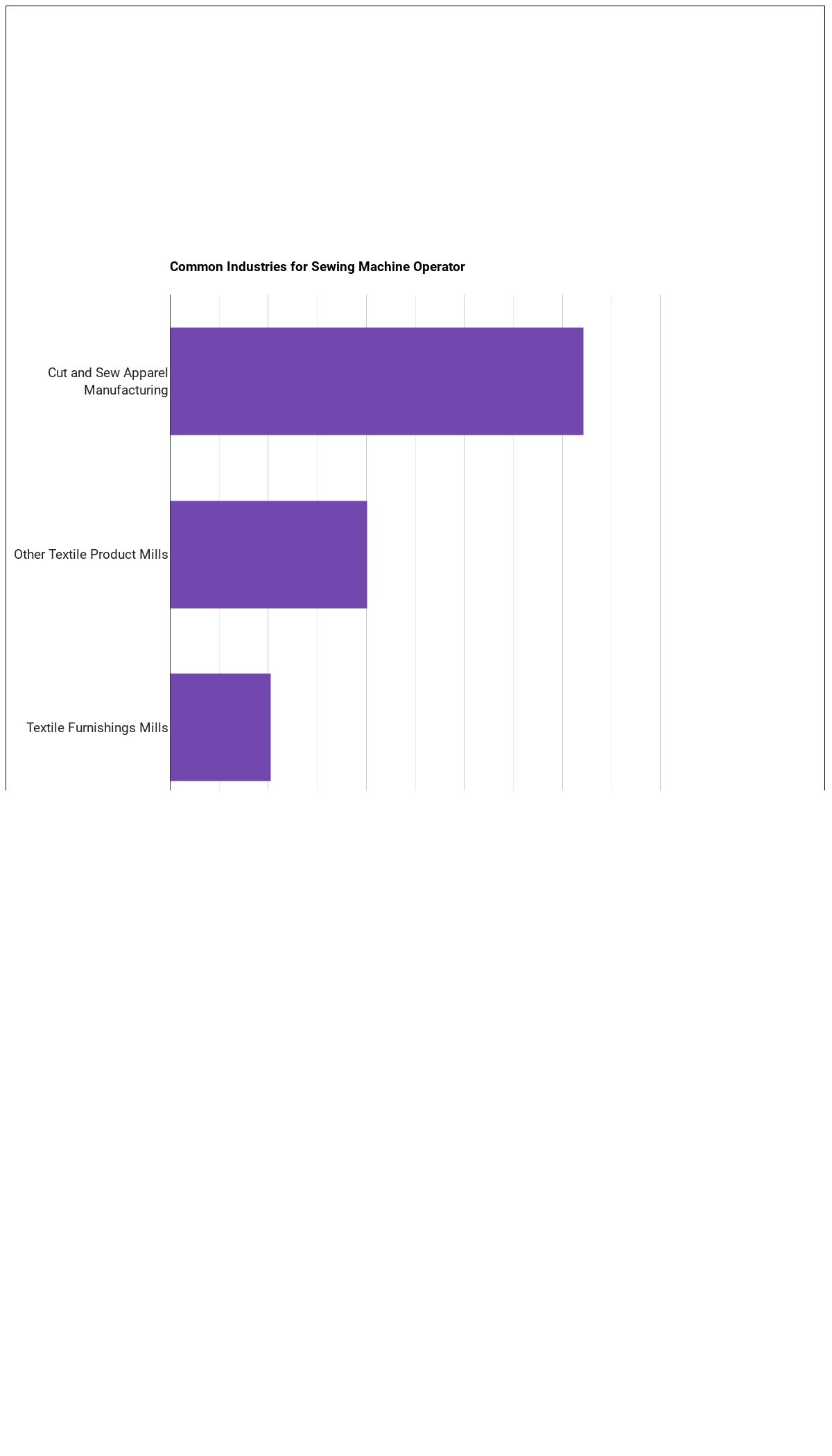
Sewing Machine Operators work in the following industries:
Software Sewing Machine Operators Use
- Spreadsheet software: Microsoft Excel (hot technology)
- Office suite software: Microsoft Office software (hot technology)
- Electronic mail software: Microsoft Outlook (hot technology)
- Word processing software: Microsoft Word (hot technology)
What the Workplace Is Like
Daily working conditions for sewing machine operators is shaped by the following characteristics:
- Spend Time Using Your Hands to Handle, Control, or Feel Objects, Tools, or Controls
- Spend Time Making Repetitive Motions
- Spend Time Sitting
- Importance of Being Exact or Accurate
- Time Pressure
How to Become Sewing Machine Operators
Typical sewing machine operators positions require less than a high school diploma as the typical entry-level education. This occupation sits in Some Preparation Needed (Job Zone 2), indicating the level of preparation typically expected.
Other Careers to Consider
Similar Occupations
- Cutting, Punching, and Press Machine Setters, Operators, and Tenders, Metal and Plastic (Supplemental)
- Grinding, Lapping, Polishing, and Buffing Machine Tool Setters, Operators, and Tenders, Metal and Plastic (Supplemental)
- Print Binding and Finishing Workers (Supplemental)
- Laundry and Dry-Cleaning Workers (Supplemental)
- Pressers, Textile, Garment, and Related Materials (Primary-Short)
- Shoe and Leather Workers and Repairers (Primary-Long)
- Shoe Machine Operators and Tenders (Primary-Short)
- Sewers, Hand (Primary-Short)
About the Data
Data on this page comes from the following authoritative sources:
- U.S. Bureau of Labor Statistics — Occupational Employment and Wage Statistics (OEWS) for employment and wage data by state and industry.
- BLS Employment Projections for total employment and growth forecasts.
- O*NET (Occupational Information Network) for skills, knowledge, tasks, work activities, work context, technology, and education-zone data.
SOC code: 51-6031.00 (Sewing Machine Operators).

Course Advisor provides higher-education, college and university, degree, program, career, salary, and other helpful information to students, faculty, institutions, and other internet audiences. Presented information and data are subject to change. Inclusion on this website does not imply or represent a direct relationship with the company, school, or brand. Information, though believed correct at time of publication, may not be correct, and no warranty is provided. Contact the schools to verify any information before relying on it. Financial aid may be available for those who qualify. The displayed options may include sponsored or recommended results, not necessarily based on your preferences.
© Course Advisor – All Rights Reserved.