Orthodontists: Career Overview
Examine, diagnose, and treat dental malocclusions and oral cavity anomalies. Design and fabricate appliances to realign teeth and jaws to produce and maintain normal function and to improve appearance.
Featured schools near , edit
What Do Orthodontists Take On?
The core tasks performed by orthodontists include:
- Diagnose teeth and jaw or other dental-facial abnormalities.
- Examine patients to assess abnormalities of jaw development, tooth position, and other dental-facial structures.
- Study diagnostic records, such as medical or dental histories, plaster models of the teeth, photos of a patient's face and teeth, and X-rays, to develop patient treatment plans.
- Fit dental appliances in patients' mouths to alter the position and relationship of teeth and jaws or to realign teeth.
- Adjust dental appliances to produce and maintain normal function.
- Provide patients with proposed treatment plans and cost estimates.
- Advise patients to comply with treatment plans.
- Prepare diagnostic and treatment records.
Skills and Knowledge
Successful orthodontists combine a mix of skills and domain knowledge.
Top Skills
The abilities most central to this role, rated on an importance scale of 0 to 5:
Knowledge Areas
Related Job Titles
People in this occupation may also be known by titles such as:
- Board Certified Orthodontist
- Dental Treatment Coordinator
- Dentofacial Orthopedics Dentist
- Doctor
- Invisible Braces Orthodontist
- Orthodontic Dentist
- Orthodontic Specialist
- Orthodontic Treatment Coordinator
Employment and Demand
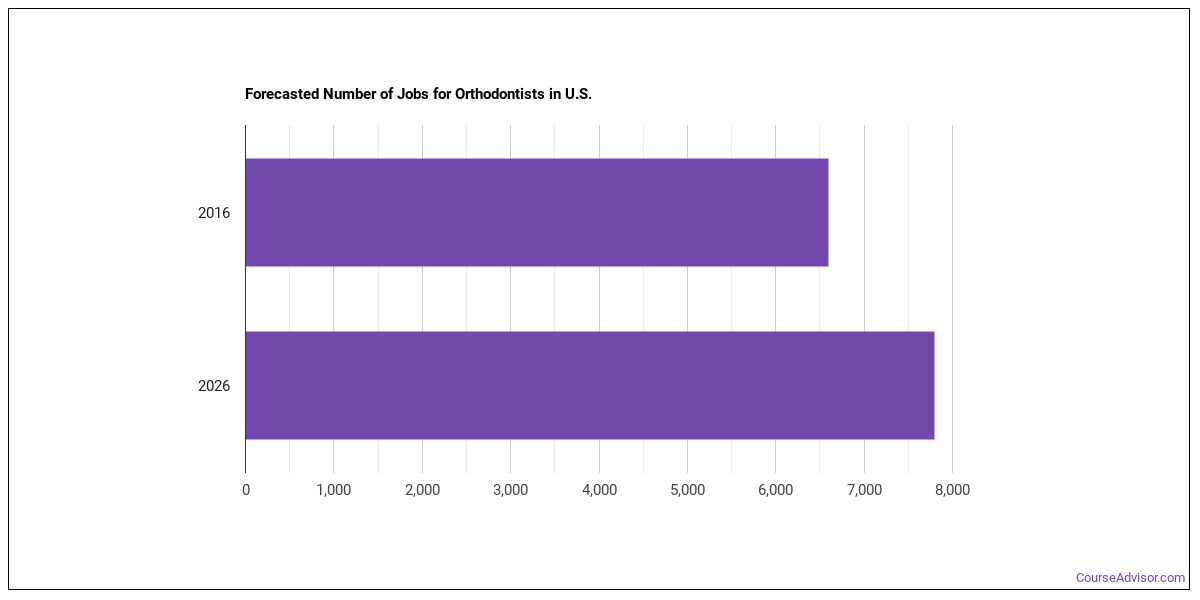
The U.S. employs around 2,129,132 orthodontists working in the United States today. This occupation is expected to grow by +5.8% over the projection horizon.
How Much Do Orthodontists Make?
| Statistic | Value |
|---|---|
| Annual median | $108,772 |
| Hourly median | $52.29 |
| 10th percentile | $62,376 |
| 25th percentile | $85,574 |
| 75th percentile | $131,970 |
| 90th percentile | $155,169 |
Compensation varies based on experience, location, and industry.

How Much Do Orthodontists Make in Different U.S. States?
| State | Annual median salary |
|---|---|
| Iowa | $223,020 |
| Alabama | $222,010 |
| Ohio | $211,410 |
| Indiana | $203,520 |
| Tennessee | $174,830 |
| South Carolina | $148,410 |
| Georgia | $143,080 |
| Utah | $124,830 |
| New York | $105,110 |
| California | $101,420 |
Top-Paying U.S. Regions
Pay for orthodontists shift depending on where you work. These regions lead on median pay:
| Region | Median annual wage | Share of U.S. jobs | Location quotient |
|---|---|---|---|
| Great Lakes | $209,398 | 20.1% | 1.84 |
| Rocky Mountains | $124,830 | 3.9% | 1.73 |
| Middle Atlantic | $105,110 | 12.2% | 0.97 |
| Far Western US | $101,420 | 26.4% | 1.10 |
| Southeast | $90,277 | 30.7% | 2.38 |
| Plains States | $74,340 | 3.5% | 1.00 |
Top Metro Areas
| Metro area | State | Median annual wage | Employment |
|---|---|---|---|
| Indianapolis-Carmel-Greenwood, IN | IN | $234,170 | |
| Cleveland, OH | OH | $211,410 | 200 |
| Greenville-Anderson-Greer, SC | SC | $145,630 | 80 |
| Provo-Orem-Lehi, UT | UT | $124,830 | 70 |
Industry Breakdown
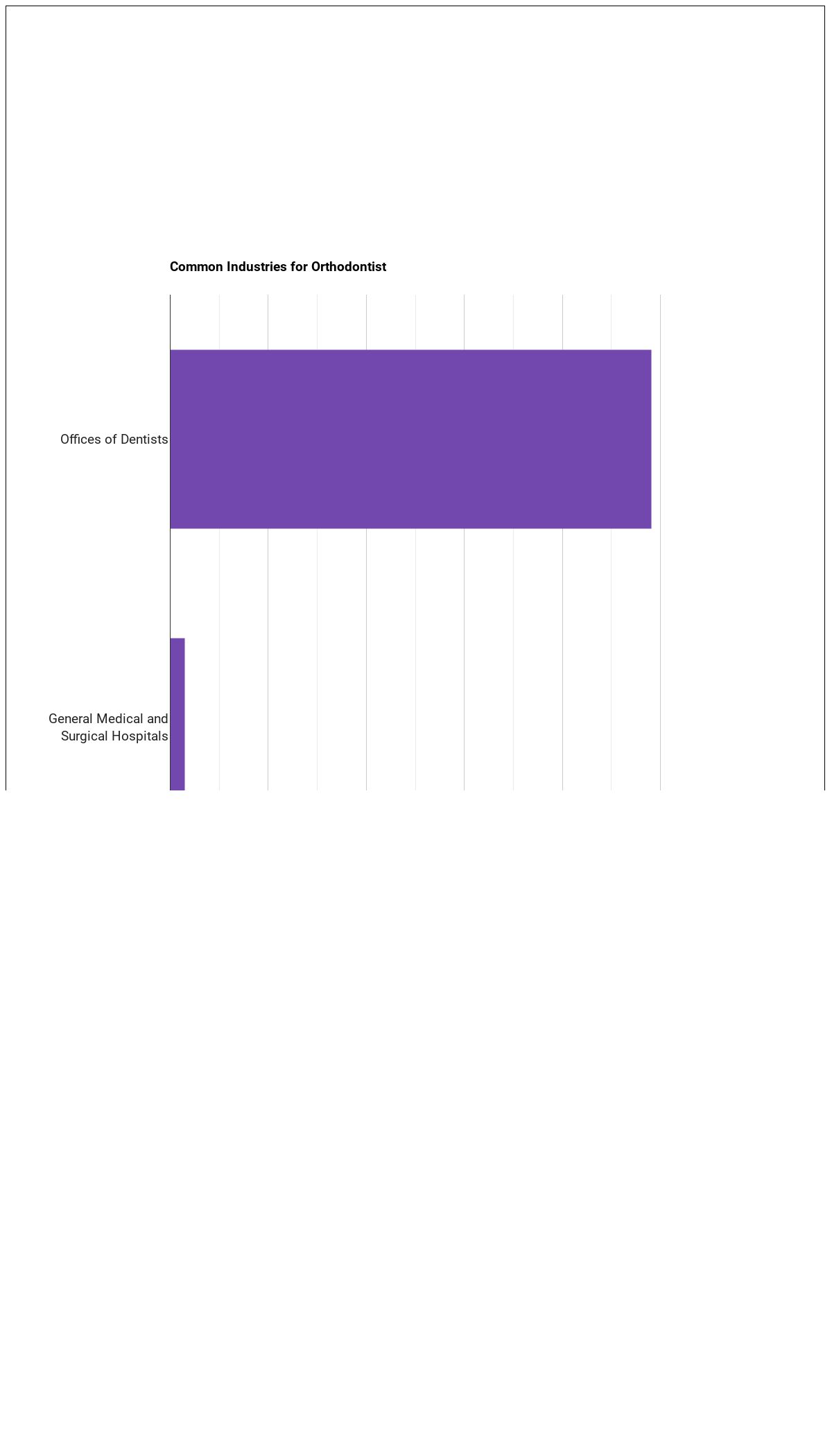
Most orthodontists are found across these industries:
| Industry | Employment | Median annual wage |
|---|---|---|
| Health Care and Social Assistance | 5,130 | n/a |
The table below shows some of the most common industries where those employed in this career field work.
Software Orthodontists Use
- Web page creation and editing software: Facebook (hot technology)
- Office suite software: Microsoft Office software (hot technology)
The Day-to-Day Environment
The on-the-job environment of orthodontists is shaped by the following characteristics:
- Face-to-Face Discussions with Individuals and Within Teams
- Wear Common Protective or Safety Equipment such as Safety Shoes, Glasses, Gloves, Hearing Protection, Hard Hats, or Life Jackets
- Work With or Contribute to a Work Group or Team
- Contact With Others
- Work Outcomes and Results of Other Workers
Education and Training
The role falls in Extensive Preparation Needed (Job Zone 5), indicating the level of preparation typically expected.
Similar Occupations
Similar Occupations
- Chiropractors (Primary-Long)
- Dentists, General (Primary-Short)
- Oral and Maxillofacial Surgeons (Primary-Short)
- Prosthodontists (Primary-Short)
- Optometrists (Supplemental)
- Podiatrists (Supplemental)
- Cardiologists (Primary-Long)
- Dermatologists (Primary-Long)
Top Programs to Study For This Career
Students preparing for orthodontists commonly pursue programs in:
Health Professions and Related Programs
1 programs across 1 majors
1 programs across 1 majors
About the Data
This profile draws on the following authoritative sources:
- U.S. Bureau of Labor Statistics — Occupational Employment and Wage Statistics (OEWS) for employment and wage data by state and industry.
- BLS Employment Projections for total employment and growth forecasts.
- O*NET (Occupational Information Network) for skills, knowledge, tasks, work activities, work context, technology, and education-zone data.
SOC code: 29-1023.00 (Orthodontists).

Course Advisor provides higher-education, college and university, degree, program, career, salary, and other helpful information to students, faculty, institutions, and other internet audiences. Presented information and data are subject to change. Inclusion on this website does not imply or represent a direct relationship with the company, school, or brand. Information, though believed correct at time of publication, may not be correct, and no warranty is provided. Contact the schools to verify any information before relying on it. Financial aid may be available for those who qualify. The displayed options may include sponsored or recommended results, not necessarily based on your preferences.
© Course Advisor – All Rights Reserved.