Operating Engineers and Other Construction Equipment Operators: Career Overview
Operate one or several types of power construction equipment, such as motor graders, bulldozers, scrapers, compressors, pumps, derricks, shovels, tractors, or front-end loaders to excavate, move, and grade earth, erect structures, or pour concrete or other hard surface pavement. May repair and maintain equipment in addition to other duties.
Featured schools near , edit
What Do Operating Engineers and Other Construction Equipment Operators Perform?
The day-to-day responsibilities of operating engineers and other construction equipment operators span:
- Learn and follow safety regulations.
- Take actions to avoid potential hazards or obstructions, such as utility lines, other equipment, other workers, or falling objects.
- Start engines, move throttles, switches, or levers, or depress pedals to operate machines, such as bulldozers, trench excavators, road graders, or backhoes.
- Coordinate machine actions with other activities, positioning or moving loads in response to hand or audio signals from crew members.
- Align machines, cutterheads, or depth gauge makers with reference stakes and guidelines or ground or position equipment, following hand signals of other workers.
- Locate underground services, such as pipes or wires, prior to beginning work.
- Signal operators to guide movement of tractor-drawn machines.
- Repair and maintain equipment, making emergency adjustments or assisting with major repairs as necessary.
Key Skills and Knowledge
Top operating engineers and other construction equipment operators combine a mix of skills and domain knowledge.
Key Skills
These are the skills most important for this role, rated on an importance scale of 0 to 5:
Top Knowledge Areas
Related Job Titles
Common job titles for this role include:
- Angle Dozer Operator
- Asphalt Roller Operator
- Back Hoe Operator
- Backhoe Operator
- Blade Grader Operator
- Blade Operator
- Bulldozer Engineer
- Bulldozer Operator
How Many Operating Engineers and Other Construction Equipment Operators Are There?
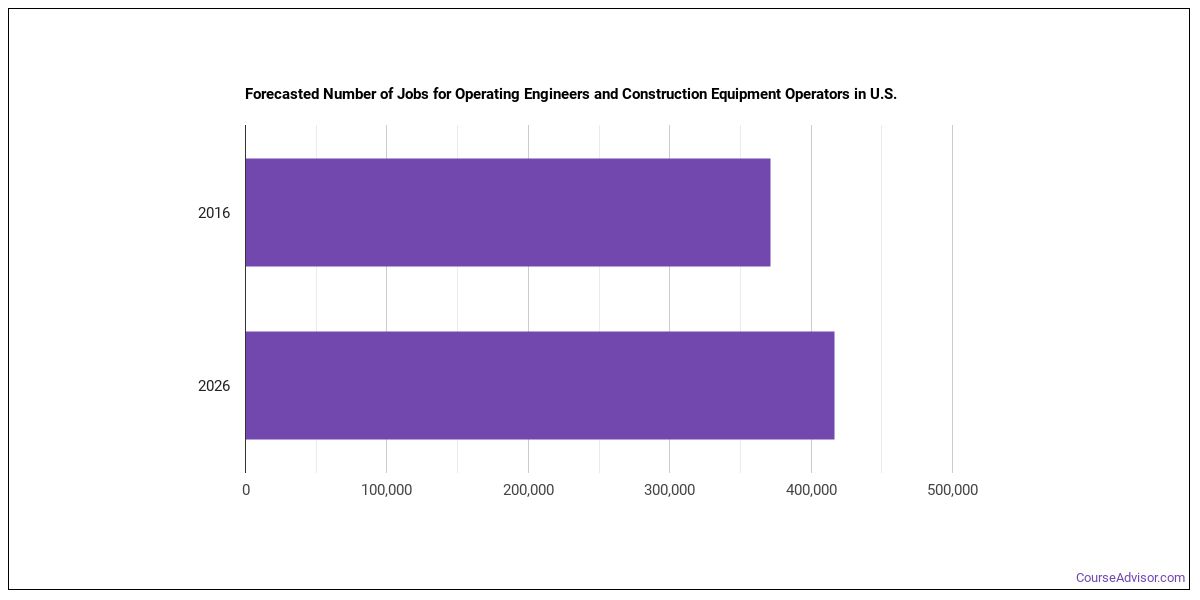
The U.S. employs around 554,723 operating engineers and other construction equipment operators working in the United States today. Employment is projected to decline by -1.1% over the projection horizon.
How Much Do Operating Engineers and Other Construction Equipment Operators Make?
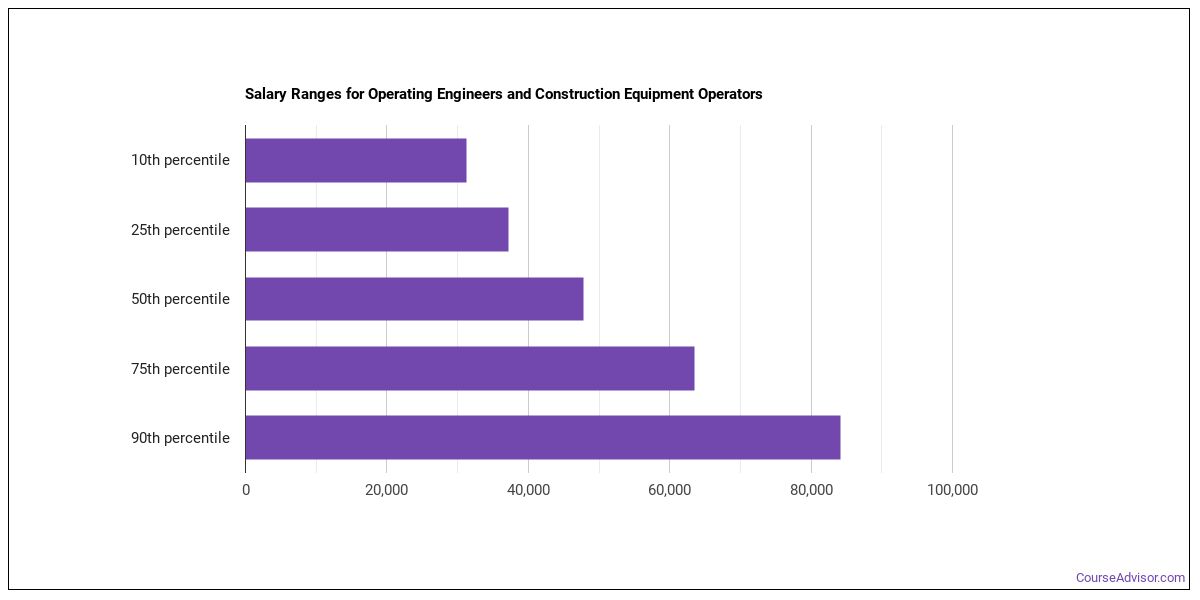
| Statistic | Value |
|---|---|
| Annual median | $54,087 |
| Hourly median | $26.00 |
| 10th percentile | $36,627 |
| 25th percentile | $45,357 |
| 75th percentile | $62,818 |
| 90th percentile | $71,548 |
Wages vary widely based on experience, location, and industry.
Pay by State
| State | Annual median salary |
|---|---|
| Hawaii | $105,440 |
| Illinois | $96,980 |
| California | $89,120 |
| New Jersey | $84,170 |
| New York | $80,260 |
| Washington | $79,190 |
| Minnesota | $78,580 |
| Connecticut | $76,690 |
| Rhode Island | $76,030 |
| Alaska | $75,000 |
| Massachusetts | $72,800 |
| Nevada | $72,780 |
| Wisconsin | $72,650 |
| Indiana | $72,370 |
| District of Columbia | $69,050 |
| Oregon | $68,210 |
| Wyoming | $63,560 |
| New Hampshire | $62,770 |
| North Dakota | $62,760 |
| Michigan | $62,550 |
| Ohio | $62,410 |
| Colorado | $61,570 |
| Iowa | $61,210 |
| Maryland | $60,620 |
| Montana | $60,130 |
| Missouri | $60,050 |
| Arizona | $59,900 |
| Utah | $59,760 |
| Idaho | $59,140 |
| Pennsylvania | $58,580 |
| Nebraska | $57,240 |
| Kentucky | $57,060 |
| South Dakota | $56,720 |
| Delaware | $56,630 |
| Vermont | $56,260 |
| Maine | $55,170 |
| Virginia | $52,240 |
| Kansas | $50,600 |
| West Virginia | $50,010 |
| Louisiana | $49,650 |
| Texas | $49,650 |
| New Mexico | $49,130 |
| Tennessee | $49,070 |
| North Carolina | $48,910 |
| Florida | $48,780 |
| South Carolina | $47,480 |
| Oklahoma | $47,190 |
| Virgin Islands | $47,020 |
| Alabama | $46,870 |
| Georgia | $46,380 |
| Mississippi | $46,020 |
| Arkansas | $45,170 |
| Guam | $39,260 |
| Puerto Rico | $26,200 |
Where Operating Engineers and Other Construction Equipment Operators Earn the Most
Compensation for operating engineers and other construction equipment operators shift depending on where you work. Top regions by median wage:
| Region | Median annual wage | Share of U.S. jobs | Location quotient |
|---|---|---|---|
| Far Western US | $83,983 | 13.0% | 0.90 |
| Great Lakes | $72,948 | 12.1% | 0.89 |
| New England | $69,816 | 4.0% | 0.87 |
| Middle Atlantic | $68,579 | 10.6% | 0.80 |
| Plains States | $62,393 | 8.3% | 1.45 |
| Rocky Mountains | $60,940 | 6.3% | 1.90 |
| Southwest | $51,134 | 17.0% | 1.36 |
| Southeast | $48,928 | 28.0% | 1.26 |
Highest-Paying Metro Areas for Operating Engineers and Other Construction Equipment Operators
| Metro area | State | Median annual wage | Employment |
|---|---|---|---|
| San Francisco-Oakland-Fremont, CA | CA | $117,350 | 4,560 |
| San Jose-Sunnyvale-Santa Clara, CA | CA | $115,500 | 1,350 |
| Urban Honolulu, HI | HI | $109,740 | 950 |
| Chicago-Naperville-Elgin, IL-IN | IL | $101,200 | 7,760 |
| Springfield, IL | IL | $99,950 | 230 |
| Santa Rosa-Petaluma, CA | CA | $98,830 | 640 |
| New York-Newark-Jersey City, NY-NJ | NY | $98,610 | 11,790 |
| Rockford, IL | IL | $96,740 | 280 |
Industry Breakdown
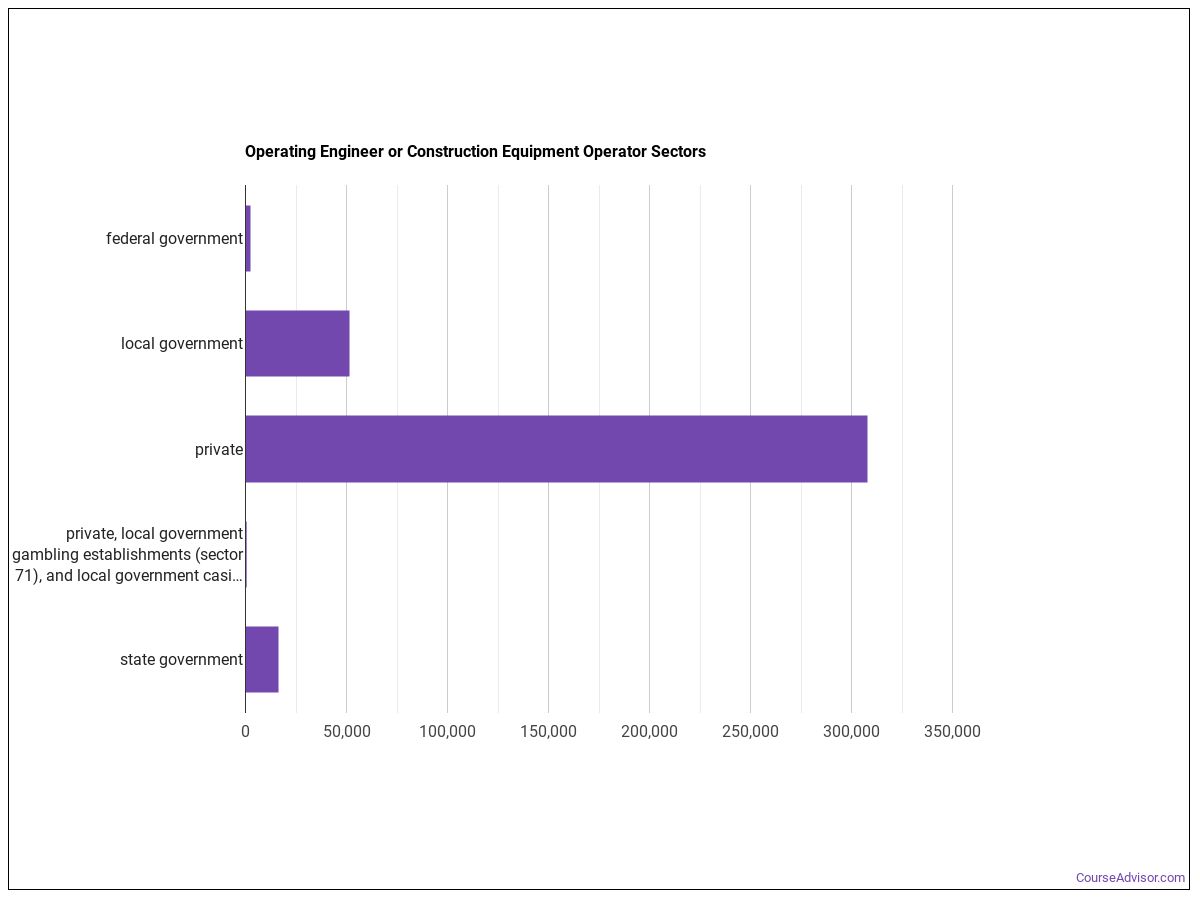
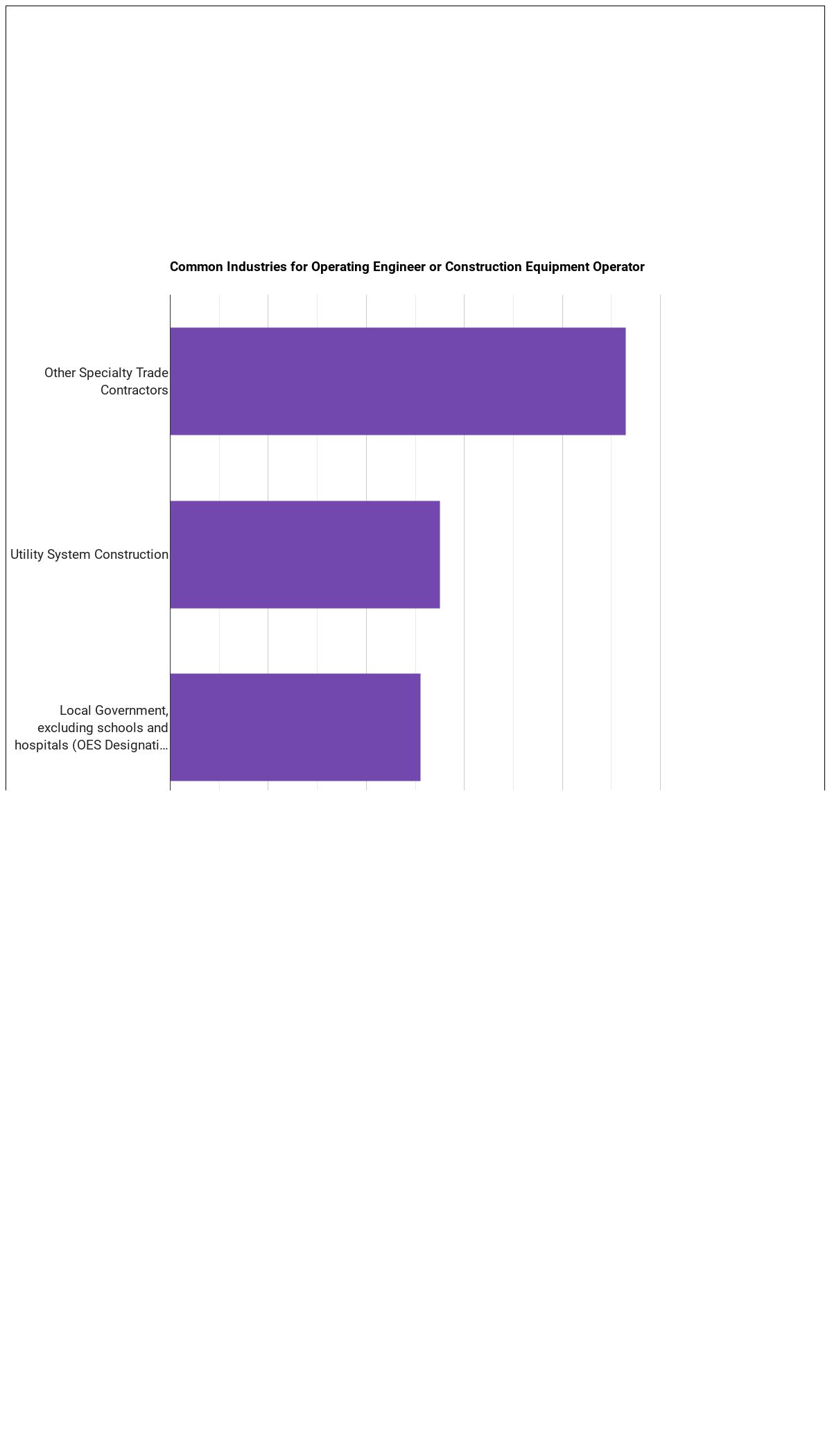
The bulk of operating engineers and other construction equipment operators are found across these industries:
| Industry | Employment | Median annual wage |
|---|---|---|
| Construction | 295,700 | $60,950 |
| Mining, Quarrying, and Oil and Gas Extraction | 26,430 | $57,840 |
| Administrative and Support and Waste Management and Remediation Services | 25,950 | $51,080 |
| Manufacturing | 9,760 | $51,950 |
| Wholesale Trade | 7,780 | $47,260 |
| Transportation and Warehousing | 6,090 | $53,930 |
| Utilities | 4,020 | $81,040 |
| Professional, Scientific, and Technical Services | 2,660 | $60,110 |
The table below shows some of the most common industries where those employed in this career field work.
Software Operating Engineers and Other Construction Equipment Operators Use
- Spreadsheet software: Microsoft Excel (hot technology)
- Office suite software: Microsoft Office software (hot technology)
- Electronic mail software: Microsoft Outlook (hot technology)
- Operating system software: Microsoft Windows (hot technology)
The Day-to-Day Environment
The work environment for operating engineers and other construction equipment operators is shaped by the following characteristics:
- Outdoors, Exposed to All Weather Conditions
- Wear Common Protective or Safety Equipment such as Safety Shoes, Glasses, Gloves, Hearing Protection, Hard Hats, or Life Jackets
- Consequence of Error
- Face-to-Face Discussions with Individuals and Within Teams
- Frequency of Decision Making
How to Become Operating Engineers and Other Construction Equipment Operators
Typical operating engineers and other construction equipment operators positions require a high school diploma or equivalent as the typical entry-level education. This occupation sits in Some Preparation Needed (Job Zone 2), reflecting the level of preparation typically expected.
Other Careers to Consider
Similar Occupations
- Construction Laborers (Primary-Long)
- Paving, Surfacing, and Tamping Equipment Operators (Primary-Long)
- Pile Driver Operators (Primary-Long)
- Highway Maintenance Workers (Supplemental)
- Rail-Track Laying and Maintenance Equipment Operators (Supplemental)
- Excavating and Loading Machine and Dragline Operators, Surface Mining (Primary-Short)
- Earth Drillers, Except Oil and Gas (Supplemental)
- Continuous Mining Machine Operators (Primary-Short)
Top Programs to Study For This Career
Students preparing for operating engineers and other construction equipment operators often complete programs in:
Transportation and Materials Moving
2 programs across 1 majors
About the Data
This profile draws on the following authoritative sources:
- U.S. Bureau of Labor Statistics — Occupational Employment and Wage Statistics (OEWS) for employment and wage data by state and industry.
- BLS Employment Projections for total employment and growth forecasts.
- O*NET (Occupational Information Network) for skills, knowledge, tasks, work activities, work context, technology, and education-zone data.
SOC code: 47-2073.00 (Operating Engineers and Other Construction Equipment Operators).

Course Advisor provides higher-education, college and university, degree, program, career, salary, and other helpful information to students, faculty, institutions, and other internet audiences. Presented information and data are subject to change. Inclusion on this website does not imply or represent a direct relationship with the company, school, or brand. Information, though believed correct at time of publication, may not be correct, and no warranty is provided. Contact the schools to verify any information before relying on it. Financial aid may be available for those who qualify. The displayed options may include sponsored or recommended results, not necessarily based on your preferences.
© Course Advisor – All Rights Reserved.