Music Therapists: Career Overview
Plan, organize, direct, or assess clinical and evidenced-based music therapy interventions to positively influence individuals' physical, psychological, cognitive, or behavioral status.
Featured schools near , edit
The Daily Work of Music Therapists Perform?
The day-to-day responsibilities of music therapists include:
- Design or provide music therapy experiences to address client needs, such as using music for self-care, adjusting to life changes, improving cognitive functioning, raising self-esteem, communicating, or controlling impulses.
- Design music therapy experiences, using various musical elements to meet client's goals or objectives.
- Sing or play musical instruments, such as keyboard, guitar, or percussion instruments.
- Communicate with clients to build rapport, acknowledge their progress, or reflect upon their reactions to musical experiences.
- Customize treatment programs for specific areas of music therapy, such as intellectual or developmental disabilities, educational settings, geriatrics, medical settings, mental health, physical disabilities, or wellness.
- Establish client goals or objectives for music therapy treatment, considering client needs, capabilities, interests, overall therapeutic program, coordination of treatment, or length of treatment.
- Document evaluations, treatment plans, case summaries, or progress or other reports related to individual clients or client groups.
- Assess client functioning levels, strengths, and areas of need in terms of perceptual, sensory, affective, communicative, musical, physical, cognitive, social, spiritual, or other abilities.
What Music Therapists Need to Know
Top music therapists combine a mix of skills and domain knowledge.
Most Important Skills
The competencies most central to this role, rated on an importance scale of 0 to 5:
Knowledge Areas
Related Job Titles
People in this occupation may also be known by titles such as:
- Activity Therapist
- Board Certified Music Therapist (MT-BC)
- Certified Music Therapist
- Community Music Therapist
- Creative Arts Music Therapist
- Creative Music Therapist
- Expressive Music Therapist
- Home Care Music Therapist
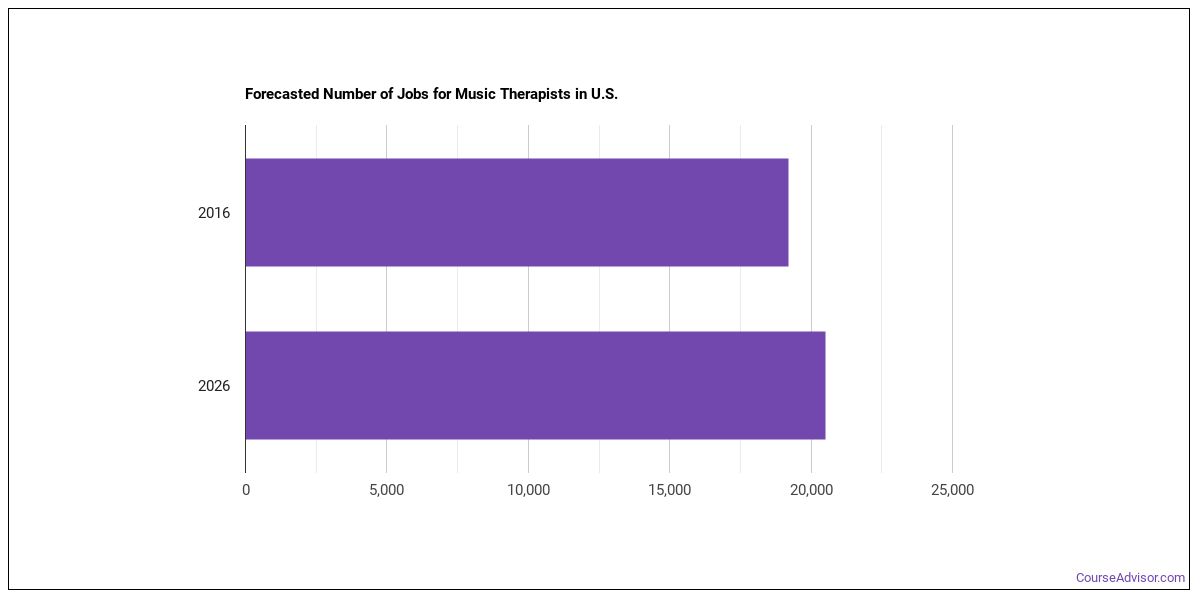
How Many Music Therapists Are There?
The U.S. employs around 2,939,478 music therapists working in the United States today. Demand is forecast to grow by +4.9% over the projection horizon.
Salary for Music Therapists
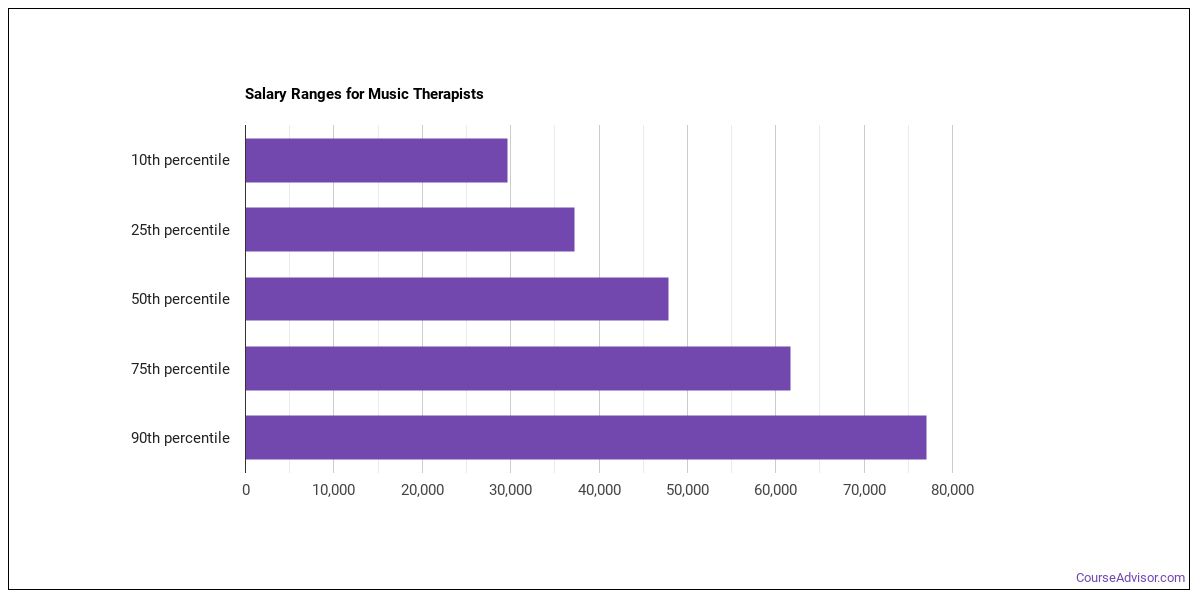
| Statistic | Value |
|---|---|
| Annual median | $71,670 |
| Hourly median | $34.46 |
| 10th percentile | $47,484 |
| 25th percentile | $59,577 |
| 75th percentile | $83,764 |
| 90th percentile | $95,857 |
Wages vary widely based on experience, location, and industry.
Pay by State
| State | Annual median salary |
|---|---|
| Alaska | $107,070 |
| Nebraska | $102,680 |
| New Mexico | $100,510 |
| South Carolina | $99,870 |
| Kentucky | $99,060 |
| District of Columbia | $90,920 |
| New Jersey | $90,280 |
| Montana | $82,070 |
| Oregon | $80,210 |
| Rhode Island | $75,470 |
| Minnesota | $73,300 |
| Colorado | $72,440 |
| California | $71,190 |
| West Virginia | $71,180 |
| Illinois | $71,040 |
| Oklahoma | $69,900 |
| Alabama | $69,320 |
| New York | $67,870 |
| North Carolina | $65,310 |
| Massachusetts | $65,190 |
| Georgia | $63,540 |
| Texas | $62,560 |
| Arizona | $61,430 |
| Louisiana | $61,400 |
| Missouri | $60,800 |
| New Hampshire | $60,210 |
| Utah | $59,660 |
| Pennsylvania | $59,540 |
| Indiana | $58,690 |
| Virginia | $58,070 |
| Florida | $57,770 |
| Wisconsin | $57,540 |
| Arkansas | $55,820 |
| Iowa | $53,600 |
| Kansas | $52,690 |
| Michigan | $49,640 |
| Ohio | $49,510 |
| Maryland | $47,520 |
| Tennessee | $45,800 |
| Connecticut | $44,670 |
| Maine | $44,540 |
| Mississippi | $43,150 |
Pay by U.S. Region
Pay for music therapists differ across the country. The following regions pay the most:
| Region | Median annual wage | Share of U.S. jobs | Location quotient |
|---|---|---|---|
| Middle Atlantic | $71,574 | 31.1% | 3.53 |
| New England | $70,164 | 1.7% | 1.35 |
| Plains States | $69,806 | 5.9% | 1.16 |
| Rocky Mountains | $67,882 | 1.5% | 0.49 |
| Southeast | $63,449 | 28.0% | 1.97 |
| Southwest | $63,390 | 10.3% | 0.82 |
| Great Lakes | $59,183 | 11.7% | 0.93 |
| Far Western US | $55,673 | 9.8% | 0.85 |
Highest-Paying Metro Areas for Music Therapists
| Metro area | State | Median annual wage | Employment |
|---|---|---|---|
| Lexington-Fayette, KY | KY | $108,140 | 100 |
| Anchorage, AK | AK | $107,070 | 30 |
| Trenton-Princeton, NJ | NJ | $101,970 | 100 |
| Omaha, NE-IA | NE | $96,080 | |
| Cincinnati, OH-KY-IN | OH | $95,930 | 70 |
| Atlantic City-Hammonton, NJ | NJ | $92,000 | 50 |
| Rochester, MN | MN | $91,990 | 60 |
| Louisville/Jefferson County, KY-IN | KY | $84,440 | 140 |
Which Industries Hire Music Therapists
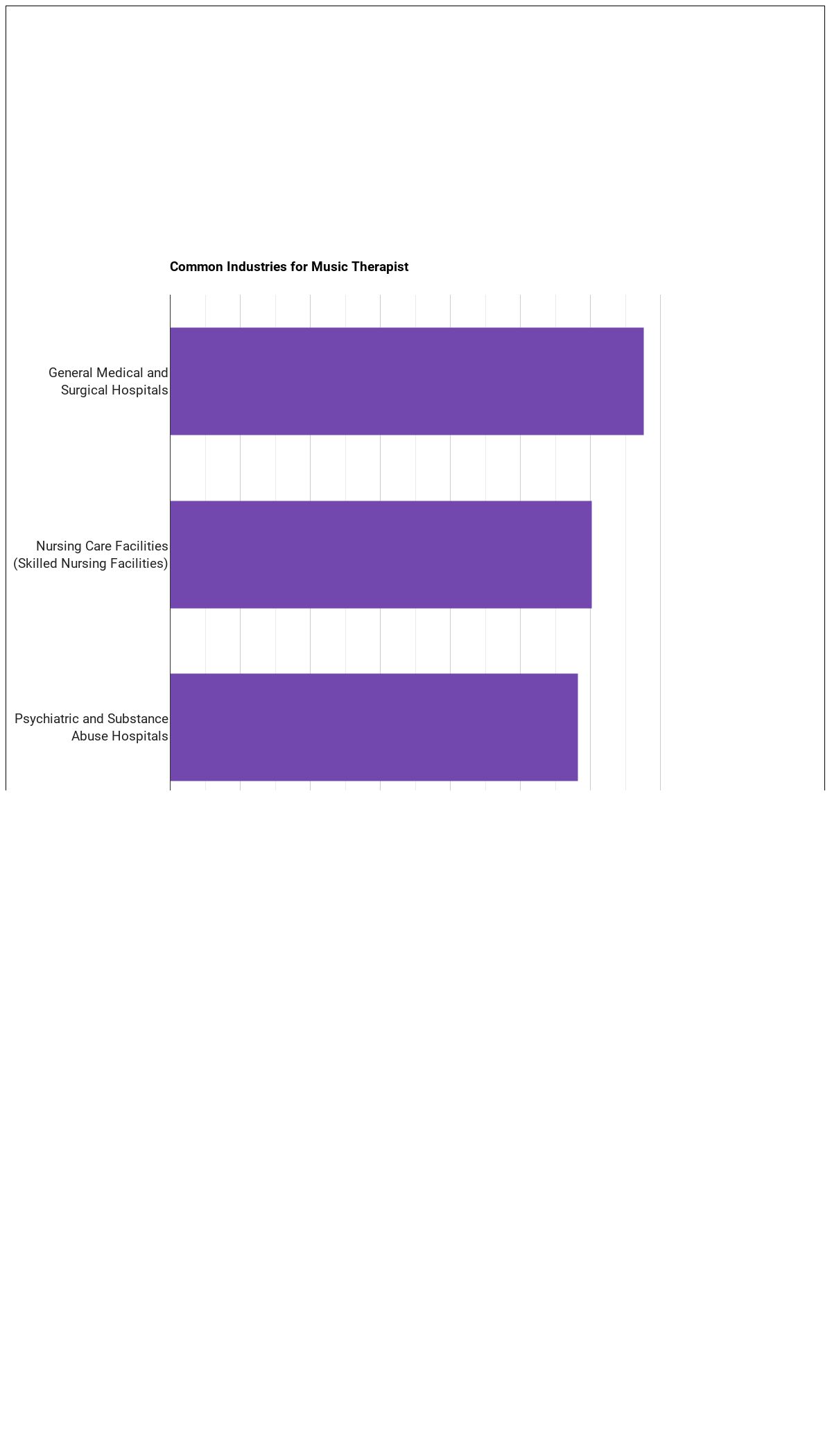
Most music therapists are found across these industries:
| Industry | Employment | Median annual wage |
|---|---|---|
| Health Care and Social Assistance | 15,910 | $64,950 |
| Educational Services | 2,140 | $62,560 |
| Administrative and Support and Waste Management and Remediation Services | 220 | $75,520 |
| Other Services (except Public Administration) | 100 | $64,680 |
| Management of Companies and Enterprises | 40 | $54,100 |

The table below shows some of the most common industries where those employed in this career field work.
Tech Stack
- Office suite software: Microsoft Office software (hot technology)
The Day-to-Day Environment
Daily working conditions for music therapists tends to involve the following characteristics:
- Face-to-Face Discussions with Individuals and Within Teams
- Contact With Others
- Freedom to Make Decisions
- Indoors, Environmentally Controlled
How to Become Music Therapists
Entry-level music therapists positions require a bachelor’s degree as the typical entry-level education. The role falls in Considerable Preparation Needed (Job Zone 4), signaling the level of preparation typically expected.
Similar Occupations
Similar Occupations
- Clinical and Counseling Psychologists (Primary-Short)
- Marriage and Family Therapists (Primary-Long)
- Mental Health Counselors (Primary-Long)
- Healthcare Social Workers (Supplemental)
- Mental Health and Substance Abuse Social Workers (Supplemental)
- Art, Drama, and Music Teachers, Postsecondary (Supplemental)
- Music Directors and Composers (Supplemental)
- Occupational Therapists (Primary-Short)
Where to Study
Aspiring music therapists typically earn programs in:
Health Professions and Related Programs
10 programs across 2 majors
References
Statistics shown above are sourced from the following authoritative sources:
- U.S. Bureau of Labor Statistics — Occupational Employment and Wage Statistics (OEWS) for employment and wage data by state and industry.
- BLS Employment Projections for total employment and growth forecasts.
- O*NET (Occupational Information Network) for skills, knowledge, tasks, work activities, work context, technology, and education-zone data.
SOC code: 29-1129.02 (Therapists, All Other).

Course Advisor provides higher-education, college and university, degree, program, career, salary, and other helpful information to students, faculty, institutions, and other internet audiences. Presented information and data are subject to change. Inclusion on this website does not imply or represent a direct relationship with the company, school, or brand. Information, though believed correct at time of publication, may not be correct, and no warranty is provided. Contact the schools to verify any information before relying on it. Financial aid may be available for those who qualify. The displayed options may include sponsored or recommended results, not necessarily based on your preferences.
© Course Advisor – All Rights Reserved.