Marriage and Family Therapists in Arkansas
Thinking about a career as a Marriage and Family Therapists in Arkansas? Here’s what you need to know. Diagnose and treat mental and emotional disorders, whether cognitive, affective, or behavioral, within the context of marriage and family systems. Apply psychotherapeutic and family systems theories and techniques in the delivery of services to individuals, couples, and families for the purpose of treating such diagnosed nervous and mental disorders. Excludes “Psychologists” (19-3032 through 19-3039) and “Social Workers” (21-1020).
What do Marriage and Family Therapists Make in Arkansas?
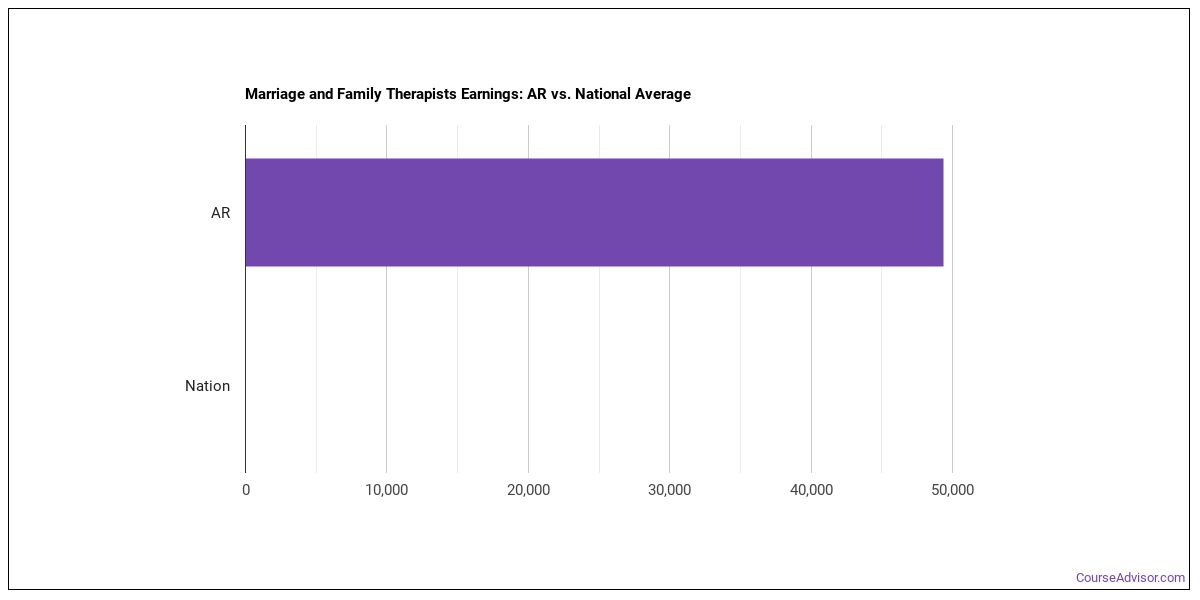
For marriage and family therapists working in Arkansas, the median annual wage is $47,090 per year (or about $22.64/hour).Pay can range from $41,120 at the 10th percentile to $71,020 at the 90th percentile.
| Wage Statistic | Annual | Hourly |
|---|---|---|
| 10th percentile | $41,120 | $19.77 |
| 25th percentile | $42,860 | $20.61 |
| Median (50th) | $47,090 | $22.64 |
| 75th percentile | $56,920 | $27.37 |
| 90th percentile | $71,020 | $34.14 |

The job concentration index in Arkansas nationwide is 0.23, indicating fewer marriage and family therapists per worker than the national average.
National Wage Comparison
Nationally, marriage and family therapists earn a median of $74,325 per year ($35.73/hour), below the Arkansas median.
Employment Outlook
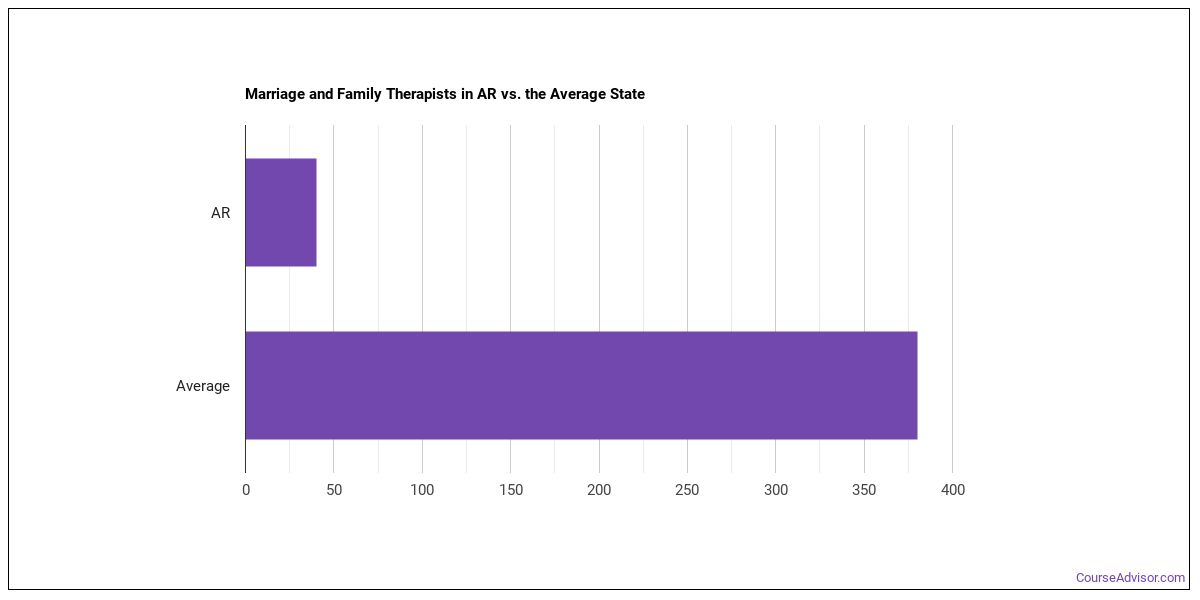
Nationally, total employment in this occupation is 237,985 marriage and family therapists nationwide. In Arkansas alone, approximately 120 people work in this role. That trails the typical state, which employs around 530 marriage and family therapists.

Top States for Marriage and Family Therapists Employment
These states have the highest employment of marriage and family therapists work.
| State | Number Employed |
|---|---|
| California | 32,070 |
| New Jersey | 3,940 |
| Minnesota | 3,780 |
| Tennessee | 2,590 |
| Pennsylvania | 2,360 |
| North Carolina | 2,110 |
| Utah | 1,980 |
| Oklahoma | 1,270 |
| Texas | 1,160 |
| Indiana | 1,120 |
| Oregon | 1,080 |
| New York | 930 |
| Virginia | 910 |
| Michigan | 870 |
| Illinois | 840 |
| Colorado | 810 |
| Florida | 760 |
| Ohio | 710 |
| South Carolina | 550 |
| Massachusetts | 530 |
Highest-Paying States for Marriage and Family Therapists
Where marriage and family therapists earn the most: marriage and family therapists.
| State | Annual Median Salary |
|---|---|
| Hawaii | $135,870 |
| New Jersey | $89,030 |
| Utah | $81,170 |
| Virginia | $80,670 |
| Oregon | $79,890 |
| Connecticut | $76,930 |
| Minnesota | $72,370 |
| Colorado | $69,990 |
| Maine | $68,670 |
| Nebraska | $68,550 |
Skills
Key marriage and family therapists skills, rated on an importance scale of 0 to 5:
Knowledge Areas
Important knowledge areas for this occupation, rated on an importance scale of 0 to 5:
Abilities
Key abilities for marriage and family therapists, rated on an importance scale of 0 to 5:
Daily Tasks
Day-to-day, marriage and family therapists typically:
- Encourage individuals and family members to develop and use skills and strategies for confronting their problems in a constructive manner.
- Ask questions that will help clients identify their feelings and behaviors.
- Develop and implement individualized treatment plans addressing family relationship problems, destructive patterns of behavior, and other personal issues.
- Maintain case files that include activities, progress notes, evaluations, and recommendations.
- Counsel clients on concerns, such as unsatisfactory relationships, divorce and separation, child rearing, home management, or financial difficulties.
- Collect information about clients, using techniques such as testing, interviewing, discussion, or observation.
- Confer with clients to develop plans for posttreatment activities.
- Confer with other counselors, doctors, and professionals to analyze individual cases and to coordinate counseling services.
- Determine whether clients should be counseled or referred to other specialists in such fields as medicine, psychiatry, or legal aid.
- Provide instructions to clients on how to obtain help with legal, financial, and other personal issues.
- Provide public education and consultation to other professionals or groups regarding counseling services, issues, and methods.
- Follow up on results of counseling programs and clients' adjustments to determine effectiveness of programs.
Work Activities
- Making Decisions and Solving Problems
- Documenting/Recording Information
- Assisting and Caring for Others
- Getting Information
- Establishing and Maintaining Interpersonal Relationships
- Communicating with Supervisors, Peers, or Subordinates
- Resolving Conflicts and Negotiating with Others
- Updating and Using Relevant Knowledge
- Organizing, Planning, and Prioritizing Work
- Working with Computers
- Identifying Objects, Actions, and Events
- Evaluating Information to Determine Compliance with Standards
Tools & Technology
Software and systems commonly involved: Hot technologies: Intuit QuickBooks, Microsoft Access
What Major Will Prepare You For This Career?
Related college programs include:
- Social Work
- Mental & Social Health Services
Featured schools near , edit
Related Careers
Related occupations to marriage and family therapists include:
- Clinical and Counseling Psychologists
- School Psychologists
- Neuropsychologists
- Clinical Neuropsychologists
- Substance Abuse and Behavioral Disorder Counselors
- Educational, Guidance, and Career Counselors and Advisors
Also Known As
ABA Behavior Therapist (Applied Behavior Analysis Behavior Therapist), Behavior Intervention Specialist, Behavior Specialist, Behavior Support Specialist, Behavior Technician (Behavior Tech), Behavior Therapist, Behavioral Analyst, Behavioral Health Clinician, Behavioral Specialist, Behavioral Therapist, Bilingual Clinician, Child and Adolescent Therapist, Child and Family Counselor, Child and Family Therapist, Clinical Therapist.
References
- U.S. Bureau of Labor Statistics, Occupational Employment and Wage Statistics — https://www.bls.gov/oes/
- O*NET Online — https://www.onetonline.org/
- BLS Employment Projections — https://www.bls.gov/emp/
- O*NET-SOC code: 21-1013.00

Course Advisor provides higher-education, college and university, degree, program, career, salary, and other helpful information to students, faculty, institutions, and other internet audiences. Presented information and data are subject to change. Inclusion on this website does not imply or represent a direct relationship with the company, school, or brand. Information, though believed correct at time of publication, may not be correct, and no warranty is provided. Contact the schools to verify any information before relying on it. Financial aid may be available for those who qualify. The displayed options may include sponsored or recommended results, not necessarily based on your preferences.
© Course Advisor – All Rights Reserved.