Logging Equipment Operators: Career Overview
Drive logging tractor or wheeled vehicle equipped with one or more accessories, such as bulldozer blade, frontal shear, grapple, logging arch, cable winches, hoisting rack, or crane boom, to fell tree; to skid, load, unload, or stack logs; or to pull stumps or clear brush. Includes operating stand-alone logging machines, such as log chippers.
Featured schools near , edit
The Daily Work of Logging Equipment Operators Do?
The day-to-day responsibilities of logging equipment operators cover:
- Inspect equipment for safety prior to use, and perform necessary basic maintenance tasks.
- Control hydraulic tractors equipped with tree clamps and booms to lift, swing, and bunch sheared trees.
- Grade logs according to characteristics such as knot size and straightness, and according to established industry or company standards.
- Drive straight or articulated tractors equipped with accessories such as bulldozer blades, grapples, logging arches, cable winches, and crane booms to skid, load, unload, or stack logs, pull stumps, or clear brush.
- Drive crawler or wheeled tractors to drag or transport logs from felling sites to log landing areas for processing and loading.
- Fill out required job or shift report forms.
- Drive tractors for building or repairing logging and skid roads.
Key Skills and Knowledge
Successful logging equipment operators rely on a mix of skills and domain knowledge.
Most Important Skills
The competencies most important for this role, rated on an importance scale of 0 to 5:
Knowledge Areas
Types of Logging Equipment Operators Jobs
Common job titles for this role include:
- Buncher Operator
- Chain Hooker
- Cutter Operator
- Delimber
- Delimber Operator
- Equipment Operator
- Feller Buncher Operator
- Feller Operator
Employment and Demand
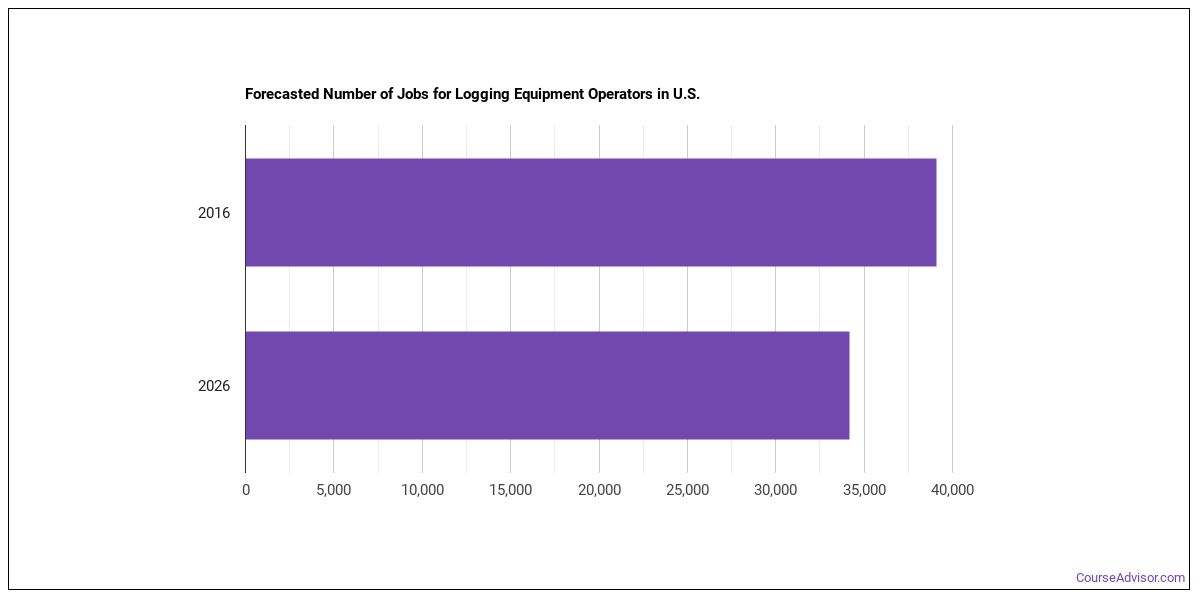
There are roughly 399,043 logging equipment operators working in the United States today. Demand is forecast to decline by -4.2% over the projection horizon.
Logging Equipment Operators Pay
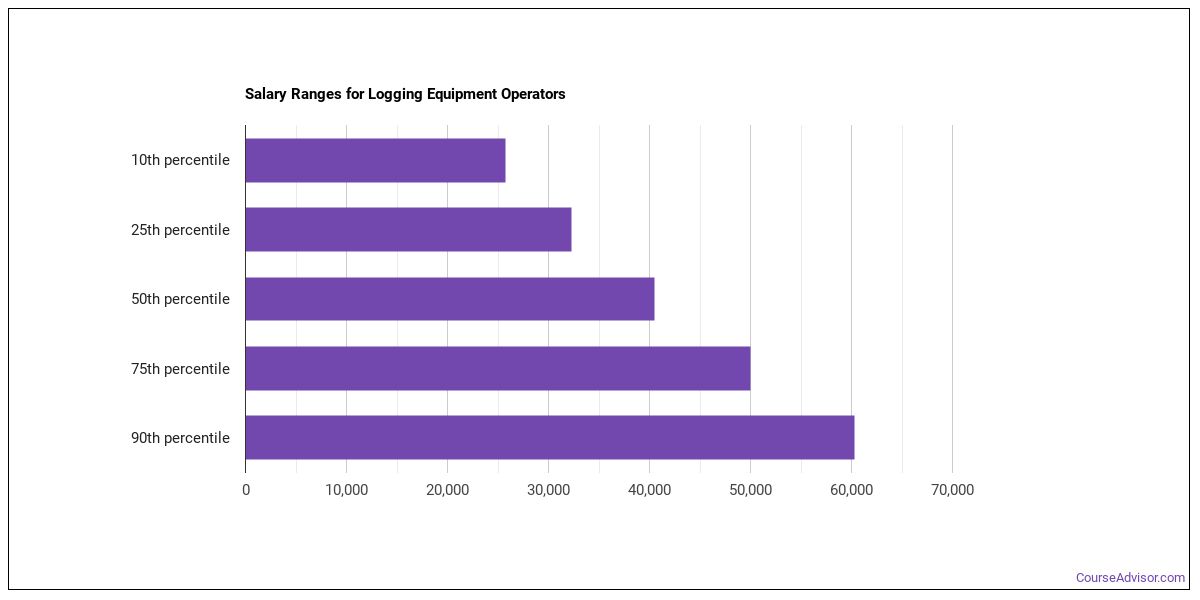
| Statistic | Value |
|---|---|
| Annual median | $36,164 |
| Hourly median | $17.39 |
| 10th percentile | $22,398 |
| 25th percentile | $29,281 |
| 75th percentile | $43,048 |
| 90th percentile | $49,931 |
Compensation varies based on experience, location, and industry.
How Much Do Logging Equipment Operators Make in Different U.S. States?
| State | Annual median salary |
|---|---|
| Washington | $74,400 |
| California | $62,000 |
| Texas | $60,220 |
| Oregon | $58,940 |
| Alaska | $58,730 |
| South Dakota | $58,370 |
| Idaho | $58,200 |
| Louisiana | $56,780 |
| Vermont | $55,050 |
| Illinois | $52,580 |
| Montana | $52,270 |
| Maryland | $51,920 |
| New Hampshire | $51,170 |
| Arizona | $50,870 |
| Colorado | $50,600 |
| Minnesota | $49,120 |
| Massachusetts | $49,000 |
| Alabama | $48,990 |
| Kentucky | $48,880 |
| Florida | $48,450 |
| Ohio | $48,360 |
| Wisconsin | $48,260 |
| Mississippi | $47,910 |
| Michigan | $46,970 |
| Georgia | $46,970 |
| Tennessee | $46,800 |
| Arkansas | $46,580 |
| South Carolina | $46,270 |
| Virginia | $46,170 |
| Indiana | $45,920 |
| North Carolina | $45,580 |
| Maine | $45,480 |
| Pennsylvania | $43,820 |
| New York | $42,760 |
| Missouri | $41,630 |
| Oklahoma | $37,440 |
| West Virginia | $35,210 |
Where Logging Equipment Operators Earn the Most
Pay for logging equipment operators differ across the country. Top regions by median wage:
| Region | Median annual wage | Share of U.S. jobs | Location quotient |
|---|---|---|---|
| Far Western US | $64,261 | 17.9% | 3.51 |
| Southwest | $56,249 | 3.9% | 0.35 |
| Rocky Mountains | $56,249 | 4.4% | 4.36 |
| Great Lakes | $47,629 | 7.6% | 0.83 |
| Plains States | $47,627 | 2.9% | 0.72 |
| Southeast | $47,599 | 53.9% | 3.46 |
| New England | $47,064 | 5.5% | 8.12 |
| Middle Atlantic | $44,122 | 4.0% | 0.37 |
Where the Jobs Cluster
| Metro area | State | Median annual wage | Employment |
|---|---|---|---|
| Bellingham, WA | WA | $78,810 | 50 |
| Seattle-Tacoma-Bellevue, WA | WA | $75,060 | 150 |
| Longview-Kelso, WA | WA | $74,840 | 140 |
| Olympia-Lacey-Tumwater, WA | WA | $74,400 | 120 |
| Mount Vernon-Anacortes, WA | WA | $71,650 | 30 |
| Houston-Pasadena-The Woodlands, TX | TX | $63,640 | 70 |
| Portland-Vancouver-Hillsboro, OR-WA | OR | $63,420 | 270 |
| Salem, OR | OR | $60,320 | 100 |
Top Industries Employing Logging Equipment Operators
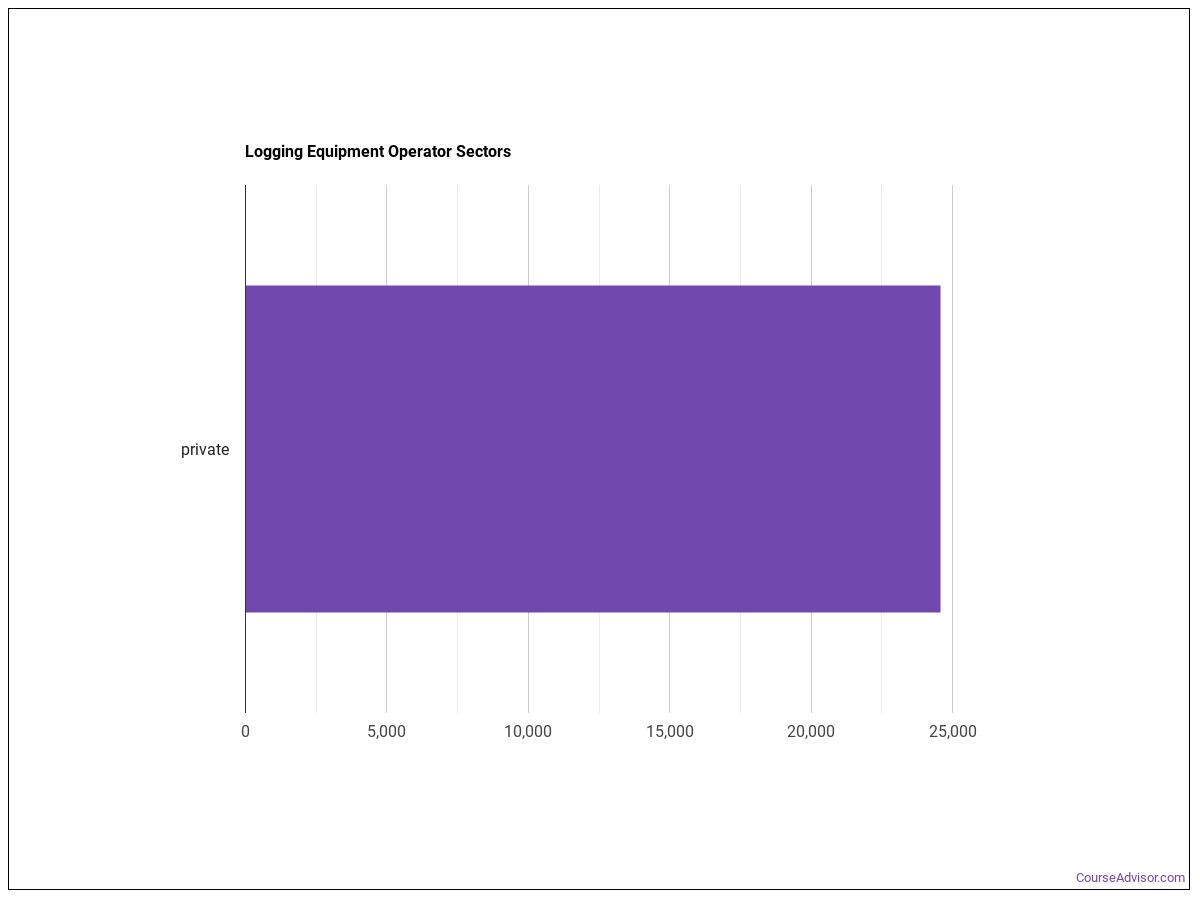
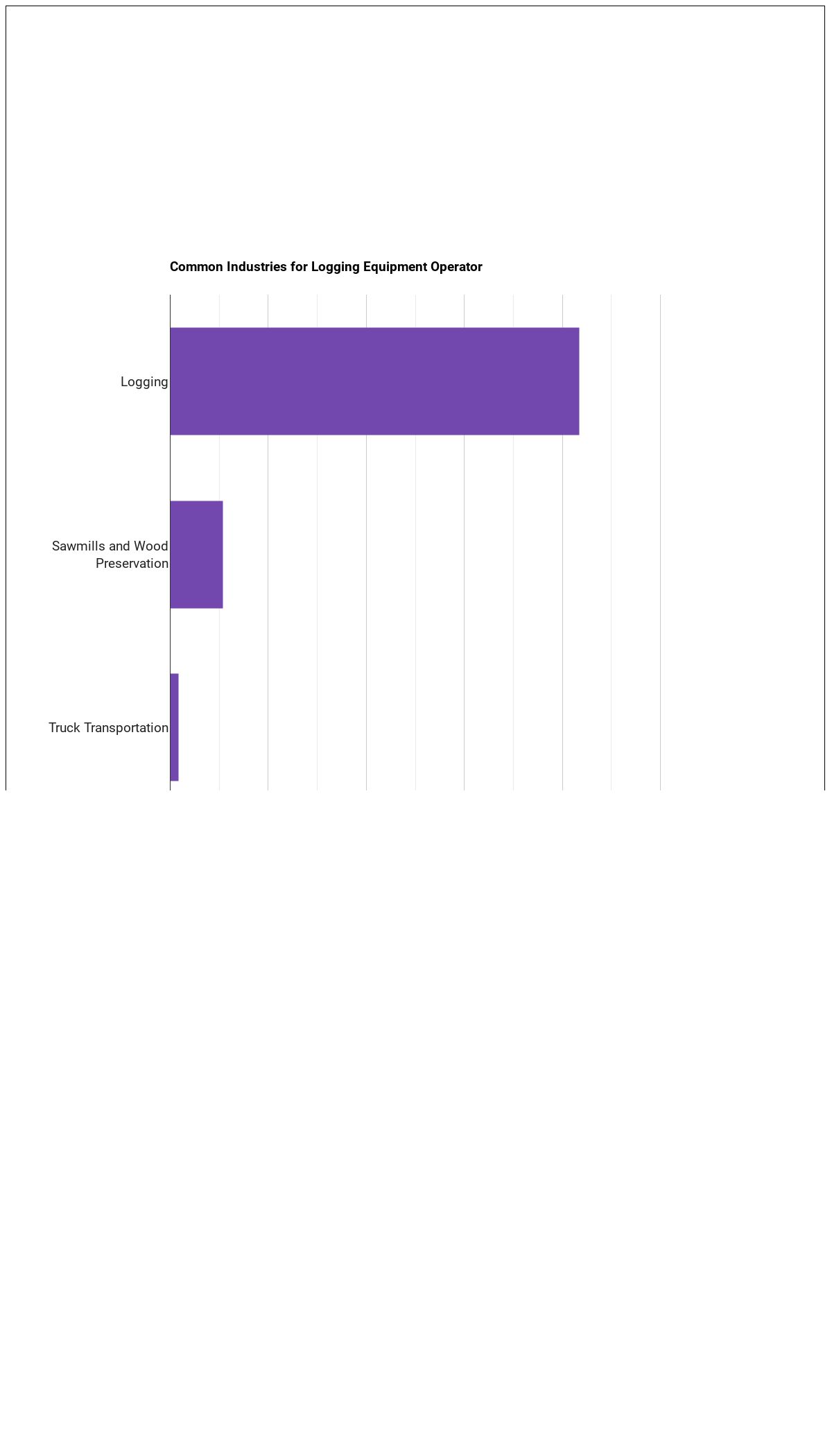
The bulk of logging equipment operators are found across these industries:
| Industry | Employment | Median annual wage |
|---|---|---|
| Agriculture, Forestry, Fishing and Hunting | 17,290 | $50,400 |
| Manufacturing | 3,330 | $43,680 |
| Transportation and Warehousing | 410 | $50,820 |
| Construction | 100 | $52,000 |
The table below shows some of the most common industries where those employed in this career field work.
Tools and Technology
- Spreadsheet software: Microsoft Excel (hot technology)
- Office suite software: Microsoft Office software (hot technology)
- Electronic mail software: Microsoft Outlook (hot technology)
- Word processing software: Microsoft Word (hot technology)
- Enterprise resource planning ERP software: SAP software (hot technology)
The Day-to-Day Environment
The work environment for logging equipment operators is shaped by the following characteristics:
- Spend Time Using Your Hands to Handle, Control, or Feel Objects, Tools, or Controls
- In an Enclosed Vehicle or Operate Enclosed Equipment
- Wear Common Protective or Safety Equipment such as Safety Shoes, Glasses, Gloves, Hearing Protection, Hard Hats, or Life Jackets
- Frequency of Decision Making
- Pace Determined by Speed of Equipment
Getting Started in This Career
Entry-level logging equipment operators positions require less than a high school diploma as the typical entry-level education. The role falls in Some Preparation Needed (Job Zone 2), signaling the level of preparation typically expected.
Related Careers
Similar Occupations
- Agricultural Equipment Operators (Primary-Long)
- Fallers (Primary-Long)
- Log Graders and Scalers (Primary-Long)
- Operating Engineers and Other Construction Equipment Operators (Primary-Short)
- Excavating and Loading Machine and Dragline Operators, Surface Mining (Primary-Short)
- Earth Drillers, Except Oil and Gas (Supplemental)
- Continuous Mining Machine Operators (Primary-Short)
- Loading and Moving Machine Operators, Underground Mining (Primary-Short)
Degree Programs
Future logging equipment operators commonly pursue programs in:
Transportation and Materials Moving
1 programs across 1 majors
Sources
Data on this page comes from the following authoritative sources:
- U.S. Bureau of Labor Statistics — Occupational Employment and Wage Statistics (OEWS) for employment and wage data by state and industry.
- BLS Employment Projections for total employment and growth forecasts.
- O*NET (Occupational Information Network) for skills, knowledge, tasks, work activities, work context, technology, and education-zone data.
SOC code: 45-4022.00 (Logging Equipment Operators).

Course Advisor provides higher-education, college and university, degree, program, career, salary, and other helpful information to students, faculty, institutions, and other internet audiences. Presented information and data are subject to change. Inclusion on this website does not imply or represent a direct relationship with the company, school, or brand. Information, though believed correct at time of publication, may not be correct, and no warranty is provided. Contact the schools to verify any information before relying on it. Financial aid may be available for those who qualify. The displayed options may include sponsored or recommended results, not necessarily based on your preferences.
© Course Advisor – All Rights Reserved.