Intelligence Analysts: Career Profile
Gather, analyze, or evaluate information from a variety of sources, such as law enforcement databases, surveillance, intelligence networks or geographic information systems. Use intelligence data to anticipate and prevent organized crime activities, such as terrorism.
Featured schools near , edit
What Do Intelligence Analysts Do?
The day-to-day responsibilities of intelligence analysts include:
- Validate known intelligence with data from other sources.
- Gather, analyze, correlate, or evaluate information from a variety of resources, such as law enforcement databases.
- Evaluate records of communications, such as telephone calls, to plot activity and determine the size and location of criminal groups and members.
- Gather intelligence information by field observation, confidential information sources, or public records.
- Analyze intelligence data to identify patterns and trends in criminal activity.
- Prepare comprehensive written reports, presentations, maps, or charts, based on research, collection, and analysis of intelligence data.
- Collaborate with representatives from other government and intelligence organizations to share information or coordinate intelligence activities.
- Link or chart suspects to criminal organizations or events to determine activities and interrelationships.
Key Skills and Knowledge
Successful intelligence analysts combine a mix of skills and domain knowledge.
Most Important Skills
The competencies that matter most in this role, rated on an importance scale of 0 to 5:
Knowledge Areas
Related Job Titles
People in this occupation may also be known by titles such as:
- AI Consultant (Artificial Intelligence Consultant)
- All Source Analyst
- All Source Intelligence Analyst
- Analyst
- Anti-Terrorist Analyst
- Background Specialist
- CIA Agent (Central Intelligence Agency Agent)
- Competitive Intelligence Analyst
Job Outlook
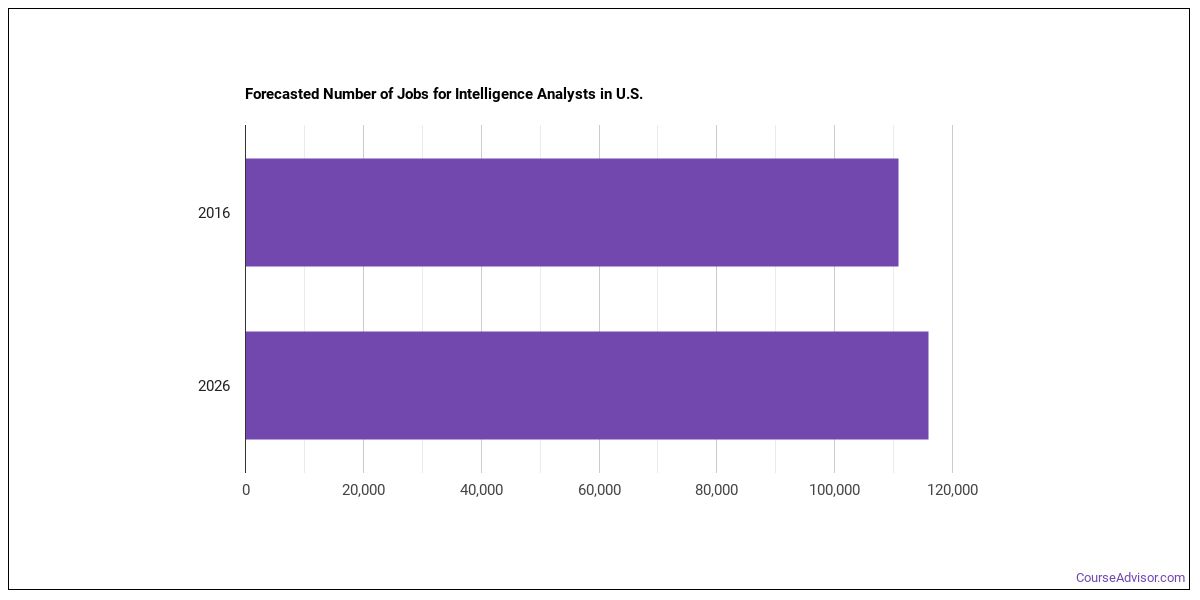
There are roughly 280,428 intelligence analysts working in the United States today. Employment is projected to grow by +11.7% over the projection horizon.
Intelligence Analysts Pay
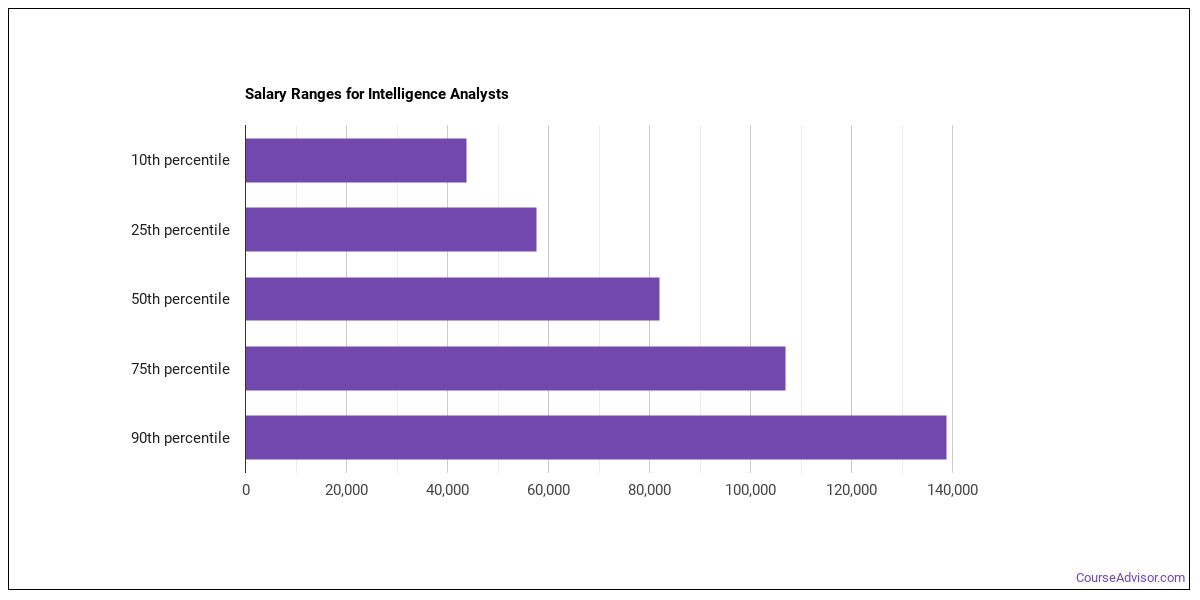
| Statistic | Value |
|---|---|
| Annual median | $65,483 |
| Hourly median | $31.48 |
| 10th percentile | $45,268 |
| 25th percentile | $55,376 |
| 75th percentile | $75,591 |
| 90th percentile | $85,698 |
Pay can vary substantially based on experience, location, and industry.
Pay by State
| State | Annual median salary |
|---|---|
| Maryland | $125,630 |
| California | $122,140 |
| Alaska | $121,140 |
| Washington | $116,450 |
| New Jersey | $113,830 |
| Hawaii | $112,100 |
| Massachusetts | $111,460 |
| Virginia | $110,220 |
| Oregon | $107,450 |
| Vermont | $104,330 |
| New York | $103,340 |
| Arizona | $103,270 |
| Colorado | $102,910 |
| Nebraska | $99,090 |
| Pennsylvania | $98,740 |
| Montana | $95,640 |
| Nevada | $95,590 |
| Connecticut | $95,420 |
| Wisconsin | $92,910 |
| Michigan | $92,560 |
| West Virginia | $90,690 |
| New Hampshire | $90,050 |
| Texas | $89,860 |
| Illinois | $89,740 |
| Rhode Island | $88,780 |
| Delaware | $88,350 |
| New Mexico | $86,840 |
| North Dakota | $84,580 |
| Minnesota | $82,330 |
| Maine | $80,750 |
| Wyoming | $80,250 |
| Missouri | $78,670 |
| Florida | $78,290 |
| Ohio | $77,940 |
| Idaho | $77,460 |
| Kentucky | $77,440 |
| Oklahoma | $77,440 |
| Iowa | $77,440 |
| South Dakota | $77,440 |
| Indiana | $74,600 |
| Utah | $74,530 |
| Tennessee | $72,800 |
| Kansas | $68,180 |
| Puerto Rico | $66,840 |
| Alabama | $66,020 |
| Georgia | $64,990 |
| South Carolina | $63,060 |
| North Carolina | $62,480 |
| Louisiana | $59,500 |
| Mississippi | $56,310 |
| Arkansas | $53,460 |
Top-Paying U.S. Regions
Compensation for intelligence analysts shift depending on where you work. The following regions pay the most:
| Region | Median annual wage | Share of U.S. jobs | Location quotient |
|---|---|---|---|
| Far Western US | $119,744 | 14.0% | 0.86 |
| Middle Atlantic | $105,564 | 15.5% | 1.13 |
| New England | $97,494 | 3.4% | 0.79 |
| Rocky Mountains | $93,204 | 3.5% | 0.92 |
| Southwest | $91,672 | 24.5% | 1.97 |
| Great Lakes | $86,404 | 9.2% | 0.64 |
| Plains States | $79,153 | 5.2% | 0.82 |
| Southeast | $73,501 | 24.2% | 1.01 |
Highest-Paying Metro Areas for Intelligence Analysts
| Metro area | State | Median annual wage | Employment |
|---|---|---|---|
| Hagerstown-Martinsburg, MD-WV | MD | $157,270 | 40 |
| San Jose-Sunnyvale-Santa Clara, CA | CA | $156,890 | 260 |
| Brunswick-St. Simons, GA | GA | $155,110 | 220 |
| Washington-Arlington-Alexandria, DC-VA-MD-WV | DC | $153,340 | 4,760 |
| Oxnard-Thousand Oaks-Ventura, CA | CA | $143,250 | 70 |
| Salinas, CA | CA | $129,880 | 40 |
| Santa Maria-Santa Barbara, CA | CA | $129,370 | 40 |
| Los Angeles-Long Beach-Anaheim, CA | CA | $127,980 | 3,070 |
Top Industries Employing Intelligence Analysts
Most intelligence analysts work in these industries:
| Industry | Employment | Median annual wage |
|---|---|---|
| Transportation and Warehousing | 440 | $115,070 |
| Educational Services | 280 | $82,990 |
| Health Care and Social Assistance | 60 | $85,650 |
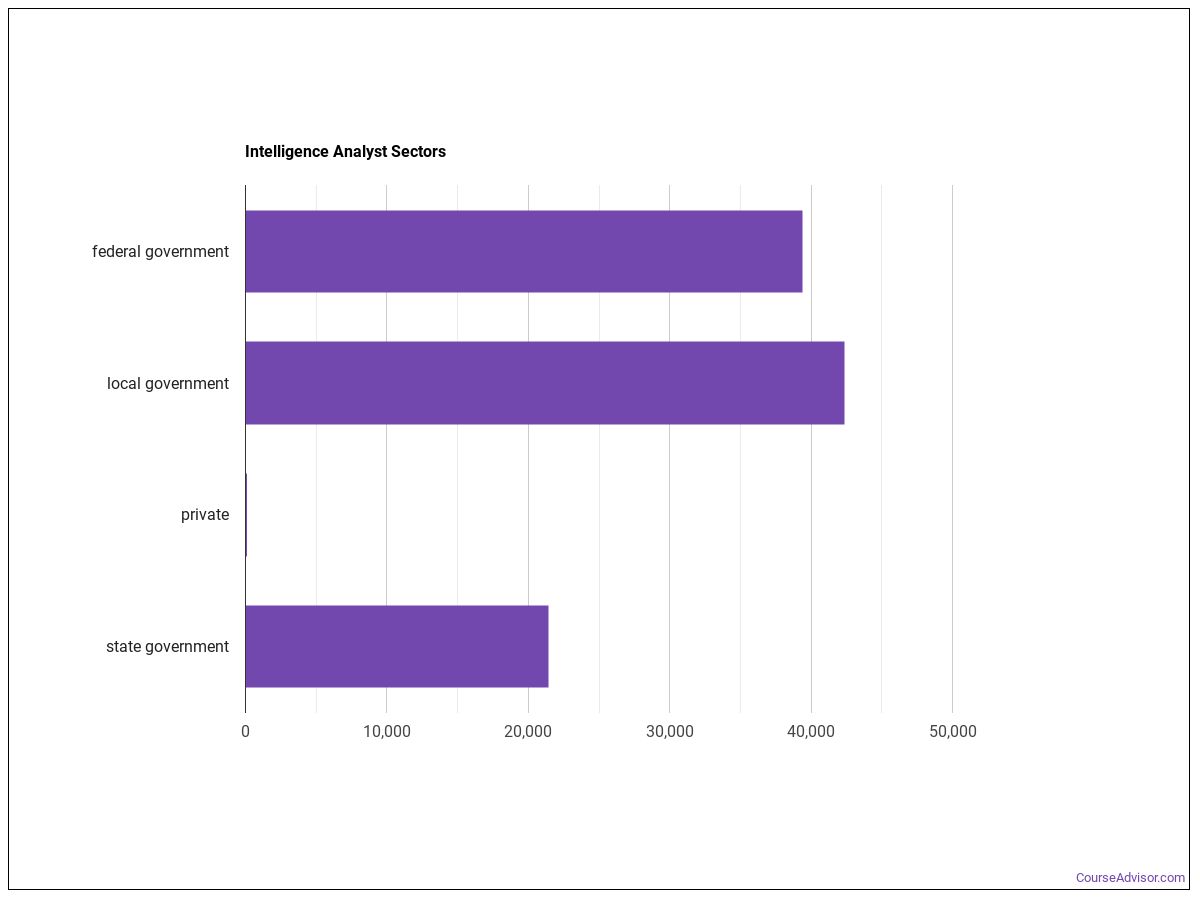
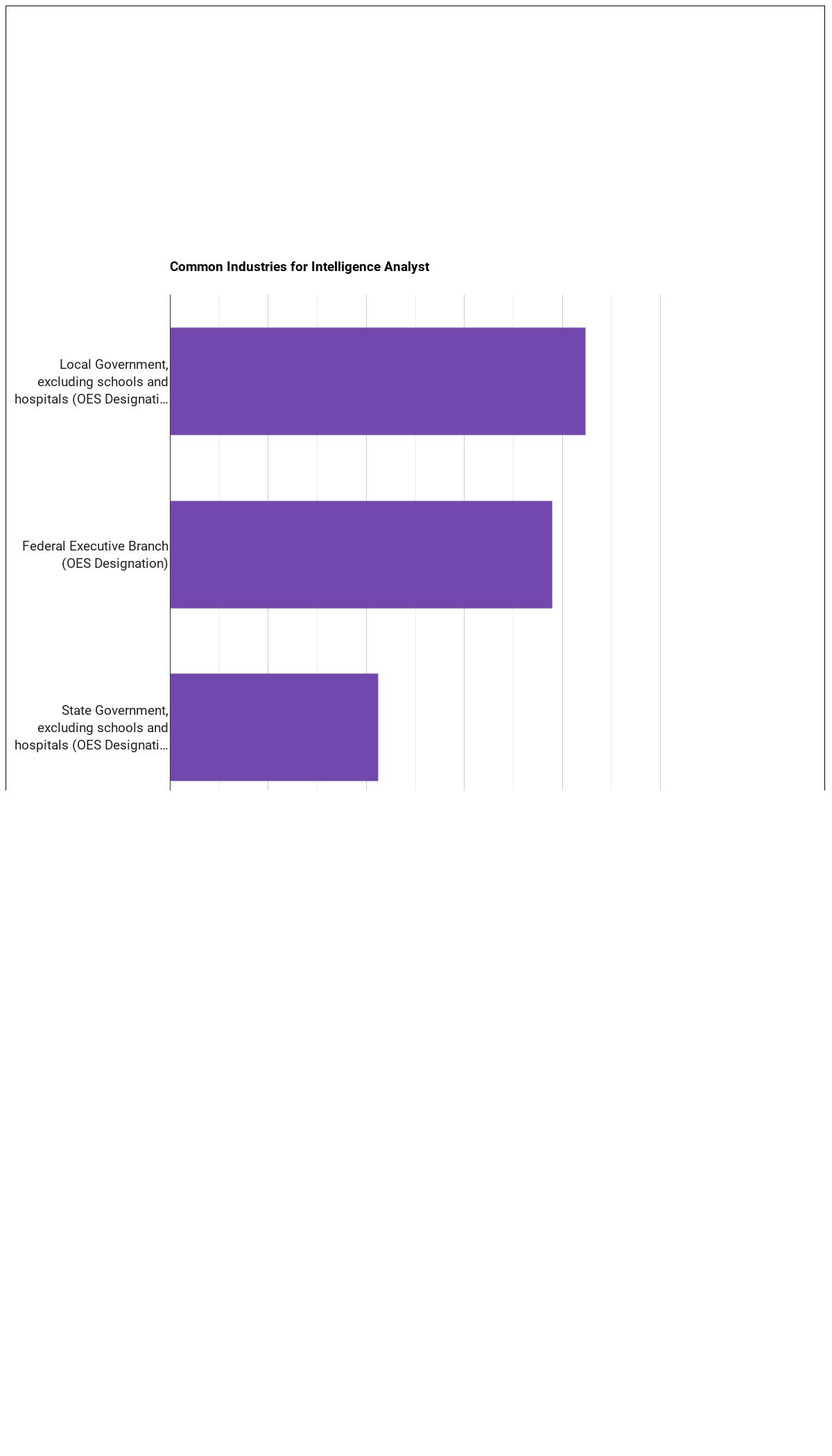
Below are examples of industries where intelligence analysts work:
Software Intelligence Analysts Use
- Data base user interface and query software: Amazon Web Services AWS software (hot technology)
- Data base management system software: Apache Hadoop (hot technology)
- Data base management system software: Apache Hive (hot technology)
- Development environment software: Apache Kafka (hot technology)
- Business intelligence and data analysis software: Apache Spark (hot technology)
- Object or component oriented development software: C++ (hot technology)
- Web platform development software: Django (hot technology)
- Geographic information system: ESRI ArcGIS software (hot technology)
- Web page creation and editing software: Facebook (hot technology)
- Web platform development software: Hypertext markup language HTML (hot technology)
- Web platform development software: JavaScript (hot technology)
- Operating system software: Linux (hot technology)
What the Workplace Is Like
The work environment for intelligence analysts tends to involve the following characteristics:
- Indoors, Environmentally Controlled
- Telephone Conversations
- Spend Time Sitting
- Work With or Contribute to a Work Group or Team
Getting Started in This Career
Typical intelligence analysts positions require a bachelor’s degree as the typical entry-level education. This occupation sits in Considerable Preparation Needed (Job Zone 4), signaling the level of preparation typically expected.
Similar Occupations
Similar Occupations
- Security Managers (Supplemental)
- Management Analysts (Supplemental)
- Security Management Specialists (Primary-Long)
- Financial Risk Specialists (Supplemental)
- Fraud Examiners, Investigators and Analysts (Primary-Long)
- Information Security Analysts (Primary-Short)
- Penetration Testers (Supplemental)
- Information Security Engineers (Primary-Long)
Top Programs to Study For This Career
Students preparing for intelligence analysts often complete programs in:
Homeland Security, Law Enforcement, Firefighting and Related Protective Services
12 programs across 2 majors
Natural Resources and Conservation
1 programs across 1 majors
Military Technologies and Applied Sciences
1 programs across 1 majors
Sources
Data on this page comes from the following authoritative sources:
- U.S. Bureau of Labor Statistics — Occupational Employment and Wage Statistics (OEWS) for employment and wage data by state and industry.
- BLS Employment Projections for total employment and growth forecasts.
- O*NET (Occupational Information Network) for skills, knowledge, tasks, work activities, work context, technology, and education-zone data.
SOC code: 33-3021.06 (Detectives and Criminal Investigators).

Course Advisor provides higher-education, college and university, degree, program, career, salary, and other helpful information to students, faculty, institutions, and other internet audiences. Presented information and data are subject to change. Inclusion on this website does not imply or represent a direct relationship with the company, school, or brand. Information, though believed correct at time of publication, may not be correct, and no warranty is provided. Contact the schools to verify any information before relying on it. Financial aid may be available for those who qualify. The displayed options may include sponsored or recommended results, not necessarily based on your preferences.
© Course Advisor – All Rights Reserved.