Industrial Truck and Tractor Operators: Career Overview
Operate industrial trucks or tractors equipped to move materials around a warehouse, storage yard, factory, construction site, or similar location.
Featured schools near , edit
What Tasks Do Industrial Truck and Tractor Operators Perform?
The core tasks performed by industrial truck and tractor operators cover:
- Move levers or controls that operate lifting devices, such as forklifts, lift beams with swivel-hooks, hoists, or elevating platforms, to load, unload, transport, or stack material.
- Move controls to drive gasoline- or electric-powered trucks, cars, or tractors and transport materials between loading, processing, and storage areas.
- Manually or mechanically load or unload materials from pallets, skids, platforms, cars, lifting devices, or other transport vehicles.
- Position lifting devices under, over, or around loaded pallets, skids, or boxes and secure material or products for transport to designated areas.
- Inspect product load for accuracy and safely move it around the warehouse or facility to ensure timely and complete delivery.
What Industrial Truck and Tractor Operators Need to Know
Successful industrial truck and tractor operators combine a mix of skills and domain knowledge.
Top Skills
The abilities most central to this role, rated on an importance scale of 0 to 5:
Knowledge Areas
Related Job Titles
This career also goes by job titles like:
- CAT Driver (Caterpillar Driver)
- CAT Operator (Caterpillar Operator)
- CAT Skinner (Caterpillar Skinner)
- CAT Tender (Caterpillar Tender)
- CAT Tractor Operator (Caterpillar Tractor Operator)
- Carry All Driver
- Charging Car Operator
- Checker Loader
Job Outlook
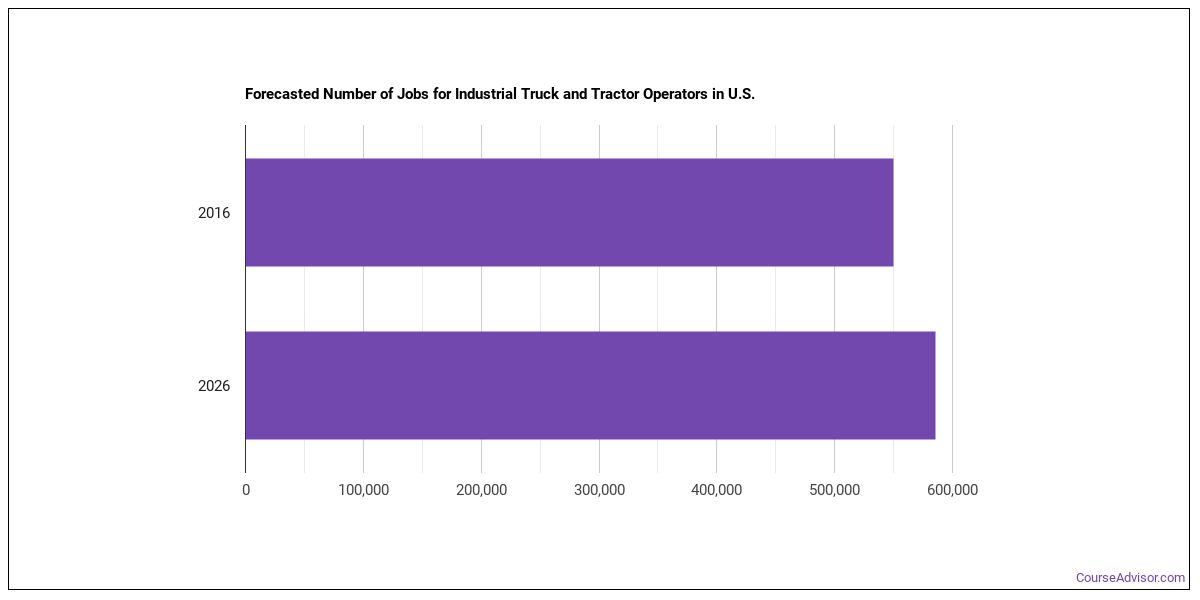
There are about 364,914 industrial truck and tractor operators working in the United States today. This occupation is expected to grow by +11.3% over the projection horizon.
Industrial Truck and Tractor Operators Pay
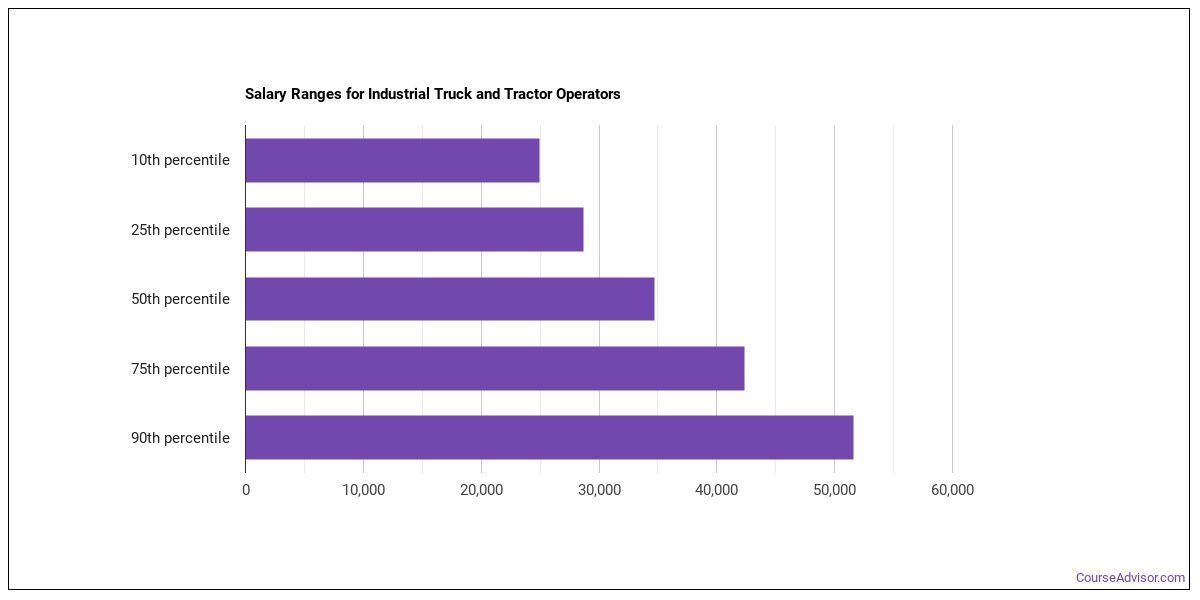
| Statistic | Value |
|---|---|
| Annual median | $36,138 |
| Hourly median | $17.37 |
| 10th percentile | $24,129 |
| 25th percentile | $30,133 |
| 75th percentile | $42,142 |
| 90th percentile | $48,147 |
Wages vary widely based on experience, location, and industry.
How Much Do Industrial Truck and Tractor Operators Make in Different U.S. States?
| State | Annual median salary |
|---|---|
| District of Columbia | $81,470 |
| New Mexico | $60,960 |
| Delaware | $60,030 |
| Hawaii | $58,070 |
| Wyoming | $56,170 |
| Alaska | $50,630 |
| New Hampshire | $50,490 |
| Oregon | $50,050 |
| New York | $49,610 |
| California | $48,720 |
| Colorado | $48,460 |
| Minnesota | $48,420 |
| Virginia | $48,380 |
| Washington | $48,270 |
| Kansas | $48,120 |
| Pennsylvania | $47,900 |
| Utah | $47,500 |
| Connecticut | $47,420 |
| Arizona | $47,250 |
| Montana | $47,230 |
| Louisiana | $47,200 |
| Illinois | $47,090 |
| Maine | $47,080 |
| Iowa | $46,950 |
| Massachusetts | $46,870 |
| Idaho | $46,870 |
| North Dakota | $46,800 |
| Maryland | $46,670 |
| Wisconsin | $46,660 |
| Ohio | $46,340 |
| Nevada | $46,280 |
| Nebraska | $46,120 |
| Vermont | $46,020 |
| Texas | $45,820 |
| Florida | $45,790 |
| New Jersey | $45,620 |
| South Dakota | $45,590 |
| Indiana | $45,310 |
| Oklahoma | $44,830 |
| Michigan | $44,380 |
| Georgia | $44,330 |
| Missouri | $44,300 |
| Rhode Island | $44,040 |
| Kentucky | $43,340 |
| Alabama | $42,640 |
| Arkansas | $42,630 |
| Mississippi | $42,430 |
| North Carolina | $42,250 |
| South Carolina | $41,770 |
| West Virginia | $40,930 |
| Tennessee | $40,760 |
| Puerto Rico | $34,880 |
| Guam | $33,000 |
| Virgin Islands | $31,950 |
Top-Paying U.S. Regions
Compensation for industrial truck and tractor operators shift depending on where you work. The following regions pay the most:
| Region | Median annual wage | Share of U.S. jobs | Location quotient |
|---|---|---|---|
| Far Western US | $48,732 | 16.6% | 1.02 |
| Middle Atlantic | $48,510 | 12.7% | 1.16 |
| Rocky Mountains | $48,132 | 2.4% | 0.63 |
| New England | $47,154 | 2.2% | 0.51 |
| Plains States | $46,495 | 5.8% | 0.91 |
| Southwest | $46,203 | 16.2% | 1.35 |
| Great Lakes | $45,955 | 16.6% | 1.22 |
| Southeast | $43,903 | 27.0% | 1.30 |
Highest-Paying Metro Areas for Industrial Truck and Tractor Operators
| Metro area | State | Median annual wage | Employment |
|---|---|---|---|
| Flint, MI | MI | $76,430 | 920 |
| Kahului-Wailuku, HI | HI | $63,970 | 60 |
| Cheyenne, WY | WY | $61,420 | 330 |
| Albuquerque, NM | NM | $60,960 | 1,720 |
| Bremerton-Silverdale-Port Orchard, WA | WA | $58,800 | 70 |
| Stockton-Lodi, CA | CA | $57,630 | 8,810 |
| San Francisco-Oakland-Fremont, CA | CA | $57,250 | 6,400 |
| Atlantic City-Hammonton, NJ | NJ | $56,580 | 150 |
Industry Breakdown
Most industrial truck and tractor operators are concentrated in the following sectors:
| Industry | Employment | Median annual wage |
|---|---|---|
| Transportation and Warehousing | 391,620 | $47,900 |
| Manufacturing | 179,250 | $45,200 |
| Wholesale Trade | 89,310 | $45,110 |
| Administrative and Support and Waste Management and Remediation Services | 69,500 | $38,200 |
| Retail Trade | 32,990 | $46,230 |
| Construction | 9,070 | $48,980 |
| Agriculture, Forestry, Fishing and Hunting | 8,260 | $38,480 |
| Professional, Scientific, and Technical Services | 7,420 | $40,650 |

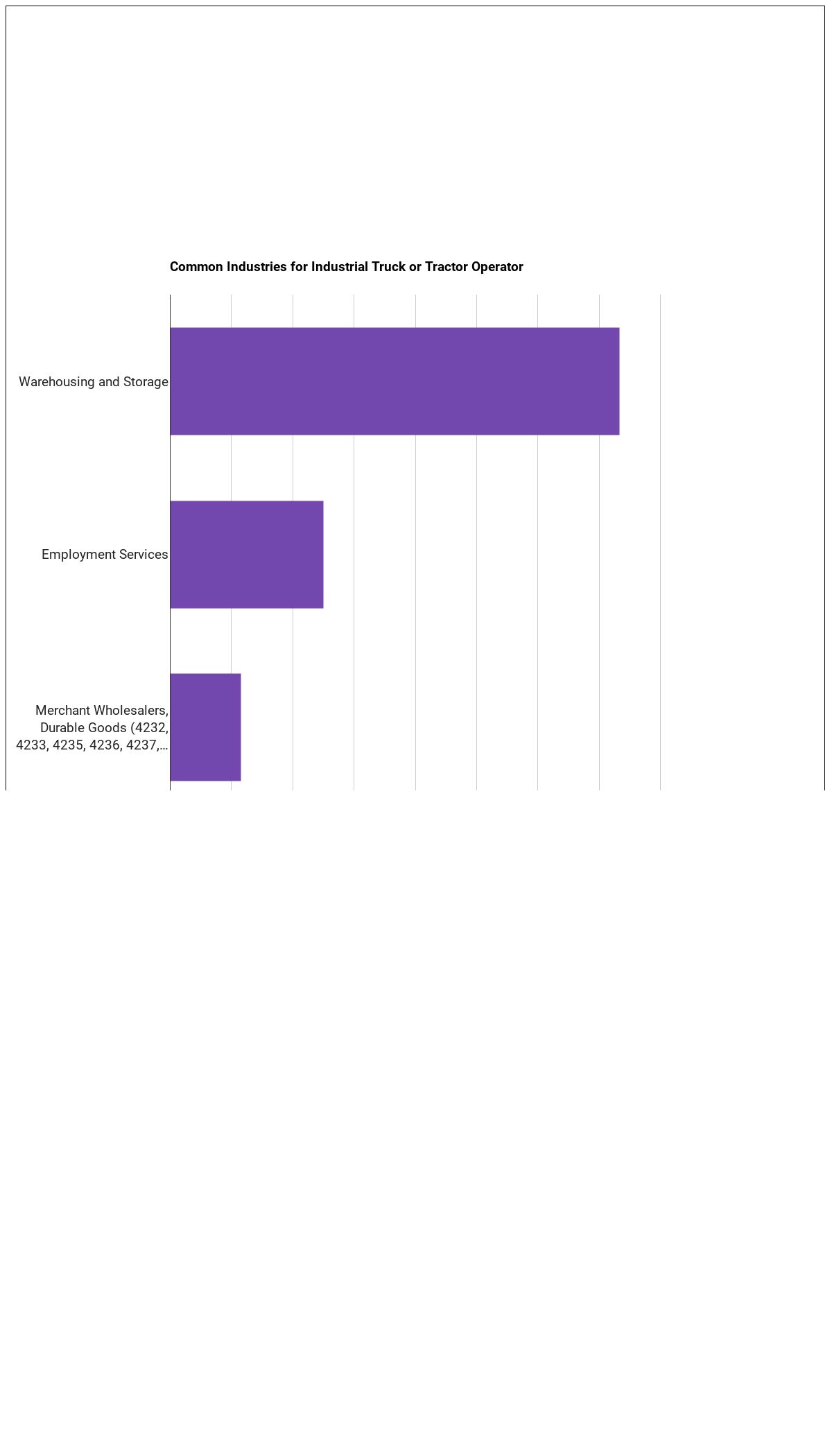
The table below shows some of the most common industries where those employed in this career field work.
Tools and Technology
- Computer aided design CAD software: Autodesk AutoCAD (hot technology)
- Spreadsheet software: Microsoft Excel (hot technology)
- Office suite software: Microsoft Office software (hot technology)
- Electronic mail software: Microsoft Outlook (hot technology)
- Word processing software: Microsoft Word (hot technology)
- Enterprise resource planning ERP software: SAP software (hot technology)
- Materials requirements planning logistics and supply chain software: Warehouse management system WMS (in demand)
Work Environment
The on-the-job environment of industrial truck and tractor operators tends to involve the following characteristics:
- Wear Common Protective or Safety Equipment such as Safety Shoes, Glasses, Gloves, Hearing Protection, Hard Hats, or Life Jackets
- Spend Time Using Your Hands to Handle, Control, or Feel Objects, Tools, or Controls
- Importance of Being Exact or Accurate
- Time Pressure
- Exposed to Very Hot or Cold Temperatures
Getting Started in This Career
Most industrial truck and tractor operators positions require a high school diploma or equivalent as the typical entry-level education. The role falls in Some Preparation Needed (Job Zone 2), indicating the level of preparation typically expected.
Other Careers to Consider
Similar Occupations
- Agricultural Equipment Operators (Supplemental)
- Paving, Surfacing, and Tamping Equipment Operators (Supplemental)
- Pile Driver Operators (Primary-Long)
- Operating Engineers and Other Construction Equipment Operators (Primary-Short)
- Excavating and Loading Machine and Dragline Operators, Surface Mining (Primary-Long)
- Continuous Mining Machine Operators (Supplemental)
- Loading and Moving Machine Operators, Underground Mining (Primary-Short)
- Bus and Truck Mechanics and Diesel Engine Specialists (Supplemental)
Top Programs to Study For This Career
Future industrial truck and tractor operators commonly pursue programs in:
Transportation and Materials Moving
1 programs across 1 majors
References
This profile draws on the following authoritative sources:
- U.S. Bureau of Labor Statistics — Occupational Employment and Wage Statistics (OEWS) for employment and wage data by state and industry.
- BLS Employment Projections for total employment and growth forecasts.
- O*NET (Occupational Information Network) for skills, knowledge, tasks, work activities, work context, technology, and education-zone data.
SOC code: 53-7051.00 (Industrial Truck and Tractor Operators).

Course Advisor provides higher-education, college and university, degree, program, career, salary, and other helpful information to students, faculty, institutions, and other internet audiences. Presented information and data are subject to change. Inclusion on this website does not imply or represent a direct relationship with the company, school, or brand. Information, though believed correct at time of publication, may not be correct, and no warranty is provided. Contact the schools to verify any information before relying on it. Financial aid may be available for those who qualify. The displayed options may include sponsored or recommended results, not necessarily based on your preferences.
© Course Advisor – All Rights Reserved.