Hearing Aid Specialists: Job Description
Select and fit hearing aids for customers. Administer and interpret tests of hearing. Assess hearing instrument efficacy. Take ear impressions and prepare, design, and modify ear molds.
Featured schools near , edit
What Tasks Do Hearing Aid Specialists Do?
The day-to-day responsibilities of hearing aid specialists cover:
- Train clients to use hearing aids or other augmentative communication devices.
- Counsel patients and families on communication strategies and the effects of hearing loss.
- Select and administer tests to evaluate hearing or related disabilities.
- Administer basic hearing tests including air conduction, bone conduction, or speech audiometry tests.
- Maintain or repair hearing aids or other communication devices.
- Perform basic screening procedures, such as pure tone screening, otoacoustic screening, immittance screening, and screening of ear canal status using otoscope.
- Create or modify impressions for earmolds and hearing aid shells.
- Read current literature, talk with colleagues, and participate in professional organizations or conferences to keep abreast of developments in audiology.
Skills and Knowledge
Top hearing aid specialists rely on a mix of skills and domain knowledge.
Key Skills
The abilities that matter most in this role, rated on an importance scale of 0 to 5:
Top Knowledge Areas
Other Hearing Aid Specialists Job Titles
This career also goes by job titles like:
- Audiology Assistant
- Audiology Technician
- Audioprosthologist
- Board Certified Hearing Instrument Specialist (Board Certified HIS)
- Hearing Aid Attendant
- Hearing Aid Consultant
- Hearing Aid Dispenser
- Hearing Aid Fitter
Employment and Demand
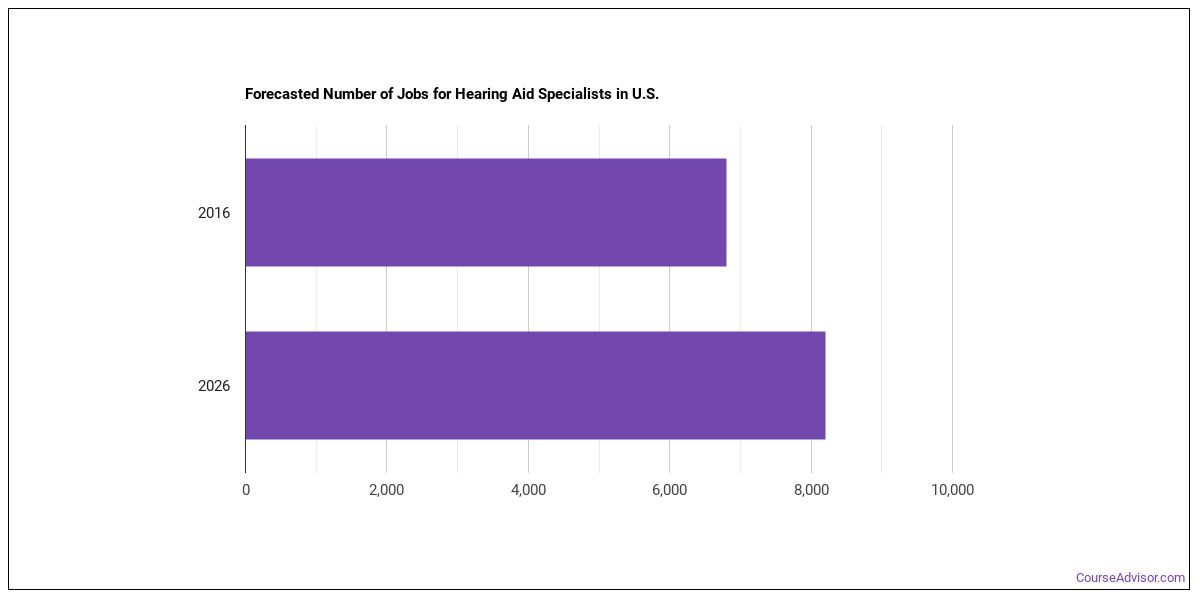
There are about 366,866 hearing aid specialists working in the United States today. Employment is projected to grow by +12.0% over the projection horizon.
Hearing Aid Specialists Pay
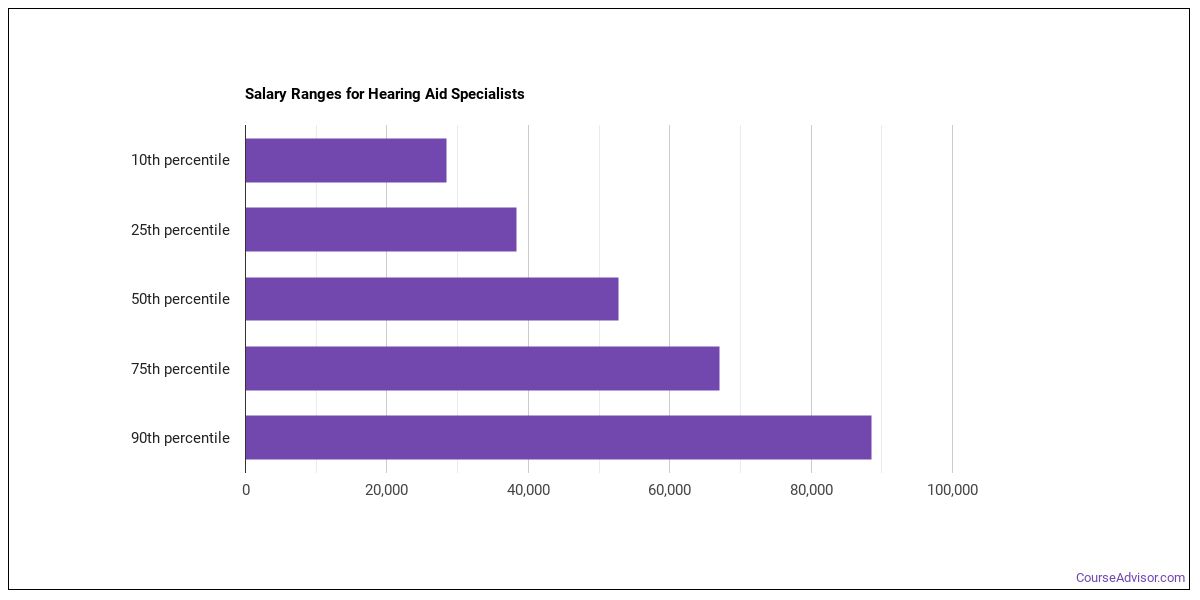
| Statistic | Value |
|---|---|
| Annual median | $96,168 |
| Hourly median | $46.23 |
| 10th percentile | $63,138 |
| 25th percentile | $79,653 |
| 75th percentile | $112,683 |
| 90th percentile | $129,198 |
Pay can vary substantially based on experience, location, and industry.
Pay by State
| State | Annual median salary |
|---|---|
| Hawaii | $91,000 |
| New York | $80,710 |
| New Mexico | $79,930 |
| California | $78,830 |
| Nevada | $78,310 |
| Arkansas | $76,750 |
| Washington | $74,670 |
| Maryland | $74,670 |
| Montana | $74,220 |
| Colorado | $73,220 |
| North Carolina | $72,950 |
| Idaho | $72,590 |
| Arizona | $71,470 |
| Virginia | $71,450 |
| Wisconsin | $71,110 |
| Massachusetts | $67,460 |
| Ohio | $63,640 |
| Iowa | $63,280 |
| Kentucky | $62,920 |
| Florida | $62,120 |
| Missouri | $61,930 |
| Oregon | $61,850 |
| Texas | $61,560 |
| Delaware | $58,130 |
| Connecticut | $57,970 |
| Minnesota | $57,080 |
| Tennessee | $56,010 |
| Indiana | $55,790 |
| Georgia | $54,100 |
| Nebraska | $50,030 |
| Illinois | $49,090 |
| Utah | $47,710 |
| Michigan | $46,680 |
| Louisiana | $45,850 |
| New Jersey | $45,550 |
| Oklahoma | $43,480 |
| Kansas | $42,190 |
| South Carolina | $36,240 |
Pay by U.S. Region
Compensation for hearing aid specialists shift depending on where you work. The following regions pay the most:
| Region | Median annual wage | Share of U.S. jobs | Location quotient |
|---|---|---|---|
| Far Western US | $74,669 | 13.0% | 1.04 |
| New England | $64,092 | 3.2% | 0.84 |
| Southwest | $62,138 | 7.6% | 0.63 |
| Southeast | $58,967 | 31.7% | 1.89 |
| Rocky Mountains | $58,639 | 4.5% | 1.55 |
| Plains States | $56,883 | 11.1% | 1.70 |
| Great Lakes | $54,594 | 20.5% | 1.40 |
| Middle Atlantic | $32,552 | 8.5% | 0.87 |
Top Metro Areas
| Metro area | State | Median annual wage | Employment |
|---|---|---|---|
| Urban Honolulu, HI | HI | $97,640 | |
| San Jose-Sunnyvale-Santa Clara, CA | CA | $82,990 | 40 |
| North Port-Bradenton-Sarasota, FL | FL | $78,980 | 180 |
| San Diego-Chula Vista-Carlsbad, CA | CA | $78,830 | 50 |
| San Francisco-Oakland-Fremont, CA | CA | $78,830 | 100 |
| Palm Bay-Melbourne-Titusville, FL | FL | $78,170 | 30 |
| Cape Coral-Fort Myers, FL | FL | $76,070 | 80 |
| Richmond, VA | VA | $75,910 | 30 |
Industry Breakdown
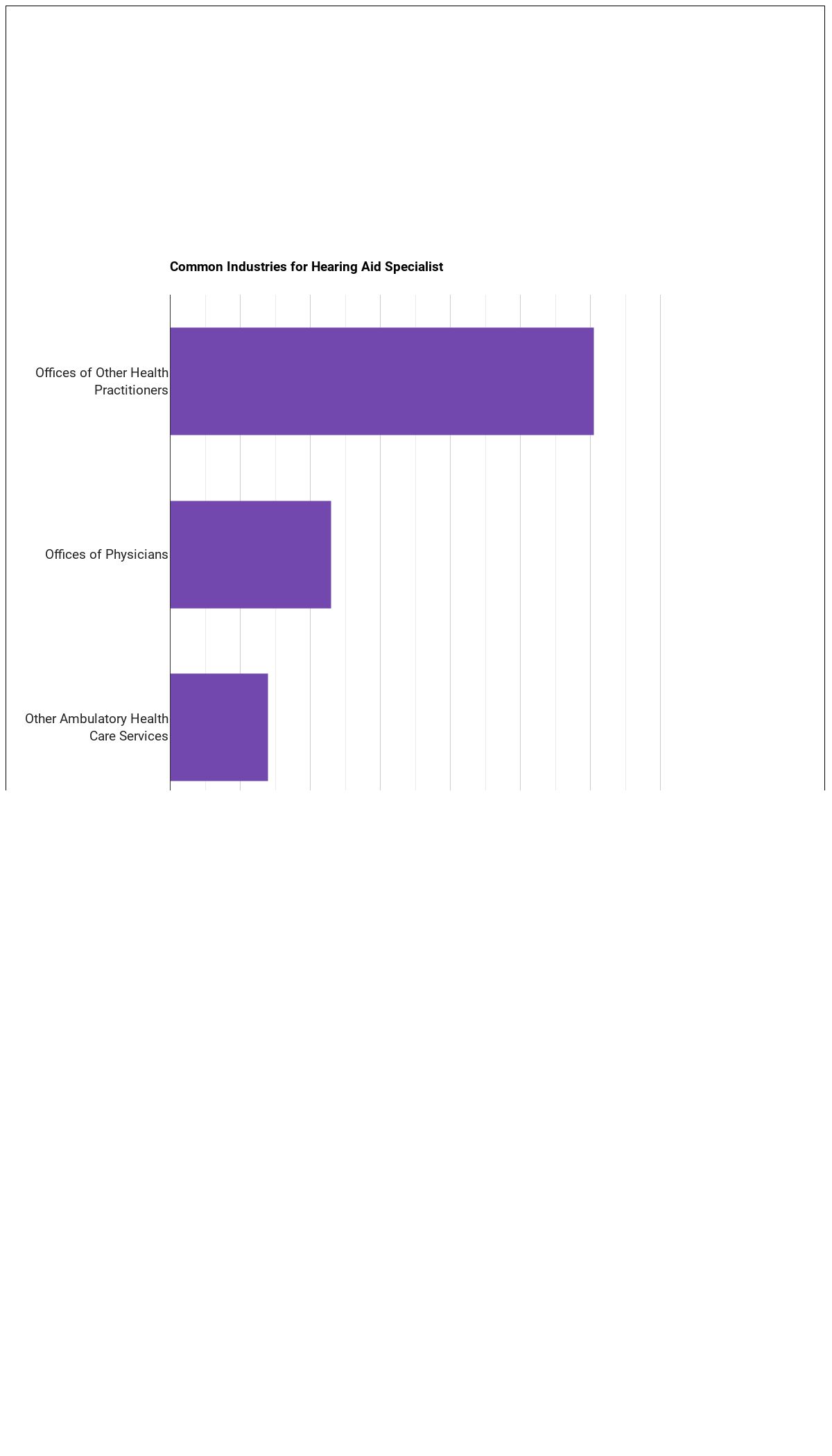
The bulk of hearing aid specialists work in these industries:
| Industry | Employment | Median annual wage |
|---|---|---|
| Retail Trade | 6,810 | $63,110 |
| Health Care and Social Assistance | 3,360 | $58,430 |
| Manufacturing | 70 | $60,290 |
| Educational Services | 40 | $44,900 |
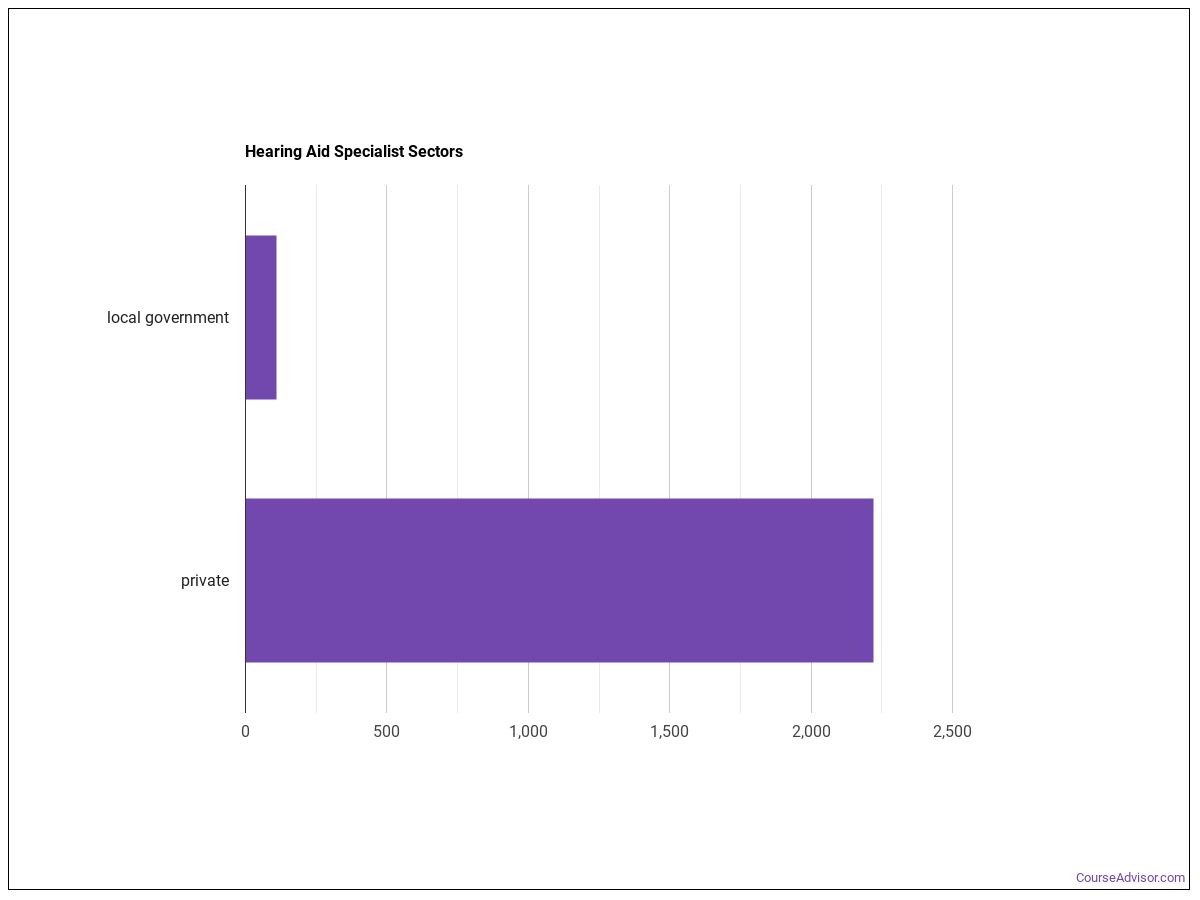
The table below shows some of the most common industries where those employed in this career field work.
Tools and Technology
- Spreadsheet software: Microsoft Excel (hot technology)
- Office suite software: Microsoft Office software (hot technology)
- Electronic mail software: Microsoft Outlook (hot technology)
- Presentation software: Microsoft PowerPoint (hot technology)
- Word processing software: Microsoft Word (hot technology)
Work Environment
Daily working conditions for hearing aid specialists is shaped by the following characteristics:
- Deal With External Customers or the Public in General
- Frequency of Decision Making
- Indoors, Environmentally Controlled
- Contact With Others
Education and Training
This occupation sits in Medium Preparation Needed (Job Zone 3), signaling the level of preparation typically expected.
Similar Occupations
Similar Occupations
- Oral and Maxillofacial Surgeons (Supplemental)
- Prosthodontists (Supplemental)
- Optometrists (Supplemental)
- Speech-Language Pathologists (Supplemental)
- Audiologists (Supplemental)
- Urologists (Supplemental)
- Physical Medicine and Rehabilitation Physicians (Supplemental)
- Ophthalmologists, Except Pediatric (Supplemental)
Top Programs to Study For This Career
Future hearing aid specialists typically earn programs in:
Health Professions and Related Programs
1 programs across 1 majors
References
This profile draws on the following authoritative sources:
- U.S. Bureau of Labor Statistics — Occupational Employment and Wage Statistics (OEWS) for employment and wage data by state and industry.
- BLS Employment Projections for total employment and growth forecasts.
- O*NET (Occupational Information Network) for skills, knowledge, tasks, work activities, work context, technology, and education-zone data.
SOC code: 29-2092.00 (Hearing Aid Specialists).

Course Advisor provides higher-education, college and university, degree, program, career, salary, and other helpful information to students, faculty, institutions, and other internet audiences. Presented information and data are subject to change. Inclusion on this website does not imply or represent a direct relationship with the company, school, or brand. Information, though believed correct at time of publication, may not be correct, and no warranty is provided. Contact the schools to verify any information before relying on it. Financial aid may be available for those who qualify. The displayed options may include sponsored or recommended results, not necessarily based on your preferences.
© Course Advisor – All Rights Reserved.