Fire-Prevention and Protection Engineers: Job Description
Research causes of fires, determine fire protection methods, and design or recommend materials or equipment such as structural components or fire-detection equipment to assist organizations in safeguarding life and property against fire, explosion, and related hazards.
Featured schools near , edit
What Tasks Do Fire-Prevention and Protection Engineers Take On?
The core tasks performed by fire-prevention and protection engineers include:
- Advise architects, builders, and other construction personnel on fire prevention equipment and techniques and on fire code and standard interpretation and compliance.
- Design fire detection equipment, alarm systems, and fire extinguishing devices and systems.
- Inspect buildings or building designs to determine fire protection system requirements and potential problems in areas such as water supplies, exit locations, and construction materials.
- Review building plans to verify compliance with fire code.
- Prepare and write reports detailing specific fire prevention and protection issues, such as work performed, revised codes or standards, and proposed review schedules.
- Consult with authorities to discuss safety regulations and to recommend changes as necessary.
- Evaluate fire department performance and the laws and regulations affecting fire prevention or fire safety.
- Direct the purchase, modification, installation, testing, maintenance, and operation of fire prevention and protection systems.
Key Skills and Knowledge
Successful fire-prevention and protection engineers combine a mix of skills and domain knowledge.
Key Skills
The competencies most central to this role, rated on an importance scale of 0 to 5:
Knowledge Areas
Related Job Titles
This career also goes by job titles like:
- Consulting Engineer
- Engineer
- Fire Alarm Systems Technician (Fire Alarm Systems Tech)
- Fire Prevention Research Engineer
- Fire Protection Commissioning Engineer
- Fire Protection Consultant
- Fire Protection Design Engineer
- Fire Protection Designer
Employment and Demand
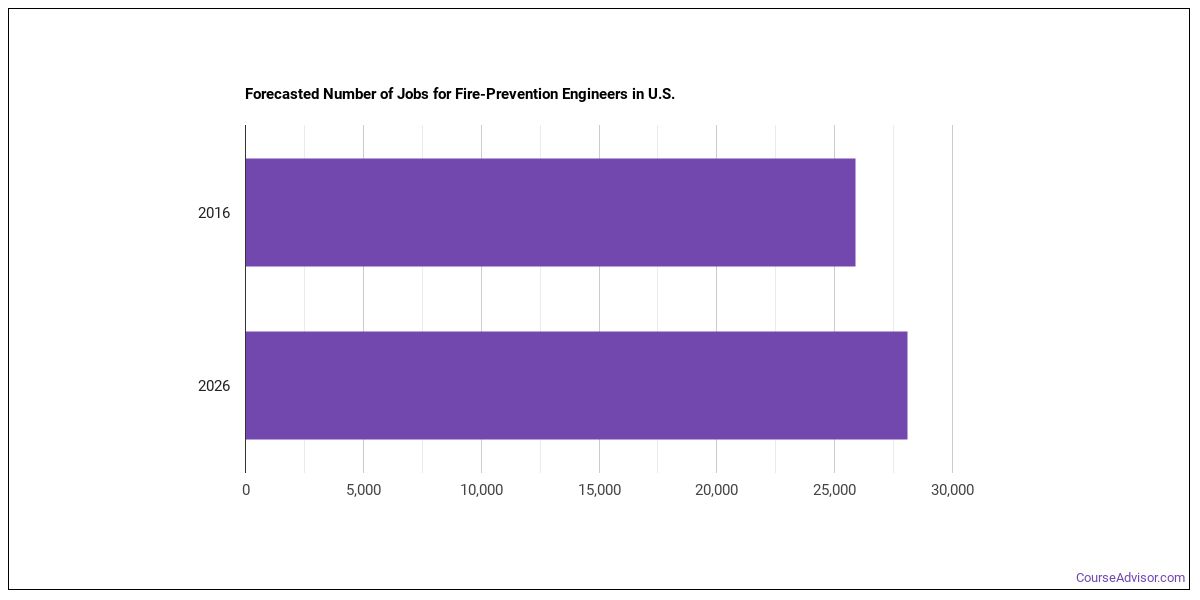
There are about 337,105 fire-prevention and protection engineers working in the United States today. This occupation is expected to decline by -0.8% over the projection horizon.
Salary for Fire-Prevention and Protection Engineers
| Statistic | Value |
|---|---|
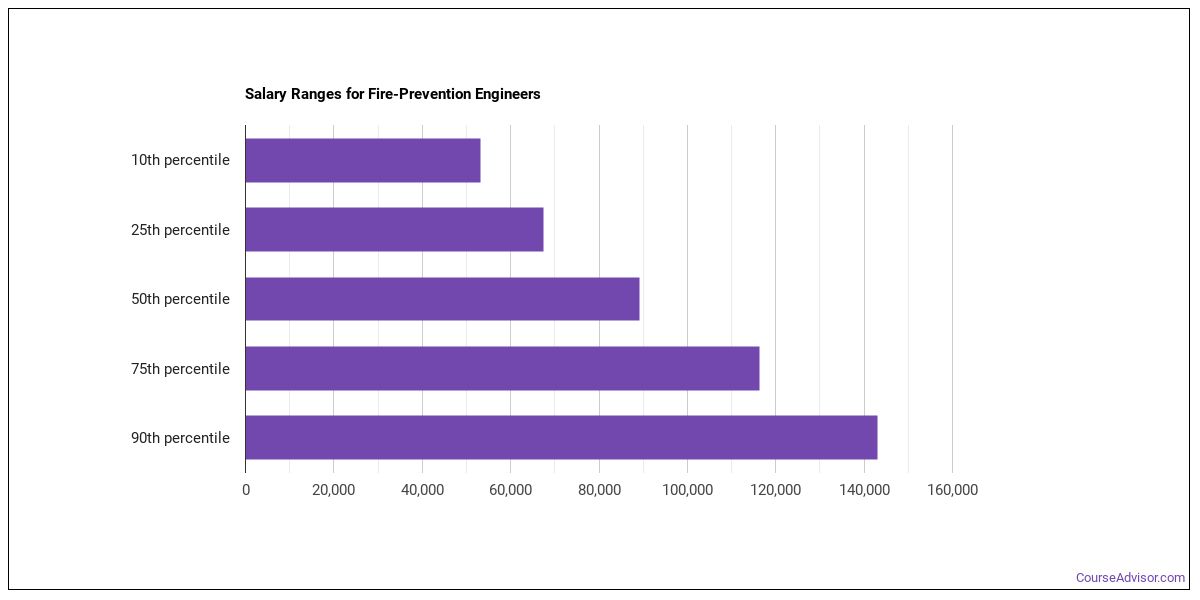
| Annual median | $122,967 |
| Hourly median | $59.12 |
| 10th percentile | $83,860 |
| 25th percentile | $103,414 |
| 75th percentile | $142,520 |
| 90th percentile | $162,074 |
Wages vary widely based on experience, location, and industry.
Fire-Prevention and Protection Engineers Salary by State
| State | Annual median salary |
|---|---|
| District of Columbia | $135,810 |
| Massachusetts | $131,500 |
| Oregon | $128,760 |
| California | $125,410 |
| Texas | $123,020 |
| Washington | $121,730 |
| Iowa | $121,520 |
| New York | $119,030 |
| Delaware | $117,250 |
| Ohio | $117,080 |
| Tennessee | $115,190 |
| Minnesota | $113,460 |
| New Jersey | $112,330 |
| Colorado | $112,140 |
| Louisiana | $111,190 |
| Arizona | $109,790 |
| Pennsylvania | $109,660 |
| Illinois | $108,530 |
| Maryland | $106,310 |
| Alabama | $106,130 |
| Georgia | $105,440 |
| Kansas | $105,010 |
| Nebraska | $104,010 |
| Utah | $102,980 |
| Alaska | $101,720 |
| Virginia | $101,680 |
| Oklahoma | $99,490 |
| Florida | $99,340 |
| Kentucky | $98,200 |
| Indiana | $97,630 |
| Michigan | $96,930 |
| Idaho | $96,090 |
| Nevada | $95,840 |
| Connecticut | $95,160 |
| North Carolina | $94,070 |
| West Virginia | $93,440 |
| South Carolina | $92,150 |
| Maine | $91,480 |
| Mississippi | $87,230 |
| Arkansas | $86,970 |
| New Mexico | $86,880 |
| Wisconsin | $84,250 |
| Montana | $82,900 |
| Guam | $76,590 |
| Hawaii | $74,410 |
| Missouri | $73,840 |
Top-Paying U.S. Regions
Compensation for fire-prevention and protection engineers vary by region. The following regions pay the most:
| Region | Median annual wage | Share of U.S. jobs | Location quotient |
|---|---|---|---|
| Far Western US | $122,783 | 17.3% | 1.06 |
| Southwest | $115,014 | 19.9% | 1.93 |
| Middle Atlantic | $114,055 | 18.3% | 1.23 |
| New England | $111,989 | 4.1% | 0.99 |
| Plains States | $103,034 | 4.1% | 0.64 |
| Rocky Mountains | $101,963 | 3.6% | 1.23 |
| Southeast | $100,690 | 21.3% | 0.98 |
| Great Lakes | $98,294 | 11.1% | 1.33 |
Where the Jobs Cluster
| Metro area | State | Median annual wage | Employment |
|---|---|---|---|
| Santa Maria-Santa Barbara, CA | CA | $147,060 | 30 |
| Kennewick-Richland, WA | WA | $141,600 | 120 |
| Sacramento-Roseville-Folsom, CA | CA | $138,780 | 210 |
| San Jose-Sunnyvale-Santa Clara, CA | CA | $132,140 | 180 |
| Boston-Cambridge-Newton, MA-NH | MA | $131,520 | 440 |
| New Orleans-Metairie, LA | LA | $129,910 | 140 |
| Riverside-San Bernardino-Ontario, CA | CA | $129,580 | 250 |
| Portland-Vancouver-Hillsboro, OR-WA | OR | $128,890 | 150 |
Top Industries Employing Fire-Prevention and Protection Engineers
The bulk of fire-prevention and protection engineers are found across these industries:
| Industry | Employment | Median annual wage |
|---|---|---|
| Professional, Scientific, and Technical Services | 5,630 | $109,740 |
| Manufacturing | 5,470 | $109,030 |
| Construction | 2,220 | $99,440 |
| Finance and Insurance | 970 | $124,970 |
| Information | 900 | $109,660 |
| Management of Companies and Enterprises | 860 | $125,780 |
| Wholesale Trade | 580 | $107,970 |
| Utilities | 570 | $121,940 |
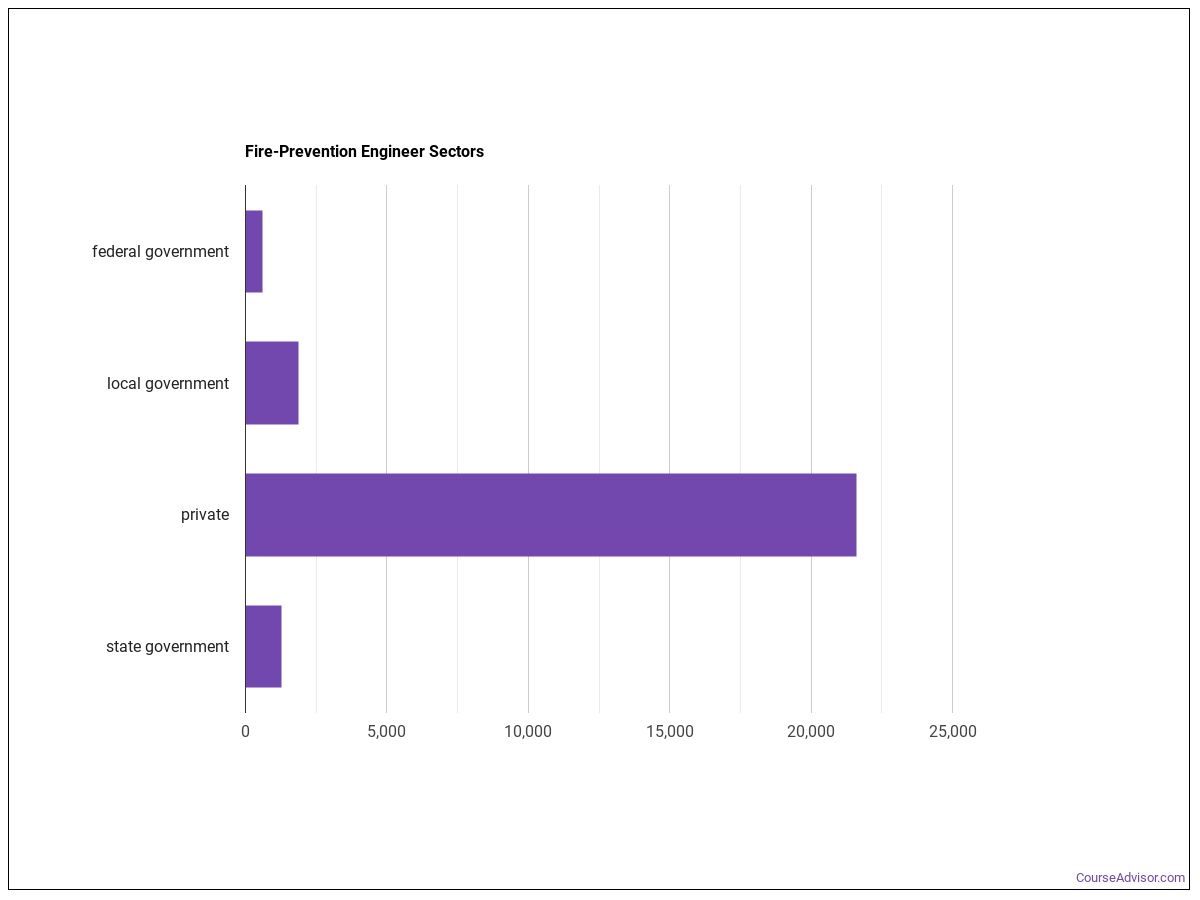
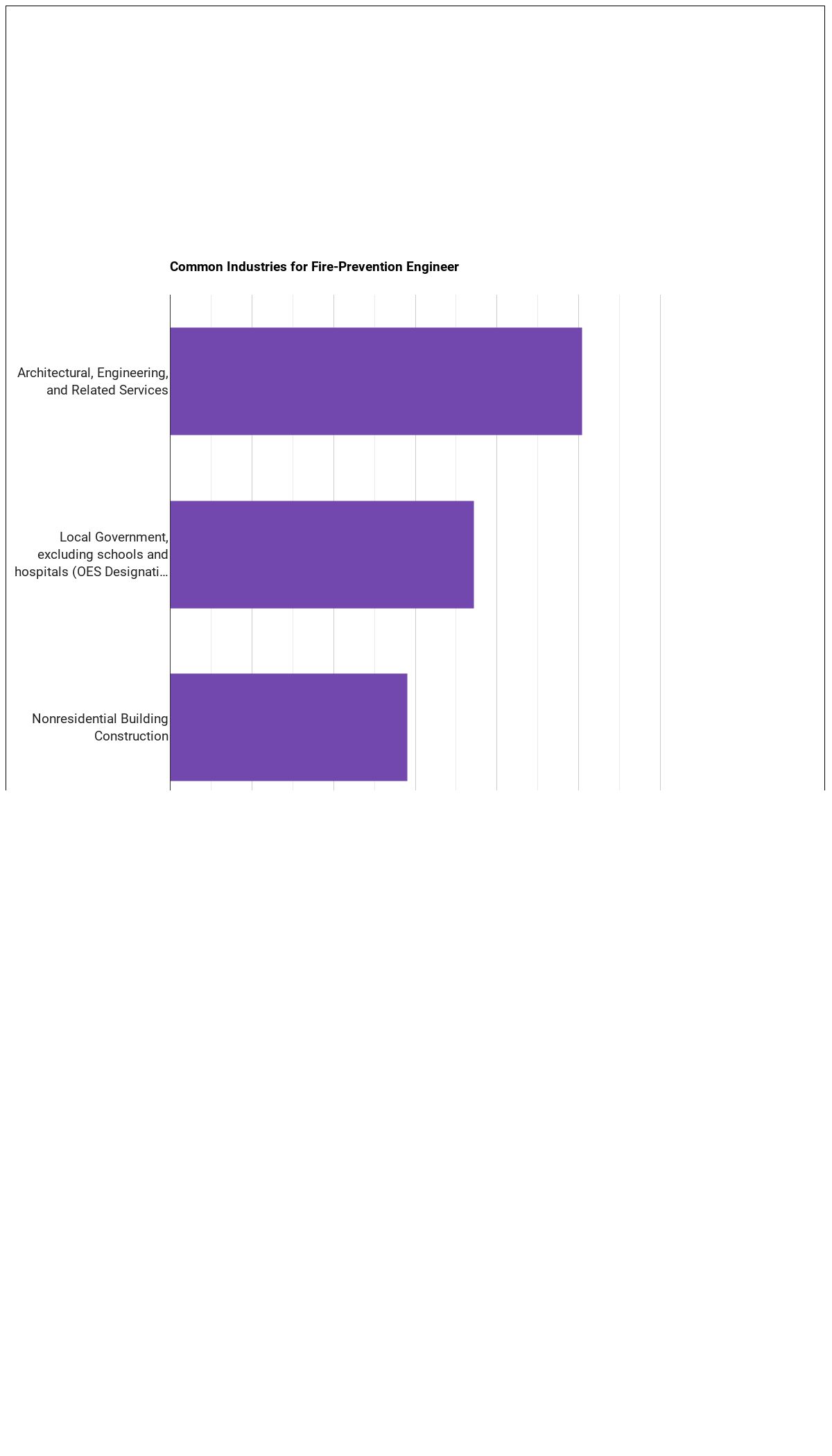
The table below shows some of the most common industries where those employed in this career field work.
Software Fire-Prevention and Protection Engineers Use
- Computer aided design CAD software: Autodesk AutoCAD (hot technology)
- Computer aided design CAD software: Autodesk Revit (hot technology)
- Computer aided design CAD software: Bentley MicroStation (hot technology)
- Spreadsheet software: Microsoft Excel (hot technology)
- Office suite software: Microsoft Office software (hot technology)
- Presentation software: Microsoft PowerPoint (hot technology)
- Project management software: Microsoft Project (hot technology)
- Process mapping and design software: Microsoft Visio (hot technology)
- Operating system software: Microsoft Windows (hot technology)
- Word processing software: Microsoft Word (hot technology)
What the Workplace Is Like
The on-the-job environment of fire-prevention and protection engineers is shaped by the following characteristics:
- Telephone Conversations
- Face-to-Face Discussions with Individuals and Within Teams
- Indoors, Environmentally Controlled
- Contact With Others
Education and Training
Entry-level fire-prevention and protection engineers positions require a bachelor’s degree as the typical entry-level education. This career aligns with Considerable Preparation Needed (Job Zone 4), signaling the level of preparation typically expected.
Other Careers to Consider
Similar Occupations
- Emergency Management Directors (Supplemental)
- Environmental Compliance Inspectors (Supplemental)
- Government Property Inspectors and Investigators (Supplemental)
- Security Management Specialists (Primary-Long)
- Penetration Testers (Supplemental)
- Civil Engineers (Supplemental)
- Water/Wastewater Engineers (Supplemental)
- Environmental Engineers (Primary-Long)
Degree Programs
Aspiring fire-prevention and protection engineers often complete programs in:
Engineering
2 programs across 2 majors
About the Data
Data on this page comes from the following authoritative sources:
- U.S. Bureau of Labor Statistics — Occupational Employment and Wage Statistics (OEWS) for employment and wage data by state and industry.
- BLS Employment Projections for total employment and growth forecasts.
- O*NET (Occupational Information Network) for skills, knowledge, tasks, work activities, work context, technology, and education-zone data.
SOC code: 17-2111.02 (Health and Safety Engineers, Except Mining Safety Engineers and Inspectors).

Course Advisor provides higher-education, college and university, degree, program, career, salary, and other helpful information to students, faculty, institutions, and other internet audiences. Presented information and data are subject to change. Inclusion on this website does not imply or represent a direct relationship with the company, school, or brand. Information, though believed correct at time of publication, may not be correct, and no warranty is provided. Contact the schools to verify any information before relying on it. Financial aid may be available for those who qualify. The displayed options may include sponsored or recommended results, not necessarily based on your preferences.
© Course Advisor – All Rights Reserved.