Budget Analysts in South Carolina
Considering working as a Budget Analysts in South Carolina? Below are the key facts. Examine budget estimates for completeness, accuracy, and conformance with procedures and regulations. Analyze budgeting and accounting reports. Excludes “Financial and Investment Analysts” (13-2051).
What do Budget Analysts Make in South Carolina?
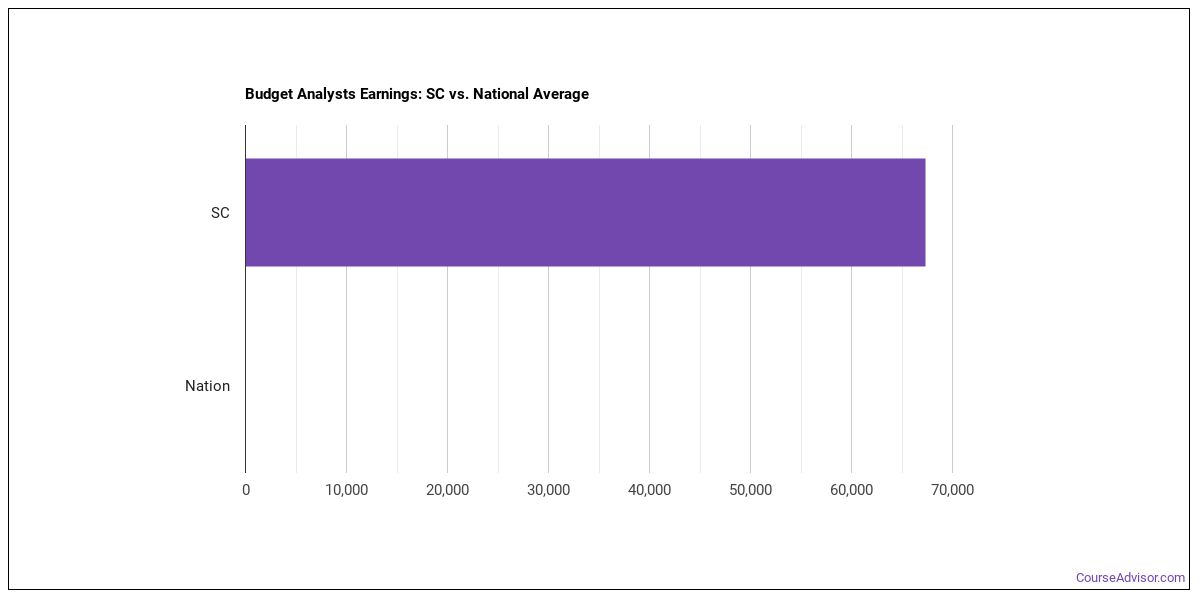
For budget analysts working in South Carolina, the typical annual salary is $82,080 per year (or about $39.46/hour).Pay can range from $59,950 at the 10th percentile to $120,640 at the 90th percentile.
| Wage Statistic | Annual | Hourly |
|---|---|---|
| 10th percentile | $59,950 | $28.82 |
| 25th percentile | $68,680 | $33.02 |
| Median (50th) | $82,080 | $39.46 |
| 75th percentile | $104,460 | $50.22 |
| 90th percentile | $120,640 | $58.00 |

Location quotient — how concentrated this career is in South Carolina nationwide is 0.65, suggesting fewer budget analysts per worker than the national average.
National Wage Comparison
Nationally, budget analysts earn a median of $80,859 per year ($38.87/hour), above the South Carolina median.
Employment Outlook
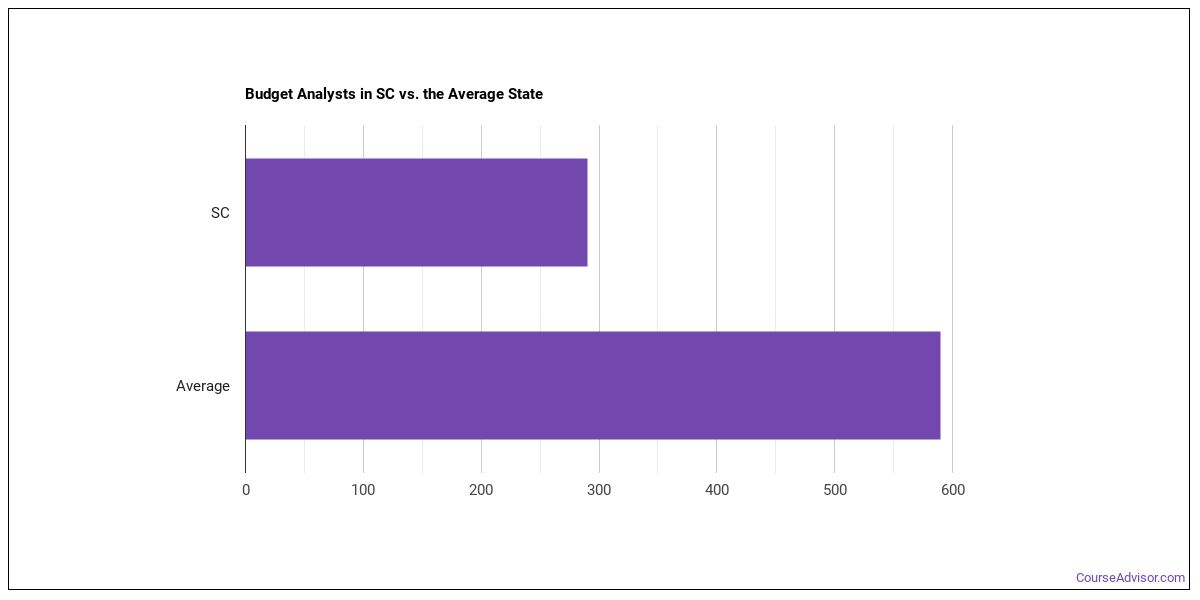
National employment for 523,417 budget analysts in the U.S.. In South Carolina alone, approximately 450 people work in this role. That’s fewer than the typical state, which employs around 480 budget analysts.

Top South Carolina Metros for Budget Analysts
These are the South Carolina metros with the most budget analysts in South Carolina.
| Metro Area | Number Employed | Annual Median Salary |
|---|---|---|
| Charleston-North Charleston, SC | 100 | $77,940 |
| Columbia, SC | 100 | $82,220 |
| Greenville-Anderson-Greer, SC | 70 | $74,840 |
| Sumter, SC | 40 | $71,950 |
Top States for Budget Analysts Employment
The table below shows the states where the most budget analysts work.
| State | Number Employed |
|---|---|
| Texas | 3,840 |
| California | 3,700 |
| Florida | 3,450 |
| Virginia | 2,940 |
| Maryland | 2,870 |
| New York | 2,740 |
| Georgia | 1,890 |
| District of Columbia | 1,720 |
| North Carolina | 1,680 |
| Colorado | 1,450 |
| Massachusetts | 1,380 |
| Washington | 1,300 |
| Tennessee | 1,090 |
| Pennsylvania | 990 |
| Oregon | 980 |
| Alabama | 940 |
| Wisconsin | 900 |
| Arizona | 850 |
| Illinois | 830 |
| New Jersey | 770 |
Highest-Paying States for Budget Analysts
These states pay the most for budget analysts.
| State | Annual Median Salary |
|---|---|
| District of Columbia | $117,960 |
| Virginia | $108,740 |
| California | $103,900 |
| Maryland | $101,420 |
| New Mexico | $99,590 |
| Alabama | $98,080 |
| Colorado | $96,680 |
| Oregon | $94,640 |
| Connecticut | $93,070 |
| New Jersey | $92,980 |
Skills
Key budget analysts skills, rated on an importance scale of 0 to 5:
Knowledge Areas
Key knowledge areas for this occupation, rated on an importance scale of 0 to 5:
Abilities
The abilities that matter most for budget analysts, rated on an importance scale of 0 to 5:
Daily Tasks
Common tasks include:
- Analyze monthly department budgeting and accounting reports to maintain expenditure controls.
- Provide advice and technical assistance with cost analysis, fiscal allocation, and budget preparation.
- Review operating budgets to analyze trends affecting budget needs.
- Compile and analyze accounting records and other data to determine the financial resources required to implement a program.
- Examine budget estimates for completeness, accuracy, and conformance with procedures and regulations.
- Summarize budgets and submit recommendations for the approval or disapproval of funds requests.
- Consult with managers to ensure that budget adjustments are made in accordance with program changes.
- Direct the preparation of regular and special budget reports.
- Interpret budget directives and establish policies for carrying out directives.
- Perform cost-benefit analyses to compare operating programs, review financial requests, or explore alternative financing methods.
- Match appropriations for specific programs with appropriations for broader programs, including items for emergency funds.
- Seek new ways to improve efficiency and increase profits.
Work Activities
- Working with Computers
- Getting Information
- Processing Information
- Communicating with Supervisors, Peers, or Subordinates
- Analyzing Data or Information
- Organizing, Planning, and Prioritizing Work
- Evaluating Information to Determine Compliance with Standards
- Documenting/Recording Information
- Making Decisions and Solving Problems
- Identifying Objects, Actions, and Events
- Updating and Using Relevant Knowledge
- Establishing and Maintaining Interpersonal Relationships
Tools & Technology
Common tools and software used in this occupation include: Hot technologies: Microsoft Access, Microsoft Excel In-demand technologies: Microsoft Access
What Major Will Prepare You For This Career?
Related college programs include:
- Accounting
- Finance & Financial Management
Featured schools near , edit
Related Careers
Careers similar to budget analysts include:
- Financial Managers
- Treasurers and Controllers
- Investment Fund Managers
- Compensation and Benefits Managers
- Project Management Specialists
- Management Analysts
Also Known As
Budget Administrator (Budget Admin), Budget Analyst, Budget Coordinator, Budget Engineer, Budget Examiner, Budget Management Analyst, Budget Officer, Budget Planning Analyst, Budget Specialist, Budget and Policy Analyst, Cost Accountant, Cost Analyst, Financial Management Analyst, Financial Planning and Analysis Analyst, Financial Services Officer.
References
- U.S. Bureau of Labor Statistics, Occupational Employment and Wage Statistics — https://www.bls.gov/oes/
- O*NET Online — https://www.onetonline.org/
- BLS Employment Projections — https://www.bls.gov/emp/
- O*NET-SOC code: 13-2031.00

Course Advisor provides higher-education, college and university, degree, program, career, salary, and other helpful information to students, faculty, institutions, and other internet audiences. Presented information and data are subject to change. Inclusion on this website does not imply or represent a direct relationship with the company, school, or brand. Information, though believed correct at time of publication, may not be correct, and no warranty is provided. Contact the schools to verify any information before relying on it. Financial aid may be available for those who qualify. The displayed options may include sponsored or recommended results, not necessarily based on your preferences.
© Course Advisor – All Rights Reserved.