Air Traffic Controllers in Connecticut
Thinking about a career as an Air Traffic Controllers in Connecticut? Here’s what the data says. Control air traffic on and within vicinity of airport, and movement of air traffic between altitude sectors and control centers, according to established procedures and policies. Authorize, regulate, and control commercial airline flights according to government or company regulations to expedite and ensure flight safety.
What do Air Traffic Controllers Make in Connecticut?
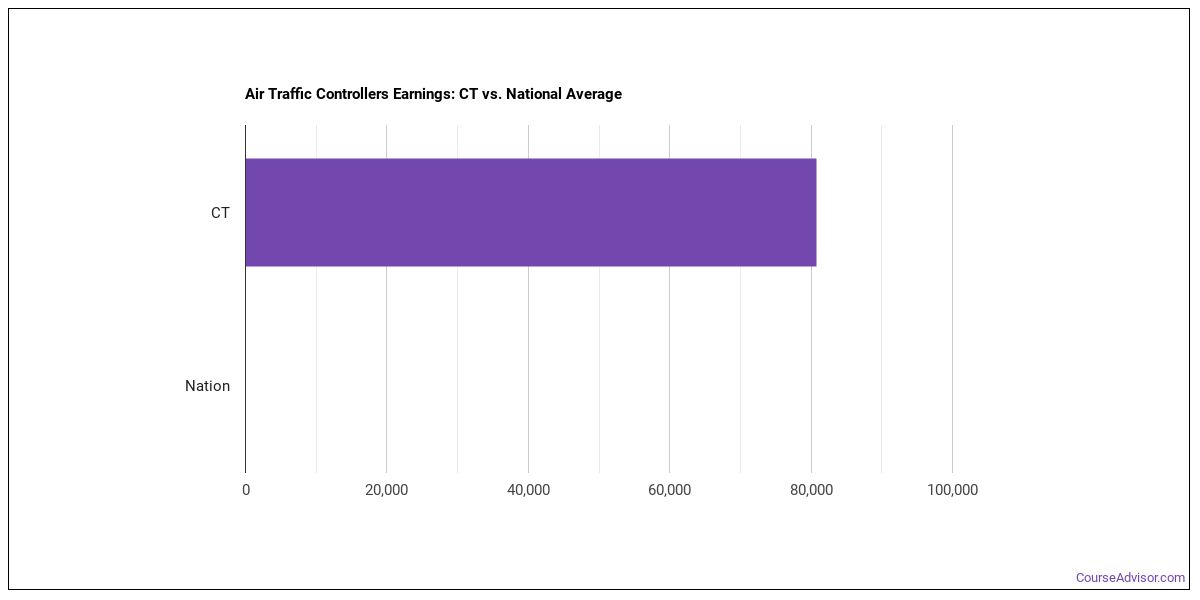
The air traffic controllers working in Connecticut, the median annual wage is $121,910 per year (or about $58.61/hour).Annual wages span from $84,240 at the 10th percentile to $191,820 at the 90th percentile.
| Wage Statistic | Annual | Hourly |
|---|---|---|
| 10th percentile | $84,240 | $40.50 |
| 25th percentile | $95,760 | $46.04 |
| Median (50th) | $121,910 | $58.61 |
| 75th percentile | $148,430 | $71.36 |
| 90th percentile | $191,820 | $92.22 |

The job concentration index in Connecticut compared to the national average — is 0.27, meaning fewer air traffic controllers per worker than the national average.
National Wage Comparison
Nationally, air traffic controllers earn a median of $46,187 per year ($22.21/hour), higher than the Connecticut median.
Employment Outlook
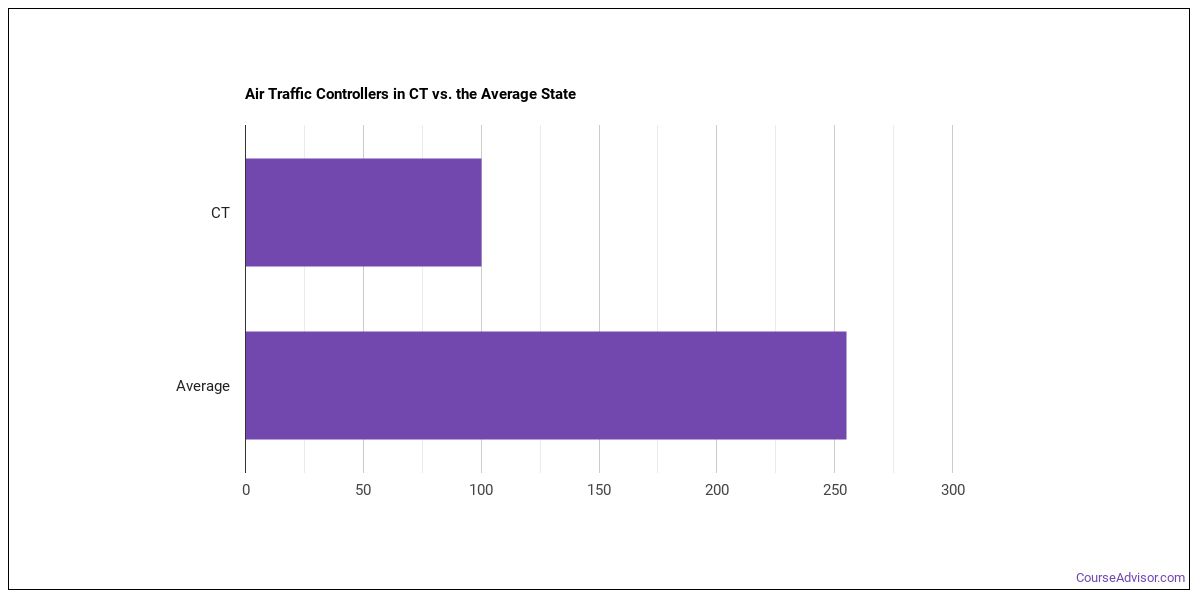
National employment for 502,845 air traffic controllers in the U.S.. In Connecticut alone, approximately 70 people work in this role. That trails the typical state, which employs around 240 air traffic controllers.

Top Connecticut Metros for Air Traffic Controllers
The metro areas below employ the most air traffic controllers in Connecticut.
| Metro Area | Number Employed | Annual Median Salary |
|---|---|---|
| Hartford-West Hartford-East Hartford, CT | 50 | $123,860 |
Top States for Air Traffic Controllers Employment
View the states that employ the most air traffic controllers work.
| State | Number Employed |
|---|---|
| California | 2,260 |
| Texas | 2,020 |
| Florida | 1,980 |
| New York | 1,190 |
| Virginia | 1,130 |
| Illinois | 1,000 |
| Georgia | 970 |
| Colorado | 780 |
| District of Columbia | 700 |
| Minnesota | 630 |
| Indiana | 620 |
| Tennessee | 610 |
| Washington | 600 |
| Alaska | 500 |
| North Carolina | 440 |
| Pennsylvania | 410 |
| Kansas | 410 |
| Michigan | 380 |
| Arizona | 380 |
| New Mexico | 360 |
Highest-Paying States for Air Traffic Controllers
These states pay the most for air traffic controllers.
| State | Annual Median Salary |
|---|---|
| Virginia | $185,890 |
| Minnesota | $176,030 |
| Illinois | $175,090 |
| Georgia | $174,600 |
| Colorado | $172,310 |
| Texas | $167,710 |
| Washington | $164,070 |
| Kansas | $156,620 |
| Utah | $156,120 |
| Indiana | $155,790 |
Skills
Key air traffic controllers skills, rated on an importance scale of 0 to 5:
Knowledge Areas
Core knowledge areas for this occupation, rated on an importance scale of 0 to 5:
Abilities
Key abilities for air traffic controllers, rated on an importance scale of 0 to 5:
Daily Tasks
Day-to-day, air traffic controllers typically:
- Inform pilots about nearby planes or potentially hazardous conditions, such as weather, speed and direction of wind, or visibility problems.
- Issue landing and take-off authorizations or instructions.
- Transfer control of departing flights to traffic control centers and accept control of arriving flights.
- Provide flight path changes or directions to emergency landing fields for pilots traveling in bad weather or in emergency situations.
- Alert airport emergency services in cases of emergency or when aircraft are experiencing difficulties.
- Monitor or direct the movement of aircraft within an assigned air space or on the ground at airports to minimize delays and maximize safety.
- Direct pilots to runways when space is available or direct them to maintain a traffic pattern until there is space for them to land.
- Monitor aircraft within a specific airspace, using radar, computer equipment, or visual references.
- Direct ground traffic, including taxiing aircraft, maintenance or baggage vehicles, or airport workers.
- Contact pilots by radio to provide meteorological, navigational, or other information.
- Maintain radio or telephone contact with adjacent control towers, terminal control units, or other area control centers to coordinate aircraft movement.
- Determine the timing or procedures for flight vector changes.
Work Activities
- Making Decisions and Solving Problems
- Identifying Objects, Actions, and Events
- Getting Information
- Monitoring Processes, Materials, or Surroundings
- Communicating with Supervisors, Peers, or Subordinates
- Processing Information
- Training and Teaching Others
- Updating and Using Relevant Knowledge
- Analyzing Data or Information
- Thinking Creatively
- Evaluating Information to Determine Compliance with Standards
- Organizing, Planning, and Prioritizing Work
Tools & Technology
Technologies frequently used: Hot technologies: Adobe Acrobat In-demand technologies: Microsoft Excel
What Major Will Prepare You For This Career?
Related college programs include:
- Air Transportation
Featured schools near , edit
Related Careers
Related occupations to air traffic controllers include:
- Transportation, Storage, and Distribution Managers
- Public Safety Telecommunicators
- Dispatchers, Except Police, Fire, and Ambulance
- Avionics Technicians
- Power Distributors and Dispatchers
- Aircraft Cargo Handling Supervisors
Also Known As
Access Control Specialist, Air Route Controller, Air Route Traffic Controller, Air Traffic Control Operator, Air Traffic Control Specialist (ATCS), Air Traffic Control Support Specialist (ATC Support Specialist), Air Traffic Controller (ATC), Air Traffic Coordinator, Air Traffic Manager, Aircraft Communicator, Airline Dispatcher, Airport Tower Controller, Airport Traffic Controller, Airway Controller, Airway Traffic Controller.
References
- U.S. Bureau of Labor Statistics, Occupational Employment and Wage Statistics — https://www.bls.gov/oes/
- O*NET Online — https://www.onetonline.org/
- BLS Employment Projections — https://www.bls.gov/emp/
- O*NET-SOC code: 53-2021.00

Course Advisor provides higher-education, college and university, degree, program, career, salary, and other helpful information to students, faculty, institutions, and other internet audiences. Presented information and data are subject to change. Inclusion on this website does not imply or represent a direct relationship with the company, school, or brand. Information, though believed correct at time of publication, may not be correct, and no warranty is provided. Contact the schools to verify any information before relying on it. Financial aid may be available for those who qualify. The displayed options may include sponsored or recommended results, not necessarily based on your preferences.
© Course Advisor – All Rights Reserved.